In today's demanding industrial environments, standard off-the-shelf sensors often fall short. Harsh conditions involving moisture, dust, chemicals, and extreme temperatures require robust sensing solutions. This is where the customization of waterproof proximity sensors becomes not just an option, but a critical necessity for operational reliability, safety, and efficiency.
Waterproof proximity sensors are designed to detect the presence or absence of an object without physical contact, using technologies like inductive, capacitive, or ultrasonic principles. While basic waterproof ratings (e.g., IP67, IP68, IP69K) are common, true customization delves deeper to meet precise application challenges. A custom-engineered sensor is tailored in its form, function, and firmware to integrate seamlessly into a specific machine or process.
The journey of customization begins with a thorough analysis of the application. What is the target material? Is it metal, plastic, glass, or a liquid? Inductive sensors are ideal for metals, while capacitive sensors can detect non-metals. The required sensing distance, switching frequency, and output type (PNP/NPN, analog, IO-Link) are defined. The physical environment is paramount. Will the sensor be subjected to high-pressure washdowns in food and beverage plants? It may require an IP69K stainless steel housing and a special chemical-resistant cable. In marine or offshore applications, resistance to saltwater corrosion is essential. For automotive manufacturing, sensors must withstand cutting oils and coolants.
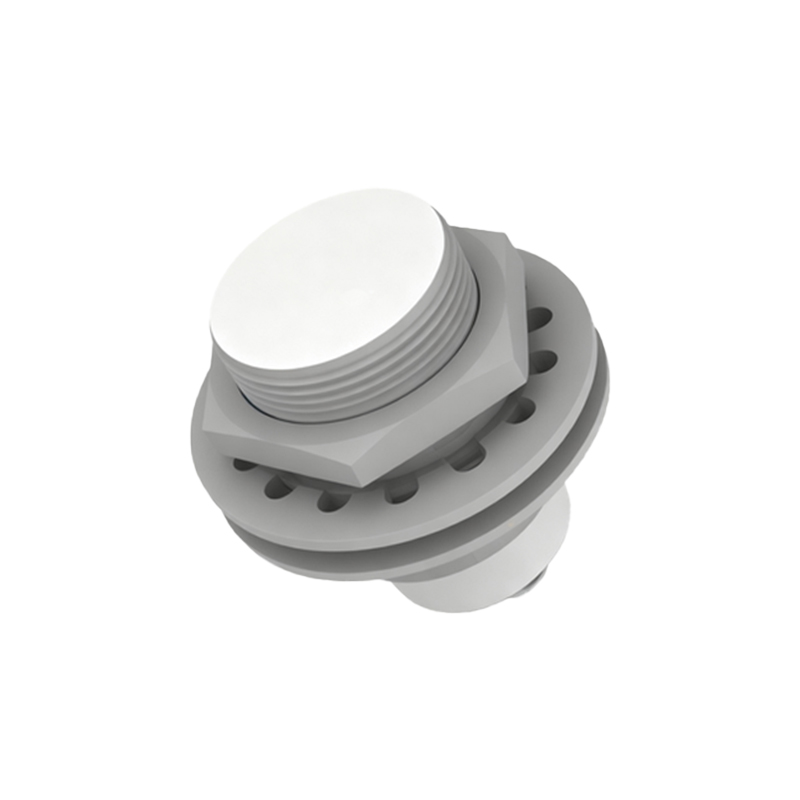
Housing design is a primary aspect of customization. Standard cylindrical or block shapes may not fit constrained spaces. Engineers can design custom housings from materials like PBT plastic, stainless steel (V2A, V4A), or brass with specific platings. The shape can be elongated, flattened, or angled to ensure optimal positioning and mounting. The sensing face material and thickness can also be adjusted to influence the sensing field and durability.
Electrical and output characteristics are fine-tuned. Custom cable lengths, connector types (M8, M12), and pigtail exits are specified to simplify installation. For smart factories, integrating digital communication protocols like IO-Link into the sensor provides valuable diagnostic data, such as operating temperature, signal strength, and parameter changes, enabling predictive maintenance.
The benefits of investing in custom waterproof proximity sensors are substantial. It leads to enhanced system performance with fewer false triggers and higher detection accuracy. It improves machine design by allowing for more compact and elegant integration. Ultimately, it reduces total cost of ownership by minimizing sensor failures, production downtime, and replacement costs. A sensor built for the exact environment lasts longer and performs more reliably.
Consider a real-world example in bottling. A standard sensor might fail due to constant condensation and sugary syrup spills. A custom capacitive proximity sensor with a hydrophobic PTFE-coated sensing face, a high-temperature resistant housing, and an IO-Link interface for monitoring buildup can solve this, ensuring uninterrupted line operation.
Developing a custom sensor is a collaborative partnership between the OEM or end-user and a specialized sensor manufacturer. It requires clear communication of requirements, prototyping, rigorous testing under simulated real-world conditions, and final validation. Choosing a manufacturer with proven expertise in both sensor technology and material science is crucial.
In conclusion, as industries push the boundaries of automation in increasingly aggressive environments, the demand for precise, durable sensing solutions grows. Custom waterproof proximity sensors represent a strategic investment, moving from a generic component to an engineered part of the system. They provide the resilience and intelligence needed to ensure continuous production, protect valuable machinery, and drive the future of industrial automation forward.