In the realm of industrial automation and machine safety, the ability to detect the presence or absence of an object without physical contact is paramount. DC proximity sensors, a cornerstone of this technology, offer reliable, non-contact detection for a vast array of applications. Unlike their mechanical switch counterparts, these sensors operate on the principle of electromagnetic fields, providing long service life, high switching speeds, and resilience in harsh environments. Understanding their working principles, key types, and selection criteria is essential for engineers and technicians designing efficient and safe automated systems.
The fundamental operation of most DC proximity sensors is based on the generation of an electromagnetic field. When a metallic object, known as the target, enters this field, it induces eddy currents within the target. These currents create a secondary magnetic field that opposes the original field. The sensor's internal oscillator circuit detects this change in the field's amplitude or frequency. This detection triggers a solid-state switching element (like a transistor) within the sensor, changing its output state. This output signal is then used to control machinery, indicate status, or trigger subsequent actions in a control system. The entire process is swift, wear-free, and highly repeatable.
DC proximity sensors are primarily categorized by their sensing technology. The most common type is the inductive proximity sensor, designed specifically to detect metallic objects, typically ferrous metals like steel and iron. Their sensing range is influenced by the target's material, size, and shape. For non-metallic object detection, such as liquids, powders, or plastic materials, capacitive proximity sensors are employed. These sensors detect changes in capacitance caused by the dielectric constant of the target material entering an electrostatic field. Another critical category is the magnetic proximity sensor, or reed sensor, which reacts to the presence of a permanent magnet. These are often used in applications like detecting cylinder piston position.
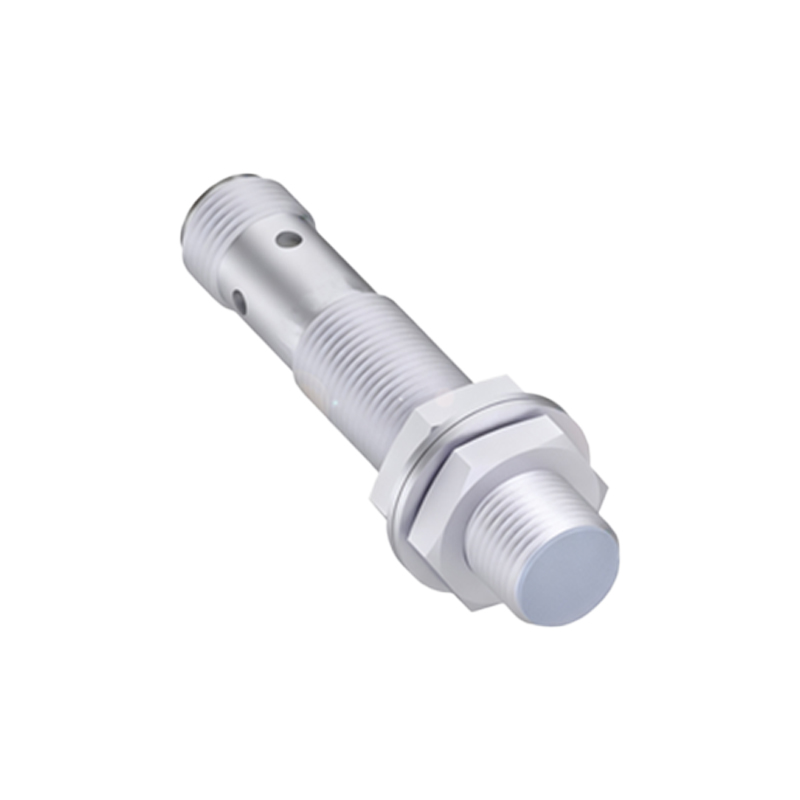
The "DC" designation refers to the sensor's power supply requirement, typically ranging from 10 to 30 VDC. This is a crucial distinction from AC-powered sensors. DC sensors offer several advantages, including compatibility with modern programmable logic controllers (PLCs) and microprocessors, faster response times, and the availability of multiple output configurations. The two primary output types are NPN (sinking) and PNP (sourcing). The choice between NPN and PNP depends on the input circuit of the connected control device. Furthermore, sensors come in two-wire, three-wire, or four-wire designs, with three-wire versions being the most prevalent for their separate power, ground, and signal lines, which reduce leakage current issues.
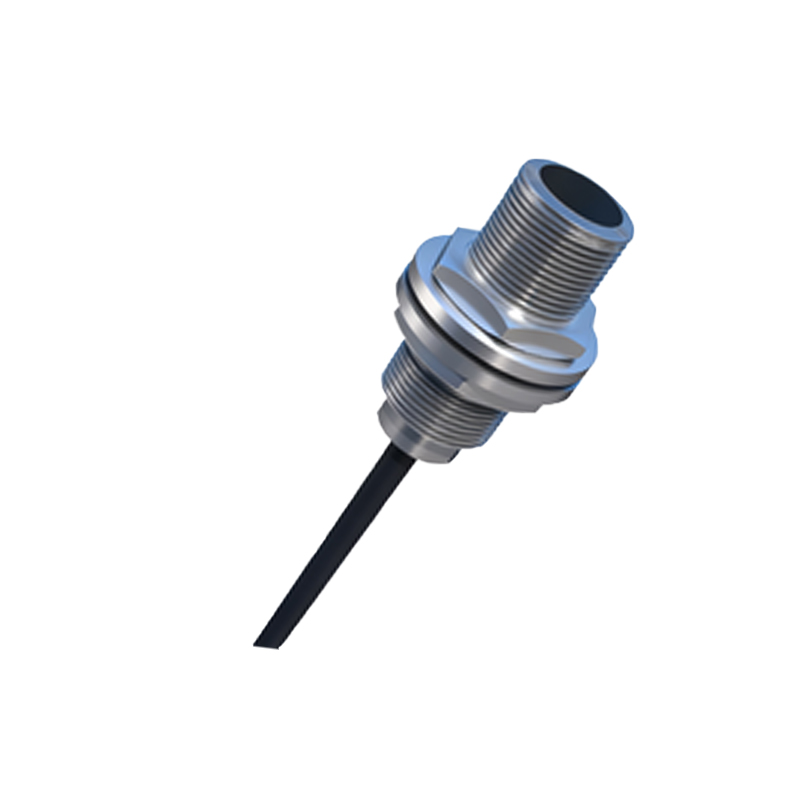
Selecting the right DC proximity sensor requires careful consideration of several application parameters. The nominal sensing distance, or rated operating distance, is specified for a standard target. Real-world sensing distance may be less. The housing material, such as nickel-plated brass, stainless steel, or PBT plastic, must withstand the environmental conditions, including exposure to chemicals, temperature extremes, and physical impacts. Key performance specifications include response frequency (how quickly it can detect objects in succession), hysteresis (the difference between the switch-on and switch-off points for stability), and protection ratings like IP67 or IP69K for dust and water ingress.
In industrial settings, DC proximity sensors are ubiquitous. They are used for precise position detection of machine parts, end-of-travel limits on actuators, and counting objects on conveyor belts. In automated assembly lines, they verify the presence of components. Within hydraulic or pneumatic systems, they monitor cylinder rod positions. Their robust construction allows them to function reliably in demanding areas like welding cells, machining centers, and material handling equipment. The non-contact nature eliminates problems associated with mechanical wear, contact bounce, and contamination.
Installation and wiring are straightforward but require attention to detail. Sensors must be mounted securely to prevent vibration-induced errors. Maintaining the proper clearance around the sensor's sensing face is vital to avoid false triggers from surrounding metal (a factor known as flush or non-flush mounting). For inductive sensors, using the correct target material and ensuring it approaches the sensing face correctly optimizes performance. Regular maintenance typically involves only keeping the sensing face clean from debris buildup that could attenuate the electromagnetic field.
Advancements continue to enhance DC proximity sensor capabilities. Modern sensors feature improved noise immunity, embedded diagnostics like LED status indicators, and even analog output versions that provide distance-proportional signals, not just a simple on/off switch. Miniaturization has led to extremely small sensors for tight spaces, while specialized models offer extended sensing ranges or enhanced resistance to welding fields.
In conclusion, DC proximity sensors are indispensable components in modern industrial control. Their ability to provide consistent, non-contact detection of objects translates into increased machine efficiency, reduced downtime, and enhanced operational safety. By carefully matching the sensor type—inductive, capacitive, or magnetic—along with its electrical characteristics and physical specifications to the application's demands, engineers can