In industrial automation and precision engineering, proximity sensing plays a critical role in ensuring accuracy, safety, and efficiency. Among various sensing technologies, optical grating proximity sensors stand out for their exceptional resolution, non-contact operation, and adaptability to challenging environments. While standard models are widely available, many advanced applications demand customized solutions to meet unique operational requirements. Customizing optical grating proximity sensors involves tailoring their physical design, optical characteristics, electronic interfaces, and software algorithms to fit specific use cases beyond the capabilities of off-the-shelf products.
The core principle of an optical grating proximity sensor relies on the interference of light waves. A light source, typically an LED or laser diode, emits a beam that passes through or reflects off a grating—a precise pattern of alternating transparent and opaque lines. When an object approaches the sensor, it modulates the light pattern, and a photodetector captures these changes. The sensor's electronics then interpret the modulation to determine the object's presence, distance, or displacement. This method allows for micron-level precision, making it ideal for applications requiring fine measurements.
Customization often begins with the grating itself. The grating pitch, line width, and material can be adjusted to optimize performance for different detection ranges, resolutions, and environmental conditions. For instance, in high-temperature settings, such as near industrial furnaces, gratings made from heat-resistant materials like fused silica or specialized ceramics may be required. Conversely, in cleanroom environments for semiconductor manufacturing, sensors might use gratings with anti-reflective coatings to minimize contamination risks. The light source wavelength is another customizable parameter; infrared light can be chosen for applications where ambient visible light could cause interference, while ultraviolet light might be used for detecting specific materials or in sterilization processes.
Mechanical design modifications are equally important. Sensors may need to be miniaturized to fit into compact machinery, such as robotic arms or medical devices, or enlarged for monitoring large-scale equipment. Housing materials can be selected for durability—stainless steel for corrosive chemical plants, or aluminum alloys for lightweight aerospace applications. Ingress protection (IP) ratings can be enhanced to withstand dust, water, or oil exposure, ensuring reliability in harsh industrial settings like mining or food processing.
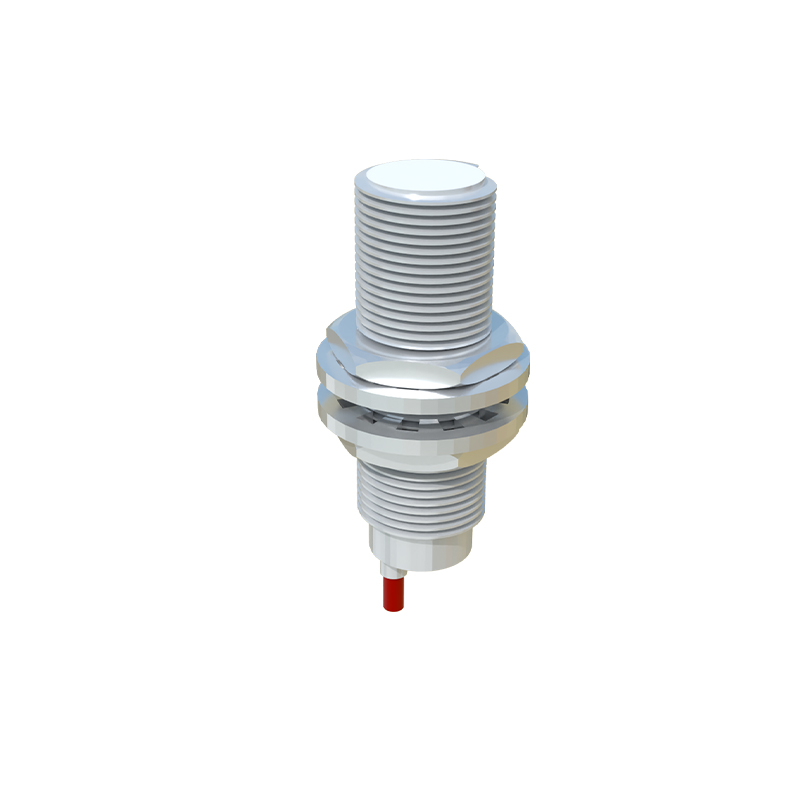
Electronic customization focuses on output signals and integration capabilities. While standard sensors often provide analog outputs (e.g., 4-20 mA or 0-10 V) or digital interfaces (e.g., IO-Link, RS-485), customized versions might incorporate proprietary communication protocols to interface with legacy systems or specific PLCs. Some applications require real-time data processing onboard the sensor, such as edge computing for predictive maintenance, where algorithms analyze vibration or wear patterns. Power supply requirements can also be tailored, with options for low-power designs for battery-operated devices in remote monitoring or energy-harvesting setups.
Software and firmware adaptations enable advanced functionalities. For example, in automated assembly lines, sensors can be programmed with custom logic to distinguish between different object types based on reflectivity or shape, reducing false triggers. In safety systems, like those guarding hazardous machinery, response times can be optimized to meet stringent safety standards (e.g., SIL or PL ratings). Additionally, calibration routines can be embedded to compensate for environmental drift, such as temperature fluctuations affecting optical components, ensuring long-term stability.
Real-world applications of customized optical grating proximity sensors span diverse industries. In automotive manufacturing, they are used for precise alignment of components during engine assembly, where custom gratings allow for sub-millimeter accuracy. In pharmaceuticals, sensors with hygienic designs and validation documentation support compliance with FDA regulations, monitoring fill levels in sterile vials. For renewable energy, sensors in wind turbines might be customized to withstand extreme weather while detecting blade position for optimal pitch control. Even in consumer electronics, miniaturized sensors enable touchless gesture control in devices, requiring tailored optical designs for compact form factors.
The process of customization typically involves close collaboration between sensor manufacturers and end-users. It starts with a detailed analysis of the application requirements, including environmental factors, performance metrics, and integration needs. Prototyping and testing follow, often using simulation tools to model optical behavior before physical production. Throughout, considerations for cost-effectiveness and scalability are balanced to ensure the customized sensor remains viable for production volumes.
In conclusion, customizing optical grating proximity sensors unlocks their full potential for specialized applications. By addressing unique challenges through tailored optical, mechanical, electronic, and software features, these sensors enhance precision, reliability, and efficiency across industries. As technology advances, the trend toward customization is likely to grow, driven by the demand for smarter, more adaptable automation solutions. For engineers and decision-makers, investing in customized sensors can offer a competitive edge, turning sensing challenges into opportunities for innovation.