In the world of modern electronics, a silent revolution is happening right at our fingertips—or, more accurately, just millimeters away from them. Proximity sensors, the unheralded workhorses of device interaction, have become a fundamental component in everything from smartphones to industrial robots. These devices detect the presence or absence of nearby objects without any physical contact, enabling a seamless and intuitive user experience that we often take for granted.
At its core, a proximity sensor is a device that emits an electromagnetic field or a beam of electromagnetic radiation and looks for changes in the field or return signal. The object being sensed is often referred to as the proximity sensor's target. The key principle is non-contact detection, which offers significant advantages over mechanical switches, including longer operational life, higher reliability, and the ability to detect objects that are fragile, hot, or in motion.
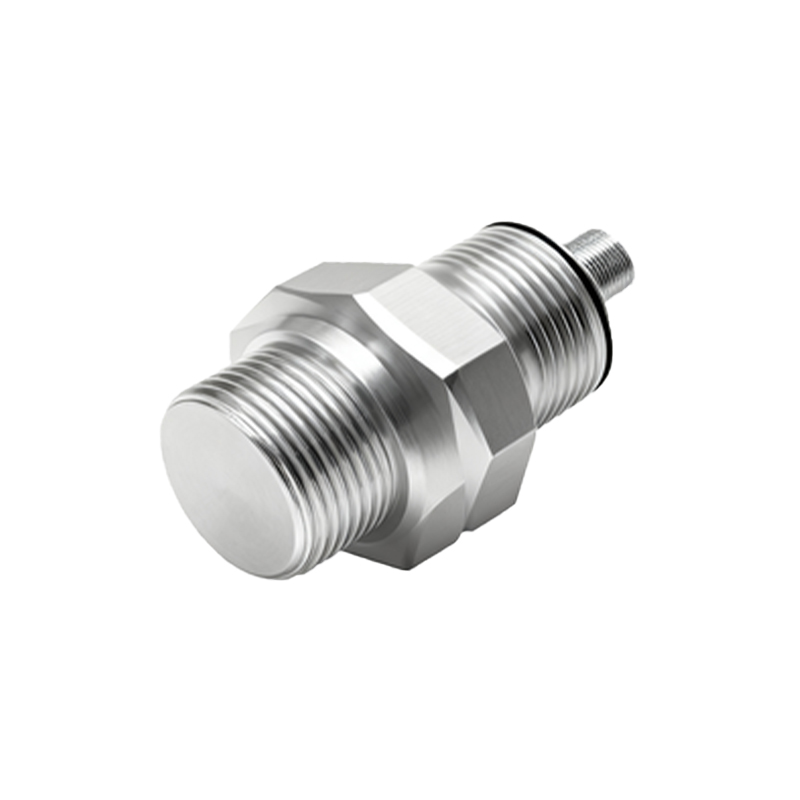
Several primary technologies dominate the proximity sensing landscape, each with its own strengths and ideal applications. Inductive proximity sensors are one of the most common types. They generate an oscillating electromagnetic field and detect the eddy current losses caused when a metallic target enters this field. This makes them exceptionally reliable for detecting metals in harsh industrial environments, such as on assembly lines for counting products or verifying the position of machine parts. They are largely unaffected by dirt, dust, or moisture.
Capacitive proximity sensors, on the other hand, can detect both metallic and non-metallic targets like liquids, plastics, or wood. They function by generating an electrostatic field and sensing the capacitance change that occurs when a target enters this field. You'll find these sensors in applications ranging from liquid level detection in tanks to touch-sensitive buttons on consumer appliances. Their versatility makes them a popular choice across various sectors.
Perhaps the most familiar type to the average consumer is the infrared (IR) proximity sensor. This technology typically involves an IR LED that emits infrared light and a photodiode or phototransistor that senses the reflected light from a nearby object. This is the technology that allows your smartphone screen to turn off when you hold it to your ear during a call, saving battery life and preventing accidental screen touches. It's also crucial for automatic faucets and hand dryers in public restrooms, promoting hygiene and conservation.
Ultrasonic sensors represent another major category, using sound waves beyond the range of human hearing. They measure the time it takes for an emitted ultrasonic pulse to bounce back from a target. This allows for precise distance measurement, not just presence detection. They excel in challenging conditions where optical sensors might fail, such as in environments with smoke, dust, or varying light levels. Applications include parking assist systems in vehicles, level measurement in silos, and even robotics for obstacle avoidance.
The applications of proximity sensors are vast and continually expanding. In the automotive industry, they are integral to advanced driver-assistance systems (ADAS), enabling features like blind-spot monitoring, automatic parking, and collision avoidance. In consumer electronics, they enable features like the automatic wake-and-sleep function in laptops and tablets. In smart homes, they can trigger lights as you enter a room or adjust thermostat settings based on occupancy.
Industrial automation is perhaps the largest domain for proximity sensors. Here, they perform critical tasks such as object counting, position verification, jam detection, and end-of-travel sensing on machinery. Their robustness and non-contact nature are essential for maintaining high-speed, efficient, and safe manufacturing processes. They help in creating "safety curtains" around dangerous machinery, instantly shutting down equipment if a worker gets too close.
When selecting a proximity sensor for a specific application, engineers must consider several key parameters. Sensing range, or the maximum distance at which the sensor can reliably detect a standard target, is fundamental. Repeatability, the sensor's ability to consistently detect a target at the same distance, is critical for precision applications. The response time determines how quickly the sensor can react to a target's presence or absence, which is vital for high-speed processes. Environmental factors like temperature extremes, potential chemical exposure, and electrical noise must also be accounted for to ensure long-term reliability.
The future of proximity sensing is tied to the growth of the Internet of Things (IoT) and smarter automation. Sensors are becoming smaller, more energy-efficient, and more intelligent, often incorporating digital interfaces and onboard diagnostics. The integration of multiple sensing modalities—combining, for example, proximity with ambient light sensing—into single compact packages is a clear trend, enabling richer contextual awareness for devices.
From the phone in your pocket to the car you drive and the factory that manufactured it, proximity sensors play an indispensable role. They are a perfect example of how a seemingly simple piece of technology, by performing its single task reliably and invisibly, becomes a cornerstone of convenience, efficiency, and safety in the modern technological ecosystem. Their continued evolution will undoubtedly unlock new levels of interaction between humans,