Accurately measuring the output of a laser diode is a critical task in numerous fields, from telecommunications and medical equipment to industrial manufacturing and research laboratories. The choice of sensor is paramount, as an incorrect selection can lead to inaccurate readings, potential damage to the sensor, or even safety hazards. Unlike measuring ordinary light, laser measurement demands specialized devices capable of handling high power densities, specific wavelengths, and precise optical characteristics.
The primary and most recommended sensor for measuring laser diode output is the photodiode sensor, specifically designed for optical power measurement. Photodiodes convert light energy into an electrical current. For laser applications, silicon (Si) photodiodes are common for visible and near-infrared lasers (approximately 400-1100 nm), while germanium (Ge) or Indium Gallium Arsenide (InGaAs) photodiodes are used for longer infrared wavelengths. These sensors are often integrated into dedicated optical power meters or laser power meters. These meters provide a calibrated readout in watts (W) or milliwatts (mW), offering a direct and accurate measurement of the laser's continuous wave (CW) output power. For pulsed lasers, a pyroelectric sensor or a specially designed fast photodiode is required to capture the energy and duration of each pulse.
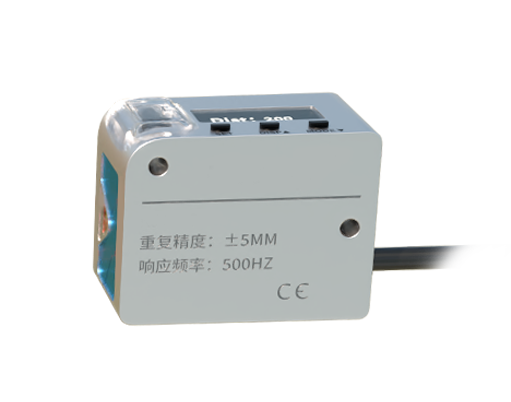
Another crucial category is the beam profiler. While not a single-point power sensor, a beam profiler uses a camera or a scanning slit sensor to capture the two-dimensional intensity distribution of the laser beam. This is essential for measuring parameters beyond total power, such as beam diameter, shape (mode profile), divergence, and pointing stability. For high-power lasers, thermal sensors like thermopiles or calorimeters are often employed. These sensors absorb the laser energy and measure the resultant temperature rise, which is then correlated to optical power. They are robust and can handle very high power levels but may have slower response times.
Selecting the correct sensor depends on several key laser parameters:
1. Wavelength: The sensor must have high responsivity (sensitivity) at the laser's specific wavelength.
2. Power Range: The sensor's damage threshold and linear operating range must comfortably exceed the laser's maximum output.
3. Beam Size: The sensor's active area must be larger than the laser beam diameter to capture all the energy.
4. Temporal Mode (CW or Pulsed): CW lasers require average power sensors, while pulsed lasers need sensors capable of measuring pulse energy and repetition rate.
5. Required Accuracy: Laboratory-grade measurements demand calibrated sensors with low uncertainty, whereas industrial settings may prioritize robustness.
For most practical applications involving common laser diodes, a calibrated photodiode-based optical power meter is the standard, reliable choice. It provides a direct, quantitative measure of optical power. For characterizing the beam's spatial properties, a beam profiler is indispensable. For very high-power industrial lasers, thermal power sensors are the norm. Always consult the sensor manufacturer's specifications to ensure compatibility with your specific laser diode's characteristics. Proper measurement not only ensures performance but is also a fundamental aspect of laser safety protocols.