In the realm of industrial automation and precision measurement, the single-sided laser sensor stands as a pivotal technology. Unlike traditional dual-sided sensors that require emitter and receiver pairs, this device operates from one side only, projecting a laser beam onto a target and analyzing the reflected light. This fundamental design shift offers significant advantages in installation flexibility and application scope.
The core working principle involves triangulation or time-of-flight measurement. In triangulation-based sensors, a laser diode emits a focused beam. The light reflected from the target surface is captured by a receiving lens at a specific angle and focused onto a position-sensitive detector, such as a CCD or CMOS array. The displacement of the light spot on the detector is directly proportional to the distance or height variation of the target. Time-of-flight variants measure the phase shift or direct time delay of a modulated laser pulse to calculate distance. This one-sided operation eliminates the need for precise alignment of separate components across a measurement path, drastically simplifying system integration.
Key performance parameters define its utility. Measurement range can vary from sub-millimeter to several meters, with resolution often reaching micrometer levels. High-speed models achieve sampling rates in the kilohertz range, suitable for dynamic processes. The choice of visible red lasers or Class 1 or 2 infrared lasers depends on application needs concerning visibility, ambient light immunity, and safety. Robust housing with IP67 ratings is common for harsh environments involving dust, coolant, or vibration.
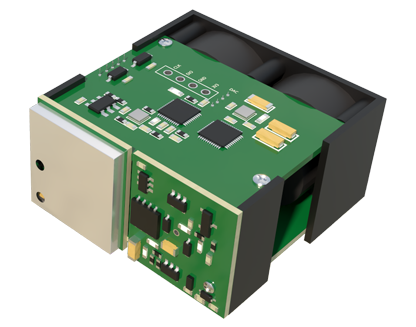
The applications are diverse and critical. In manufacturing, these sensors perform non-contact thickness gauging of materials like metal sheets, glass, or plastic films from one side, enabling 100% inline inspection. They precisely control the standoff distance in robotic welding or dispensing heads. On assembly lines, they verify presence, count objects, or detect minute height differences for quality control. In logistics, they measure package dimensions on conveyor belts. Emerging uses include alignment in additive manufacturing and surface defect detection by profiling.
Selecting the appropriate sensor requires careful analysis. Engineers must consider the target material's color, reflectivity, and surface texture, as glossy or dark surfaces can affect signal strength. Environmental factors like ambient light, temperature swings, and contaminants must be accounted for. The required accuracy, response speed, and output interface (analog, digital, or fieldbus) are also decisive. Modern sensors often integrate intelligent features like background suppression, programmable switching points, and teach-in functions for easier setup.
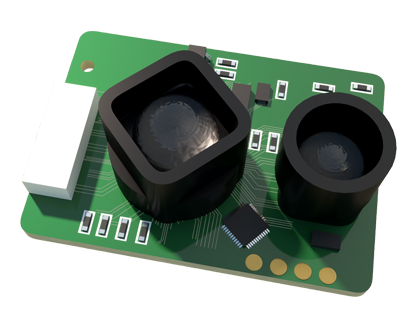
Installation and maintenance follow best practices to ensure longevity and accuracy. Mounting must be secure to minimize vibration. The sensor should be positioned perpendicular to the target surface within its specified operating range. Regular cleaning of the optical window prevents accumulation of dirt that scatters the laser beam. Calibration against known standards maintains measurement fidelity over time.
Compared to alternative technologies like ultrasonic sensors or inductive proximity switches, single-sided laser sensors provide superior precision, smaller spot size, and faster response. However, they may be more sensitive to certain surface properties and typically command a higher initial cost. The trade-off is justified in applications where micron-level accuracy or high-speed detection is paramount.
Future trends point towards miniaturization, enhanced connectivity for Industry 4.0 ecosystems, and smarter sensors with embedded edge processing for feature extraction. Integration with machine vision systems is also growing, combining precise distance data with 2D image analysis.
In summary, the single-sided laser sensor is an indispensable tool for modern industry. Its ability to deliver precise, non-contact measurements from a single vantage point solves complex challenges in automation, quality assurance, and process control, driving efficiency and innovation across numerous sectors.