In the realm of industrial automation and quality control, precision is not merely a goal—it is an absolute necessity. Laser calibration sensors have emerged as a cornerstone technology, enabling unprecedented levels of accuracy in measurement and alignment tasks across diverse sectors. These sophisticated devices utilize laser beams to detect, measure, and verify the position, dimensions, or surface characteristics of an object with exceptional fidelity. Unlike traditional contact-based measurement tools, laser sensors operate without physical touch, eliminating the risk of part damage or measurement distortion and allowing for high-speed, non-invasive inspection.
The fundamental principle behind laser calibration sensors often involves triangulation or time-of-flight measurement. In a common triangulation setup, a laser diode projects a focused beam onto the target surface. The reflected light is captured by a receiving lens at a known angle and focused onto a position-sensitive detector, such as a CCD or CMOS array. Any change in the target's distance causes a measurable shift in the position of the laser spot on the detector. This displacement is then calculated with advanced algorithms to determine the exact distance or profile. This method provides micron-level resolution, making it ideal for applications like thickness gauging, vibration analysis, and contour profiling.
The applications for laser calibration sensors are vast and critical. In automotive manufacturing, they are deployed for precise gap and flush measurement between body panels, ensuring perfect alignment and aesthetic quality. In the electronics industry, these sensors verify the coplanarity of semiconductor leads and the placement accuracy of surface-mount components on printed circuit boards. Within aerospace, they are indispensable for aligning large structural components and inspecting turbine blade profiles. Furthermore, in logistics and warehousing, laser sensors facilitate dimensional weighing (DIM weighing) of packages for accurate shipping costs and optimize palletizing processes.
Selecting the appropriate laser calibration sensor requires careful consideration of several key parameters. Measurement range, resolution, spot size, and linearity are primary technical specifications. The required measurement speed, often tied to the sensor's sampling rate, must align with production line velocities. Environmental factors pose another significant challenge; ambient light, dust, smoke, or vibrations can interfere with laser signals. Modern sensors incorporate robust designs, protective housings (often rated IP67 or higher), and sophisticated filtering algorithms to mitigate these interferences. Some advanced models feature integrated thermal compensation to maintain accuracy despite temperature fluctuations in the factory environment.
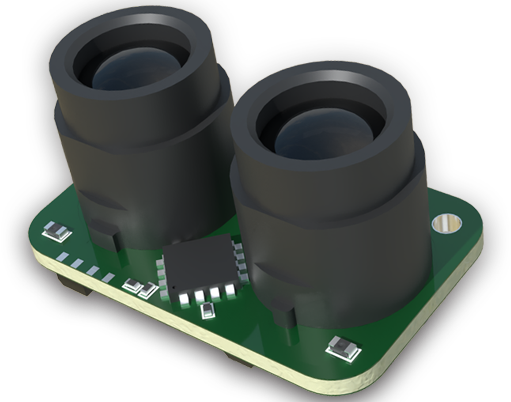
Integration into automated systems is a hallmark of modern laser calibration sensors. They typically offer a variety of digital and analog communication interfaces, such as Ethernet/IP, PROFINET, IO-Link, or analog voltage outputs, allowing seamless data transmission to Programmable Logic Controllers (PLCs) and supervisory systems. This connectivity enables real-time process monitoring and closed-loop control. For instance, if a sensor detects a part dimension drifting out of tolerance, it can trigger an immediate adjustment in the machining tool, preventing the production of defective components.
The future trajectory of laser calibration sensor technology points toward even greater intelligence and versatility. The integration of embedded processors and artificial intelligence for edge computing allows sensors to perform complex data analysis internally, such as pattern recognition or anomaly detection, reducing the computational load on central systems. Furthermore, the development of multi-point sensors and laser line profilers, which capture entire cross-sectional profiles instead of a single point, is expanding possibilities for 3D inspection and reverse engineering. As Industry 4.0 and smart factory concepts mature, these sensors will become even more integral, providing the essential high-fidelity data that drives predictive maintenance, digital twins, and fully adaptive manufacturing processes.
Ultimately, laser calibration sensors represent a critical fusion of optics, electronics, and software. They deliver the reliable, high-precision data that forms the bedrock of modern manufacturing quality, efficiency, and innovation. By providing non-contact, rapid, and exact measurements, they empower industries to maintain tighter tolerances, reduce waste, and ensure product consistency in an increasingly competitive global market.