In today's automated and interconnected world, proximity sensors serve as the silent guardians of efficiency and safety. These devices detect the presence or absence of objects within a specific range without any physical contact. The principle is elegantly simple: a sensor emits an electromagnetic field or a beam of radiation, and then looks for changes in the field or return signal. The object being detected is often referred to as the sensor's target.
The applications are vast and integral to modern life. On factory assembly lines, inductive proximity sensors reliably detect metallic components, ensuring robotic arms place parts with millimeter precision. In your smartphone, a capacitive sensor deactivates the touchscreen when held near your ear during a call, preventing accidental inputs. Automotive systems employ ultrasonic sensors for parking assistance, creating a safety bubble around the vehicle. Even in retail, sensors monitor inventory levels or count people entering a store.
Several core technologies power these devices, each with unique strengths. Inductive sensors are workhorses in industrial settings, detecting only metallic objects with high speed and durability in dirty environments. Capacitive sensors can detect a wider range of materials, including liquids, powders, and plastics, making them ideal for level detection in tanks. Photoelectric sensors use light beams (visible, infrared, or laser) for longer-range detection, while ultrasonic sensors excel where target color or transparency is irrelevant, using sound waves to gauge distance accurately.
Selecting the right sensor requires careful consideration of several factors. The nature of the target material is paramount—is it metal, plastic, liquid, or organic? The required sensing distance, or "range," dictates the technology choice; a photoelectric sensor can detect objects several meters away, while an inductive sensor typically works within a few centimeters. Environmental conditions like dust, moisture, temperature extremes, or electrical noise can severely impact performance. Finally, the required output signal—a simple on/off switch or an analog signal proportional to distance—determines the sensor's integration into the control system.
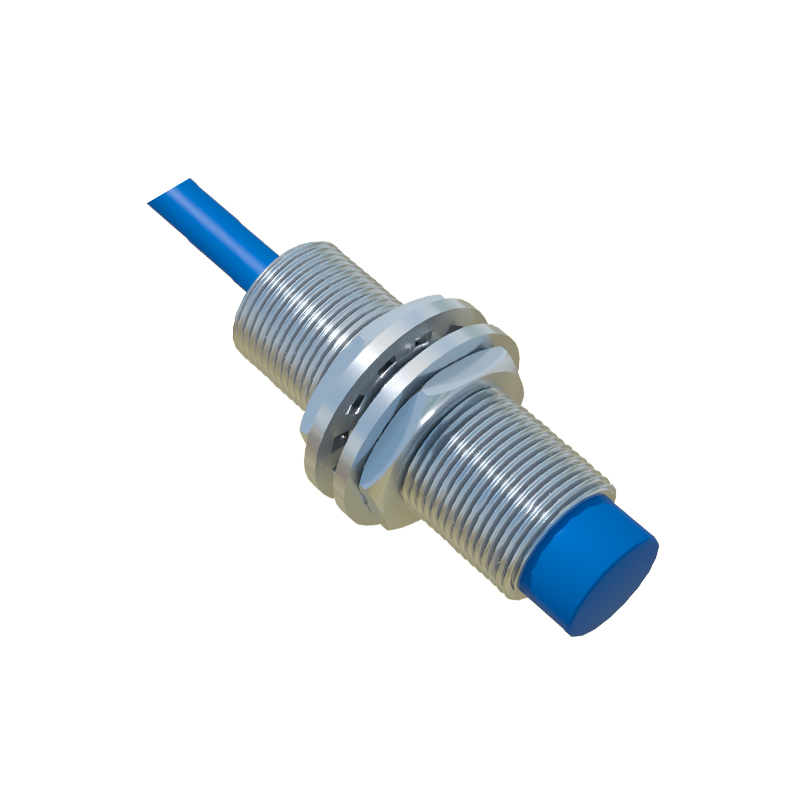
Installation and maintenance are straightforward but critical. Proper alignment is essential, especially for photoelectric and ultrasonic types. Sensors must be mounted securely to avoid vibration-induced errors. Regular cleaning of the sensing face prevents false triggers from accumulated grime. For analog sensors, periodic calibration against a known standard ensures ongoing accuracy. Most modern sensors feature LED indicators for operational status, simplifying troubleshooting.
The future of proximity sensing is driven by miniaturization, intelligence, and integration. Sensors are becoming smaller, more energy-efficient, and capable of providing diagnostic data about their own health. The rise of the Industrial Internet of Things (IIoT) sees smart sensors communicating directly with central systems, enabling predictive maintenance and finer process optimization. Furthermore, sensor fusion—combining data from multiple sensor types—creates a more robust and comprehensive understanding of the environment, paving the way for more advanced autonomous systems in manufacturing, logistics, and beyond.
In essence, proximity sensors are fundamental enabling technology. They provide the essential data point—"object present" or "object not present"—that automated systems need to make decisions. From ensuring a bottle on a filling line is correctly positioned to enabling the sophisticated driver-assist features in modern cars, these reliable components operate unseen, making our technology smarter, safer, and more responsive. Their continued evolution will be a cornerstone in the advancement of automation and intelligent systems across all industries.