In the world of sensing technology, two prominent types dominate various applications: optical sensors and laser sensors. While both serve the fundamental purpose of detection and measurement, their underlying principles, performance characteristics, and ideal use cases differ significantly. Understanding these distinctions is crucial for engineers, designers, and procurement specialists to select the optimal solution for their specific needs.
At its core, an optical sensor, often referred to as a photoelectric sensor, typically uses an LED (Light Emitting Diode) as its light source. It operates by emitting a beam of visible light or infrared light towards a target. The sensor then detects either the presence of the light beam (through-beam mode), its reflection from the target (retro-reflective mode), or the diffusion of light off the target (diffuse mode). The detection is based on a change in the received light intensity. These sensors are excellent for general-purpose object detection, presence sensing, and counting tasks. They are known for their cost-effectiveness, simplicity, and reliability in standard industrial environments. However, their performance can be influenced by ambient light, the color and surface texture of the target, and environmental contaminants like dust or fog.
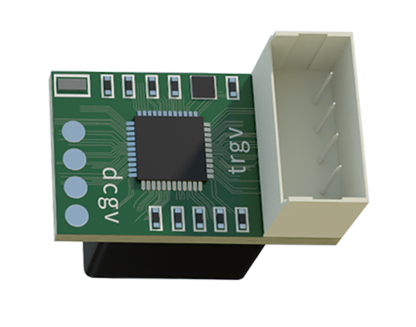
In contrast, a laser sensor utilizes a highly focused, coherent beam of laser light. This coherent light source allows for exceptional precision. The most common principle involves laser triangulation or time-of-flight measurement. In triangulation, the laser dot is projected onto the target, and its reflection is captured by a receiver at a known angle; displacement of the dot on the receiver indicates distance or profile changes. This enables laser sensors to perform highly accurate distance measurement, precise contour profiling, and detection of extremely small objects. Their focused beam is less susceptible to interference from ambient light and can achieve longer sensing ranges with higher accuracy. They are the go-to choice for applications demanding micron-level precision, such as in semiconductor manufacturing, precision assembly, and 3D scanning.
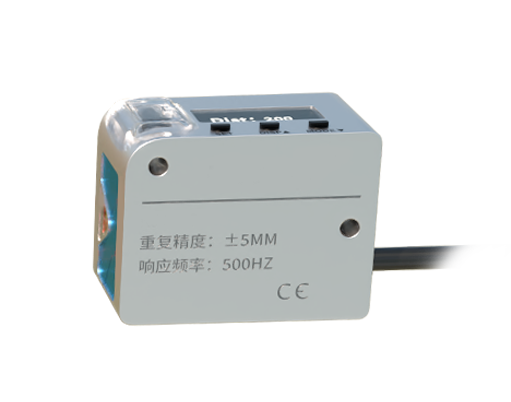
The key differentiators can be summarized in several areas. First, precision and resolution: Laser sensors offer superior resolution and accuracy, often down to micrometer levels, whereas optical sensors provide more general detection with lower resolution. Second, sensing range: Laser sensors can maintain accuracy over longer distances compared to standard optical sensors. Third, environmental robustness: While both can be affected, optical sensors with LEDs are more vulnerable to ambient light noise and target surface properties. Laser beams, being more focused, often perform better in challenging conditions, though they can be sensitive to certain particulates. Fourth, cost and complexity: Optical LED sensors are generally more economical and easier to integrate. Laser sensors involve higher costs due to the sophisticated laser diode and processing electronics.
Choosing between them hinges on the application's requirements. For simple on/off detection, object counting on a conveyor, or level control where extreme precision isn't critical, an optical sensor is typically the most cost-effective and reliable solution. For tasks involving non-contact precise distance measurement, thickness gauging, precise edge detection, or profiling complex surfaces, a laser sensor is indispensable despite its higher cost.
In conclusion, labeling one as universally "better" than the other is incorrect. The optical sensor is the versatile workhorse for general industrial automation, prized for its reliability and affordability. The laser sensor is the precision specialist, enabling advanced measurements and inspections where accuracy is paramount. A clear assessment of the required accuracy, range, environmental conditions, and budget will always point to the correct technological choice, ensuring optimal performance and efficiency in any automated system.