Proximity sensors are a cornerstone of modern automation, silently performing critical tasks in countless applications. From ensuring safety on factory floors to enabling touchless interfaces in consumer electronics, their ability to detect the presence or absence of an object without physical contact is invaluable. At the heart of their functionality lies a key parameter: sensing distance. This distance, often specified as the nominal sensing range, is not a single fixed value but a complex characteristic influenced by a web of factors. A deep understanding of these factors is essential for selecting the right sensor and ensuring reliable operation in any given system.
The stated sensing distance on a datasheet, typically under ideal conditions, serves as a starting point. This nominal range is determined using a standard target, which for many inductive sensors is a square of mild steel (e.g., Fe 360) with a defined thickness and side length. For capacitive sensors, it might be a grounded metal plate. It is crucial to understand that the actual achievable distance in a real-world application will almost always differ from this nominal value. The primary reason for this variance is the material of the target object.
For inductive proximity sensors, which detect metallic objects, the sensing distance is heavily dependent on the target's material properties. The reduction factor, a critical specification, quantifies this effect. A standard mild steel target has a factor of 1.0. Non-ferrous metals like aluminum, brass, or copper have reduction factors less than 1, meaning the effective sensing distance is reduced. For instance, if a sensor has a nominal range of 10mm for steel and is used to detect an aluminum object with a reduction factor of 0.4, the effective range drops to approximately 4mm. Stainless steel, depending on its grade, also typically reduces the sensing distance. Furthermore, the size, shape, and thickness of the target play significant roles. A target smaller than the sensor's active face or thinner than the recommended minimum will decrease the usable range.
Capacitive sensors, which can detect both metallic and non-metallic materials, face a different set of material challenges. Their sensing distance is influenced by the target's dielectric constant. Materials with a high dielectric constant (like water, glass, or plastics) are easier to detect and may allow for a longer range compared to materials with a low dielectric constant (like dry wood or paper). The sensing distance must be adjusted accordingly, often via a potentiometer on the sensor itself, to prevent false triggering from background objects or changes in environmental humidity.
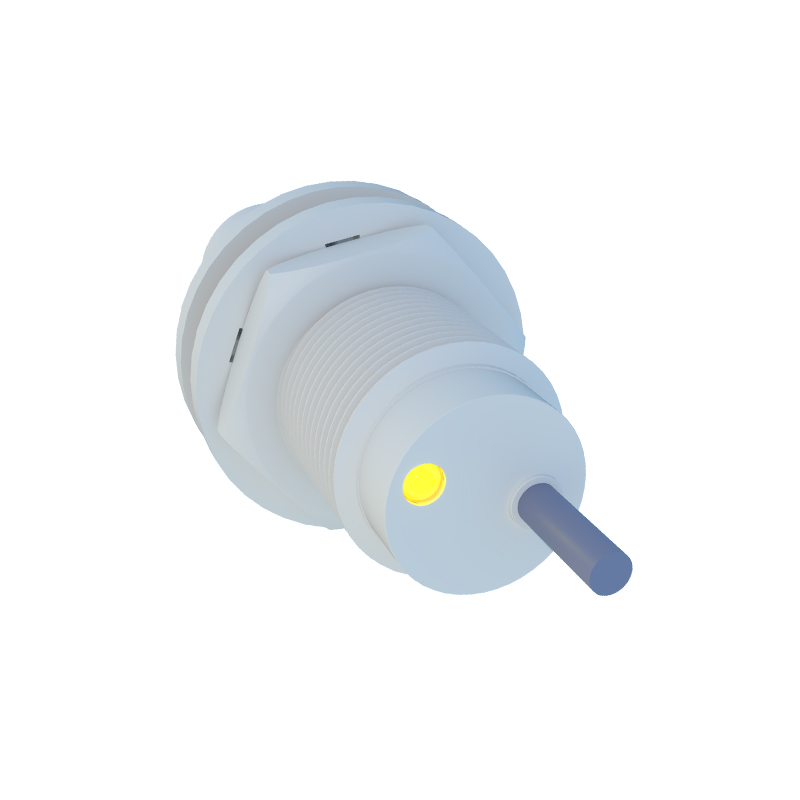
Environmental conditions pose another major influence. Temperature fluctuations can affect the electronic components and oscillation circuits within the sensor, potentially causing drift in the sensing characteristics. High-quality sensors specify an operational temperature range and a temperature drift coefficient. Contaminants such as dust, oil, or coolant can coat the sensor's active face. For inductive sensors, a thin non-conductive layer may have little effect, but a thick buildup can diminish the range. For capacitive sensors, any material buildup on the face directly alters its capacitance and can severely impact performance, potentially causing permanent activation or failure to detect.
Installation considerations are equally critical. Most proximity sensors have defined mounting conditions, such as flush-mountable or non-flush-mountable. Flush-mountable sensors can be installed embedded in a metal bracket without affecting their range, as their electromagnetic field is shielded to the front. Non-flush sensors have a larger lateral field and must be installed with sufficient clearance from surrounding metal (typically 1-2 times the sensor diameter) to achieve their full nominal range. Installing a non-flush sensor flush with metal will drastically reduce its effective sensing distance. Additionally, the presence of multiple sensors in close proximity can lead to mutual interference if they operate on similar frequencies, necessitating adequate spacing or synchronization.
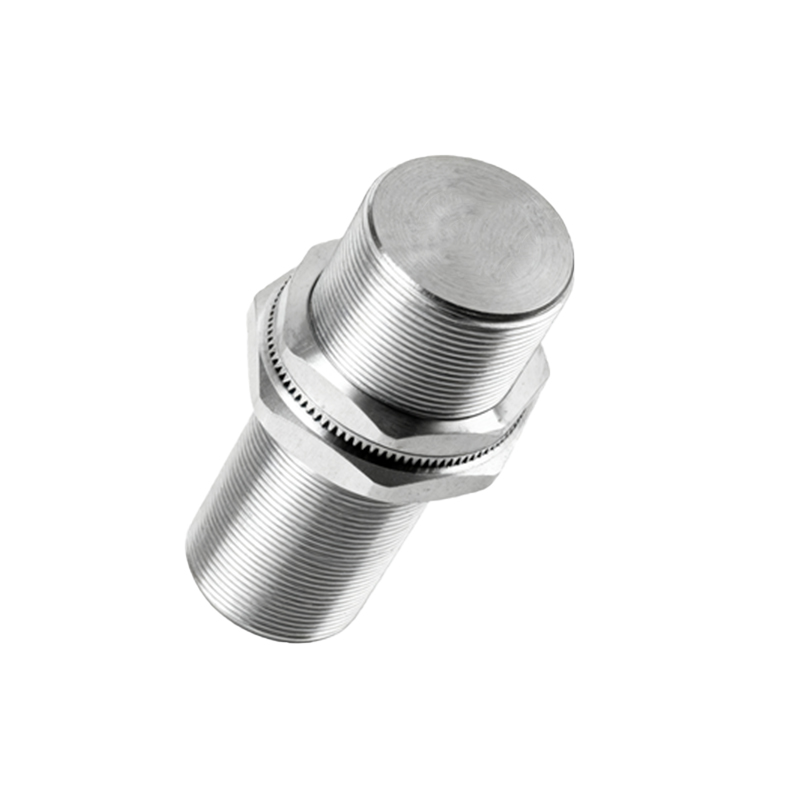
Electrical factors, though sometimes overlooked, also contribute. Voltage supply variations within the sensor's specified range generally have minimal impact on sensing distance. However, electrical noise from nearby motors, frequency converters, or welding equipment can induce instability in the sensor's output, mimicking the effect of a target within an unpredictable range. Proper shielding, grounding, and the use of filters are essential in electrically noisy environments.
Therefore, selecting and applying a proximity sensor requires a holistic view. The nominal sensing distance is a guideline, not a guarantee. A robust design always incorporates a safety margin or derating factor. A common practice is to utilize only 60-80% of the nominal range in the application layout. This margin accounts for material variances, environmental changes, and potential wear over time. For critical applications, testing with the actual target material under real operating conditions is indispensable. By meticulously considering the target, the environment, and the installation, engineers can harness the full, reliable potential of proximity sensing technology, ensuring systems that are both efficient and dependable.