Laser sensor rotation technology represents a significant advancement in precision measurement and detection systems. By integrating rotational mechanisms with laser-based sensing, this technology enables dynamic, multi-dimensional data acquisition across various industries. The core principle involves a laser emitter and receiver mounted on a rotating platform, allowing the laser beam to scan environments through controlled angular movement.
The operational mechanism typically utilizes either continuous rotation or oscillating scanning patterns. In continuous rotation, the sensor spins fully, providing 360-degree coverage ideal for applications like LiDAR in autonomous vehicles. Oscillating scans involve back-and-forth movements within set angles, commonly used in industrial automation for targeted inspections. The rotation is precisely controlled by stepper or servo motors, synchronized with laser pulse emission to correlate distance measurements with specific angles.
Key components include the laser diode generating coherent light, photodetectors capturing reflected signals, rotary encoders tracking angular position, and processing units analyzing time-of-flight or phase-shift data. Modern systems often incorporate MEMS mirrors for ultra-fast beam steering without moving the entire sensor assembly, enhancing durability and speed.

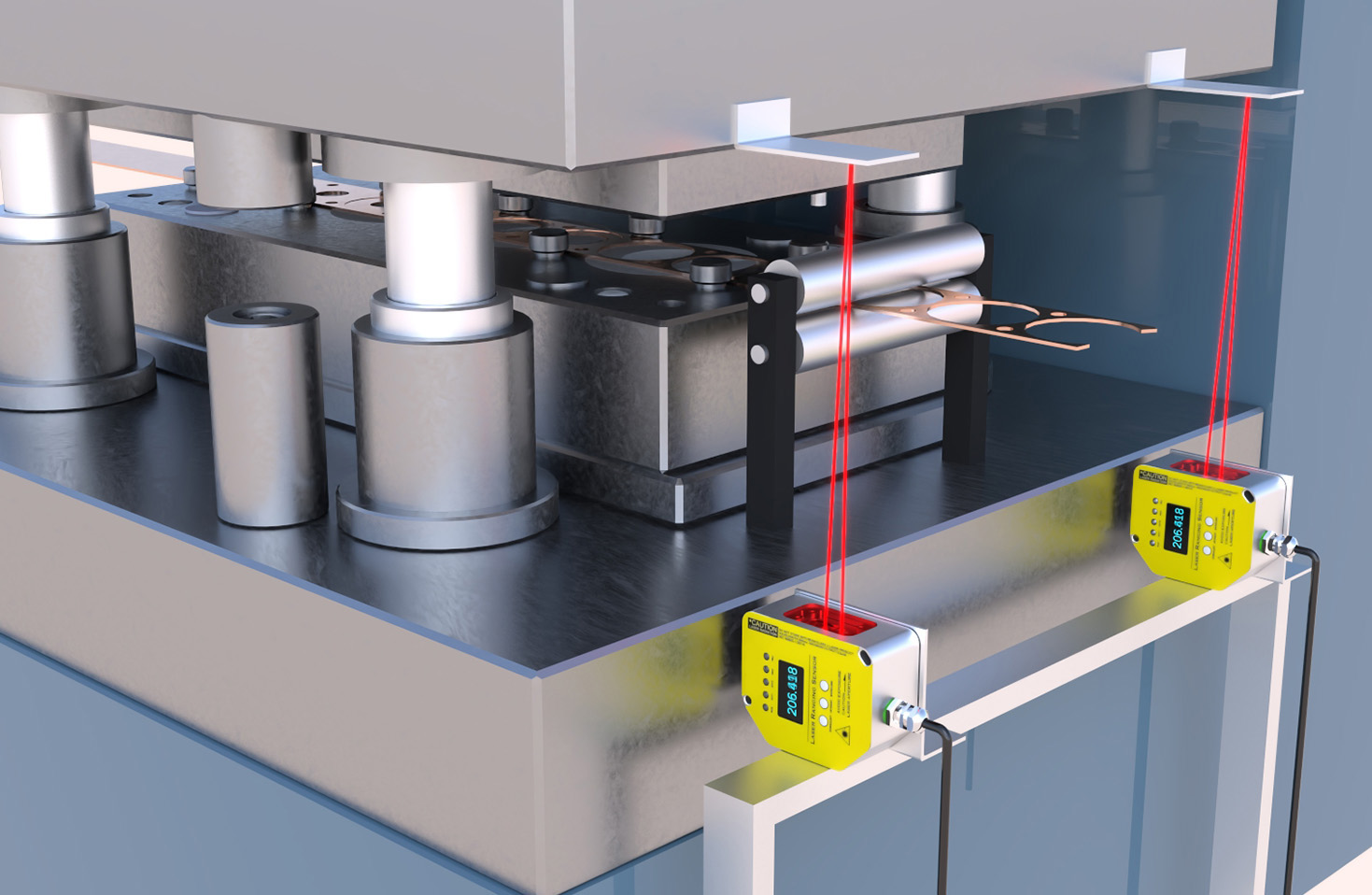
Applications span numerous fields. In robotics, rotating laser sensors enable simultaneous localization and mapping, allowing robots to navigate complex environments by creating real-time 3D maps. Manufacturing industries employ them for dimensional verification, surface defect detection, and alignment checks during production processes. Autonomous vehicles rely on rotating LiDAR sensors to detect obstacles, pedestrians, and road features under varying conditions.
Environmental monitoring utilizes this technology for atmospheric studies, measuring particulate concentrations through laser scattering analysis while scanning different altitude layers. In agriculture, rotating sensors mounted on drones assess crop health by scanning fields with multispectral lasers. Security systems implement rotating laser scanners for perimeter monitoring, detecting intrusions with high accuracy across wide areas.
Recent innovations focus on miniaturization and increased scanning frequencies. Solid-state LiDAR systems eliminate mechanical rotation entirely, using optical phased arrays to steer laser beams electronically. This approach reduces size, cost, and failure rates while achieving scanning speeds exceeding 1000 lines per second. Hybrid systems combining laser rotation with other sensing modalities like cameras or radar are becoming prevalent for enhanced data fusion.
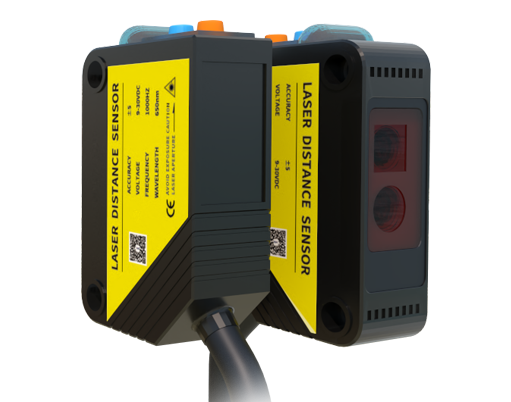
Challenges persist regarding moving part durability in mechanical systems, especially in harsh environments with dust, moisture, or extreme temperatures. Calibration requirements remain stringent, as even minor misalignments between rotational axes and laser paths can generate significant measurement errors. Researchers are developing self-calibrating algorithms and hermetic sealing techniques to address these limitations.
Future developments may incorporate quantum sensing principles to surpass current resolution limits, potentially enabling atomic-scale measurements through rotational laser scanning. Integration with 5G and edge computing will facilitate real-time processing of vast point cloud data generated by high-speed rotations. As material science advances, graphene-based photodetectors could dramatically improve sensitivity for detecting weaker return signals from greater distances.
The convergence of laser rotation technology with artificial intelligence presents particularly promising directions. Machine learning algorithms can interpret complex scan patterns to identify objects or anomalies beyond predefined parameters, adapting to new scenarios through continuous learning. This synergy could revolutionize fields from medical diagnostics using rotational laser endoscopy to construction site monitoring through automated progress tracking.
Industry standards are evolving alongside technological progress. Organizations like ISO and IEC are developing frameworks for performance validation, safety classifications, and interoperability protocols. These standards ensure reliable deployment across critical applications while fostering innovation through clear technical benchmarks.
Laser sensor rotation technology continues to expand its capabilities through interdisciplinary advancements. From enabling precise robotic surgeries to mapping ocean floors, its versatility demonstrates how controlled light manipulation through motion creates valuable perception capabilities. As research addresses current constraints, these systems will likely become more pervasive, affordable, and integral to automated solutions across society.