In the realm of precision measurement and industrial automation, phase laser sensors have emerged as a cornerstone technology. Unlike traditional intensity-based sensors, these devices measure distance or displacement by analyzing the phase shift of a modulated laser beam reflected from a target surface. This fundamental principle grants them exceptional accuracy, stability, and resolution, making them indispensable in fields where micron-level precision is non-negotiable.
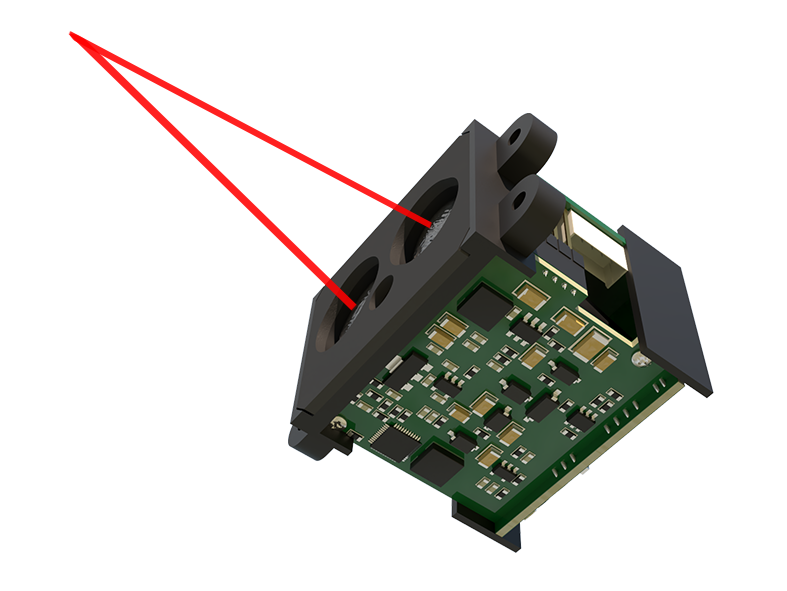
The core operation hinges on the concept of interferometry. A laser diode emits a coherent beam whose intensity is modulated at a high frequency, typically in the megahertz range. This modulated light strikes the target and is reflected back to the sensor's receiver. The journey to the target and back introduces a phase difference between the emitted and received signals. By precisely measuring this phase shift, the sensor's internal processor can calculate the absolute distance to the target with remarkable fidelity. The use of phase comparison, rather than simple time-of-flight measurement used in pulse lasers, allows for much finer resolution over shorter to medium ranges.
The advantages of phase laser sensors are manifold. Their most celebrated attribute is high precision, often capable of resolutions in the sub-micron range. They exhibit excellent long-term stability with minimal drift, ensuring consistent measurements over time. Furthermore, they are largely insensitive to variations in the target's surface color or reflectivity, a common challenge for other optical sensors. This is because the phase measurement relies on the timing of the wave rather than its amplitude. Their non-contact nature prevents damage to both the sensor and delicate target objects, enabling measurements on sensitive materials like soft polymers or polished metals.
Applications for phase laser sensors are vast and growing. In industrial manufacturing, they are deployed for precise thickness gauging of materials such as paper, film, and metal sheets. They perform critical roles in vibration analysis of machinery, detecting minute oscillations that could indicate impending failure. Within the electronics industry, they are used for wafer inspection, solder paste height measurement, and component placement verification. Automotive manufacturers rely on them for body-in-white gap and flush measurement, ensuring perfect panel alignment. Beyond the factory floor, they contribute to topographic mapping, structural health monitoring of bridges and buildings, and even in cultural heritage preservation for documenting artifact dimensions.
When selecting a phase laser sensor, several key specifications demand attention. Measurement range defines the minimum and maximum distances over which the sensor operates accurately. Resolution indicates the smallest detectable change in distance. Linearity error specifies the deviation from a perfectly straight response across the measurement range. The sampling rate, or measurement frequency, determines how quickly the sensor can update its reading, which is crucial for dynamic applications like profiling moving objects. Environmental factors such as temperature fluctuations and ambient light must also be considered, as high-quality sensors incorporate compensation mechanisms for these variables.
Looking ahead, the evolution of phase laser sensors is intertwined with broader technological trends. Integration with Industrial Internet of Things (IIoT) platforms is becoming standard, allowing for real-time data streaming, predictive maintenance, and centralized quality control. Advancements in laser diode and photodetector technology continue to push the boundaries of speed and resolution. The miniaturization of components is leading to more compact sensor designs that can be installed in space-constrained applications. Furthermore, the integration of onboard intelligence, such as edge computing capabilities for initial data processing and filtering, is enhancing system efficiency and reducing latency.

In conclusion, phase laser sensors represent a sophisticated and mature technology that translates the abstract properties of light into concrete, high-precision dimensional data. Their unique operating principle provides a significant edge in applications demanding uncompromising accuracy and reliability. As industries worldwide pursue greater automation, quality, and efficiency, the role of the phase laser sensor as a critical enabler of precision measurement is set to become even more pronounced, continuously adapting to meet the challenges of next-generation manufacturing and scientific inquiry.