In industrial automation, robotics, and precision measurement systems, laser sensors have become indispensable components due to their high accuracy, speed, and reliability. However, the effectiveness of a laser sensor heavily depends on its proper interface and integration with the broader control system. This guide explores the primary laser sensor interface methods, detailing their characteristics, applications, and implementation considerations.
One of the most traditional and widely used interface methods is the analog voltage or current output. Laser sensors with analog interfaces typically provide a voltage signal (e.g., 0-10V) or a current signal (e.g., 4-20 mA) that varies proportionally with the measured distance, height, or presence of an object. This method is straightforward and compatible with many programmable logic controllers (PLCs) and data acquisition systems. The 4-20 mA current loop is particularly valued in industrial environments for its noise immunity over long cable runs. Engineers must ensure proper scaling in the receiving device to convert the analog signal into meaningful engineering units. Calibration is crucial, as drift or electrical interference can affect accuracy.
Digital interfaces have gained significant prominence, offering enhanced data integrity, configuration flexibility, and communication capabilities. Common digital protocols include IO-Link, RS-232, RS-485, and various fieldbus systems like PROFIBUS or EtherCAT. IO-Link, a point-to-point serial communication standard, is especially popular for smart sensors. It not only transmits the measured value but also allows for remote parameter setting, diagnostics, and identification data exchange. This simplifies maintenance and sensor replacement. RS-232 is suitable for short-distance, point-to-point computer connections, while RS-485 supports multi-drop networks over longer distances. Fieldbus and Industrial Ethernet protocols integrate the laser sensor directly into high-speed, deterministic networks, enabling synchronized operation in complex machinery.
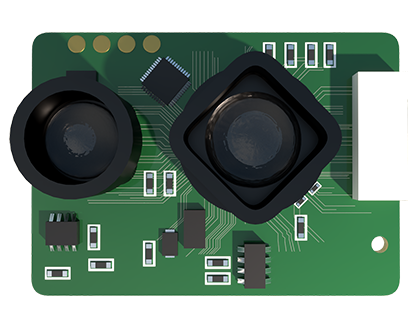
Discrete or switching outputs represent another fundamental interface type. These include PNP (sourcing) or NPN (sinking) transistor outputs, as well as relay contacts. A laser sensor with a discrete output acts primarily as a proximity switch. When the measured value crosses a preset threshold (e.g., an object is detected within a certain range), the output switches its state (ON/OFF). This simple on/off signal is ideal for basic presence detection, counting, or triggering an action in a PLC. The choice between PNP and NPN depends on the electrical design of the control system's input card. These outputs are robust and easy to wire but provide no granular measurement data.
For advanced applications requiring high-speed data streaming or complex data structures, direct Ethernet TCP/IP or UDP communication is increasingly adopted. This allows the laser sensor to function as a network node with its own IP address. Measurement data can be sent in packets to a central server, PC, or cloud platform for analysis, visualization, and storage. This method is key for Industry 4.0 and IoT implementations, facilitating predictive maintenance and system-wide data analytics. It requires network configuration knowledge and considerations for latency and data security.
Wireless interfaces, such as Bluetooth, Wi-Fi, or proprietary industrial wireless protocols, offer cable-free installation, which is beneficial in rotating machinery, mobile platforms, or harsh environments where cabling is impractical. While offering installation flexibility, wireless methods must be evaluated for potential signal interference, latency, power supply requirements (battery life), and data security protocols.
Selecting the appropriate interface method involves a careful analysis of several factors. System requirements for data resolution, update speed (response time), and communication distance are paramount. The existing control architecture—whether it's a legacy PLC system or a modern networked setup—dictates compatibility. Environmental conditions like electrical noise, vibration, and temperature can influence the choice; for instance, analog signals may require shielding in noisy plants, while digital fieldbuses offer better robustness. Finally, considerations for future scalability, ease of diagnostics, and total cost of ownership should guide the decision.
In practice, many modern laser sensors offer multiple interface options in a single device, providing flexibility. For example, a sensor might provide both analog 4-20 mA and IO-Link outputs, or discrete PNP/NPN outputs alongside Ethernet connectivity. This multi-interface design allows system integrators to choose the most suitable connection method for their immediate needs while retaining options for future upgrades.
Proper installation and configuration are as critical as the selection itself. Adhering to manufacturer guidelines for wiring, grounding, and cable types prevents common issues like signal noise or communication errors. For digital interfaces, correct parameter setting via software tools ensures the sensor operates within its intended application parameters. Regular verification of the interface performance through system diagnostics helps maintain long-term reliability and accuracy.
In conclusion, the interface method is a bridge that translates the precise optical measurements of a laser sensor into actionable data for control systems. From simple discrete switches to sophisticated networked smart sensors, the choice of interface directly impacts system performance, integration effort, and operational intelligence. Understanding these methods enables engineers to design more efficient, reliable, and future-proof automated systems.