Proximity sensors are fundamental components in modern automation, robotics, and consumer electronics, providing critical non-contact detection of objects. However, their raw output signals are often contaminated by electrical noise, environmental interference, and physical vibrations, leading to false triggers or missed detections. This is where sensor filtering becomes indispensable. Effective filtering techniques transform erratic, noisy signals into stable, reliable digital or analog outputs, ensuring system accuracy and robustness.
The need for filtering stems from the operating principles of common proximity sensor types, such as inductive, capacitive, and photoelectric sensors. Inductive sensors, for instance, can be affected by electromagnetic interference from nearby motors or power lines. Capacitive sensors might falsely trigger due to humidity changes or non-target materials. Photoelectric sensors are susceptible to ambient light, dust, or reflective surfaces. Without filtering, this noise directly impacts control systems, causing machinery to stop unexpectedly, count inaccurately, or behave erratically.
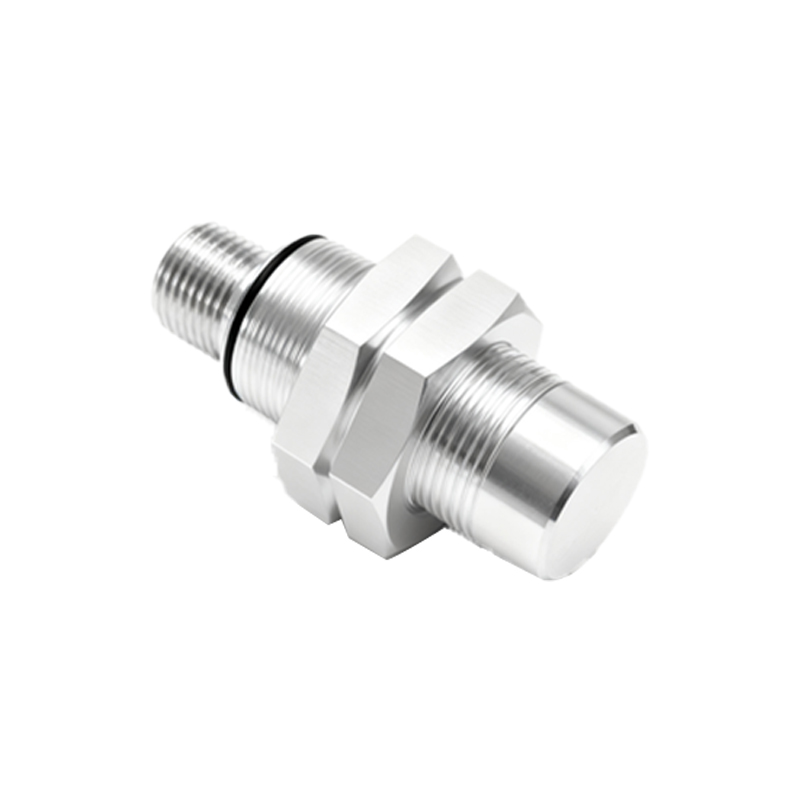
Several core filtering strategies are employed, often implemented within the sensor's internal circuitry or in the subsequent controller (PLC, microcontroller). The most common is debounce filtering (or hysteresis). This simple yet powerful digital filter addresses mechanical vibration or "chatter" when an object is near the detection threshold. It requires the signal to remain in a new state (e.g., object present) for a preset, short time delay before the output actually switches. This delay, typically adjustable from milliseconds to seconds, effectively ignores brief, spurious fluctuations.
For analog sensors providing a continuous distance or intensity output, low-pass filtering is essential. This analog or digital filter allows low-frequency signals (the actual, gradual approach of an object) to pass while attenuating high-frequency noise. A simple resistor-capacitor (RC) circuit can serve as a basic hardware low-pass filter. In digital systems, software algorithms like a moving average or an exponential smoothing filter are frequently used. The moving average filter calculates the average of the last 'n' sensor readings, smoothing out short-term spikes. Exponential smoothing gives more weight to recent readings, offering a good balance between noise rejection and response speed.
More advanced techniques include median filtering, which is excellent for eliminating outlier "shot" noise. Instead of averaging, it takes a window of sequential readings and outputs the median value. This effectively removes improbable, sudden spikes without smoothing the overall signal shape as aggressively as a moving average. Adaptive filtering represents a sophisticated approach where the filter's parameters (like cutoff frequency) dynamically change based on the signal's characteristics or operating conditions, optimizing performance across varying environments.
The choice of filtering method is a critical design trade-off between stability, responsiveness, and accuracy. Excessive filtering introduces lag, making the system slow to react to genuine changes—a critical flaw in high-speed applications. Insufficient filtering leaves the system prone to noise. Engineers must carefully analyze the noise profile, the required response time, and the physical process dynamics. For example, a packaging line detecting rapidly moving boxes needs a very fast response with minimal delay, perhaps using a short debounce time. Conversely, a sensor detecting liquid level in a turbulent tank may require heavy low-pass filtering to ignore surface ripples.
Implementing these filters requires attention to detail. When using programmable logic controllers (PLCs), built-in filter function blocks for digital inputs (debounce) and analog inputs (averaging) are commonly configured. In microcontroller-based systems, developers write firmware to implement digital filters, carefully considering sampling rates and computational overhead. It is also crucial to combine electronic filtering with good physical installation practices—proper shielding, grounding, and separation from noise sources—to minimize noise at its origin.
In conclusion, proximity sensor filtering is not an optional enhancement but a fundamental requirement for creating dependable systems. By understanding and correctly applying techniques like debouncing, low-pass, and median filtering, engineers can extract clean, truthful signals from noisy sensor data. This ensures that automated processes run smoothly, safety systems function correctly, and data collection is accurate, ultimately enhancing the performance and reliability of any application reliant on precise non-contact detection.