In today's rapidly evolving industrial automation landscape, 3D line laser sensors have become indispensable tools for precision measurement, quality control, and robotic guidance. Understanding the market price for these sophisticated devices is crucial for engineers, procurement specialists, and business owners making informed investment decisions. This guide provides a comprehensive analysis of the factors influencing 3D line laser sensor costs and offers a realistic overview of current market pricing.
The price of a 3D line laser sensor is not a single figure but a range determined by a complex interplay of technical specifications and application requirements. At the entry-level, basic sensors suitable for simple profile measurement or presence detection in controlled environments can start from approximately $2,000 to $5,000 USD. These models typically offer standard resolution, a limited measurement range, and may have slower scanning rates. They are often used in academic research or for less demanding industrial tasks where extreme precision is not the primary concern.
Mid-range sensors, which form the bulk of the industrial market, generally fall between $8,000 and $20,000 USD. This price bracket includes sensors from established manufacturers like Keyence, Cognex, and LMI Technologies. For this investment, you can expect robust performance features such as higher point density (resolution), improved accuracy often down to micron levels, faster data acquisition rates for dynamic processes, and enhanced software capabilities for data processing and integration with PLCs or robotic systems. These sensors are commonly deployed in automotive assembly for weld seam inspection, in electronics for component coplanarity checks, and in logistics for parcel dimensioning.
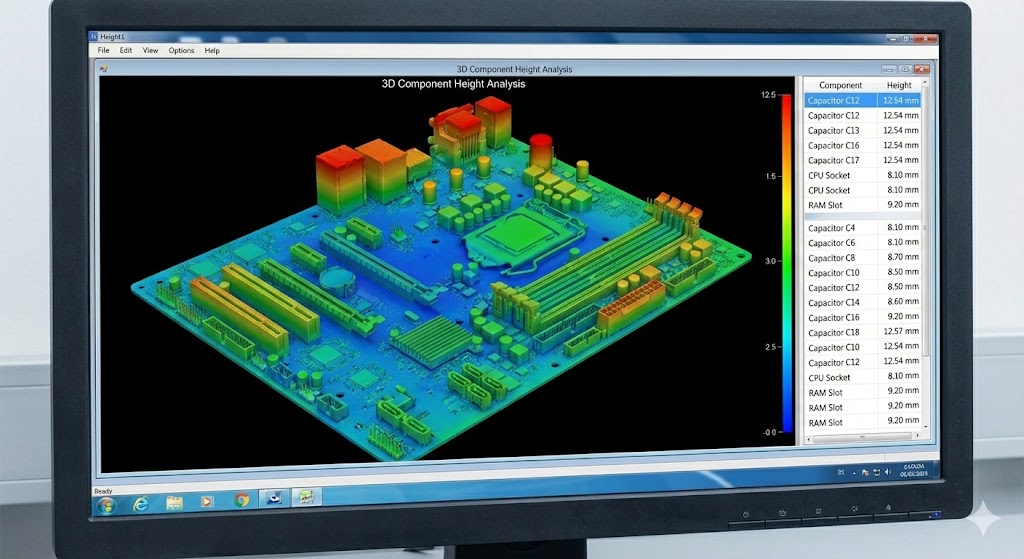
High-end, premium 3D line laser sensors command prices from $25,000 to well over $50,000 USD. These are engineered for the most challenging applications. Key cost drivers here include exceptional accuracy and repeatability for semiconductor or aerospace metrology, ultra-high-speed scanning for web inspection (e.g., moving paper or metal), specialized protective housings for extreme environments (washdown, explosive atmospheres), and advanced multi-sensor synchronization capabilities. The software suite accompanying these sensors is also a significant part of the value, offering powerful development tools and analytics.
Several core technical parameters directly correlate with price. Measurement range and field of view are primary factors; a sensor capable of scanning a wide, deep area costs more than one with a narrow window. Resolution, expressed as the number of profile points per line, is another major driver. A 2048-point profile sensor is significantly more expensive than a 640-point model. Scanning frequency, or how many profiles are captured per second, dramatically affects price, especially for high-speed production lines. The class of laser (usually Class 1 or 2 for safety) and the wavelength also influence cost. Furthermore, the choice of camera technology within the sensor—CMOS vs. specialized global shutter sensors—impacts both performance and price.
Beyond the hardware, the total cost of ownership must be considered. This includes calibration services, maintenance contracts, and the software licensing model (perpetual vs. subscription). The reputation and support network of the manufacturer also play a role in pricing; a sensor from a vendor with global application engineering support typically carries a premium compared to a lesser-known brand.
The market has seen a trend toward more compact and cost-effective sensors, but for mission-critical applications, the adage "you get what you pay for" largely holds true. When evaluating price, it is essential to conduct a thorough cost-benefit analysis based on the specific application's requirements for accuracy, speed, robustness, and long-term reliability. Requesting detailed quotations from multiple suppliers with a clear specification sheet is the most effective way to navigate the market and secure a sensor that delivers optimal value for your specific operational needs.