In today's highly automated industrial landscape, proximity sensor switches are indispensable components. They enable non-contact detection of objects, playing a critical role in enhancing efficiency, ensuring safety, and facilitating precise control in manufacturing, packaging, assembly, and robotics. A well-structured PowerPoint (PPT) presentation is an excellent tool for educating teams, presenting technical proposals, or training personnel on these vital devices. This guide outlines the key elements for creating an effective and informative presentation on proximity sensor switches.
The foundation of any technical PPT is a clear introduction. Begin by defining what a proximity sensor switch is: an electronic sensor that can detect the presence or absence of nearby objects without any physical contact. Explain the core principle of operation, which typically involves emitting an electromagnetic field or a beam of electromagnetic radiation and looking for changes in the field or return signal. Immediately highlight the primary advantages over mechanical limit switches, such as longer service life (no moving parts to wear out), higher operational speed, and reliable performance in harsh environments with dust, moisture, or oils.
The main body of the presentation should be dedicated to explaining the different types of proximity sensors, as this is often the most crucial information for selection and application. Organize this section by technology. Dedicate separate slides to Inductive, Capacitive, Ultrasonic, and Photoelectric (Optical) proximity sensors.
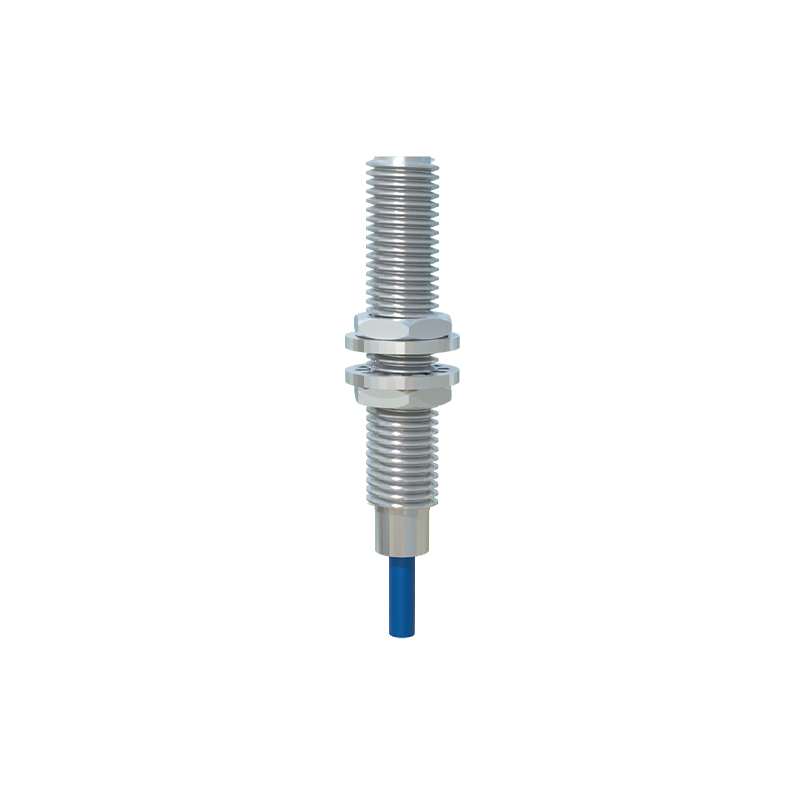
For Inductive Proximity Sensors, explain that they detect metallic objects only. Describe how an oscillator creates a high-frequency electromagnetic field at the active face. When a metal object enters this field, eddy currents are induced, causing a change in the oscillation amplitude. This change is detected by the sensor's circuitry, triggering the output switch. Include common applications like position sensing of metal parts, gear tooth detection, and end-of-travel control in machinery.
Next, cover Capacitive Proximity Sensors. These can detect both metallic and non-metallic materials (liquids, plastics, wood, granules). Describe their operation based on capacitance change. The sensor forms one plate of a capacitor, with the target object acting as the other plate. As the object approaches, the capacitance increases, and once it reaches a threshold, the output switches. Use cases often include level detection in tanks (for liquids or powders), material handling for non-metals, and presence detection of glass or plastic containers.
Then, introduce Ultrasonic Sensors. These work by emitting high-frequency sound waves and evaluating the reflected echo. The time lapse between sending the signal and receiving the echo is used to calculate the distance to an object. Emphasize their usefulness for distance measurement, level sensing in challenging conditions (foamy liquids, transparent materials), and detecting objects regardless of color or material transparency.
Finally, detail Photoelectric Sensors. While sometimes categorized separately, they are a major type of proximity switch. Explain the three main modes: Through-beam (separate emitter and receiver), Retro-reflective (uses a reflector), and Diffuse (reflective), where the emitter and receiver are in the same housing. Discuss their ability to detect small objects over long distances and their sensitivity to color and surface properties.
Following the type explanations, include a comparative slide or matrix. This visual aid should summarize key characteristics like sensing range, detectable materials, cost, environmental robustness, and typical applications for each sensor type. This helps the audience make informed decisions.
The presentation must also cover critical technical specifications. Dedicate slides to explain:
Sensing Range: The nominal distance at which an object can be reliably detected.
Output Types: Sinking (NPN) vs. Sourcing (PNP) transistor outputs, and analog outputs for distance-proportional signals.
Housing and Form Factor: Cylindrical (threaded barrel) and rectangular shapes, with considerations for embeddable or non-embeddable designs.
Environmental Ratings: The importance of Ingress Protection (IP) ratings (e.g., IP67) for dust and water resistance, and temperature ratings for operational range.
Incorporate a section on practical application guidelines. Show typical wiring diagrams for both NPN and PNP 3-wire DC sensors. Discuss installation considerations: ensuring the correct sensing distance, avoiding mutual interference between multiple sensors, and considering the influence of the target material's size, shape, and composition. A slide on troubleshooting common issues (like false triggers, no output, or reduced sensing range) adds immense practical value.
Conclude the PPT by summarizing the key takeaways: the right sensor choice depends on the target material, required range, environmental conditions, and electrical interface. Emphasize that proximity sensors are key enablers for automation. End with a forward-looking statement on trends like IO-Link connectivity for smart sensors that provide diagnostic data and parameterization directly to the control system.
Throughout the presentation, use high-quality diagrams, cutaway images of sensors, clear icons, and simple animations to illustrate principles like magnetic