In the realm of industrial automation, robotics, and smart systems, the ability to detect the presence, absence, or position of an object without physical contact is paramount. Among the various non-contact sensing technologies, electromagnetic proximity sensors stand out for their reliability, versatility, and robustness. These sensors operate on the fundamental principles of electromagnetism, offering solutions where other sensing methods might falter due to environmental factors like dust, moisture, or target material composition.
At its core, an electromagnetic proximity sensor generates an oscillating electromagnetic field from a coil. When a conductive target object enters this field, eddy currents are induced on the surface of the target. These eddy currents, in turn, create their own opposing electromagnetic field, which interacts with the sensor's original field. This interaction causes a change in the oscillation amplitude or frequency within the sensor's circuit. The sensor's electronics are designed to detect this precise change, triggering an output signal that indicates the object's presence within a predefined detection range. The effective sensing distance depends on factors such as the coil size, oscillation frequency, and the electrical conductivity and size of the target material. Typically, metals like copper and aluminum are highly detectable, while materials with lower conductivity present more of a challenge.
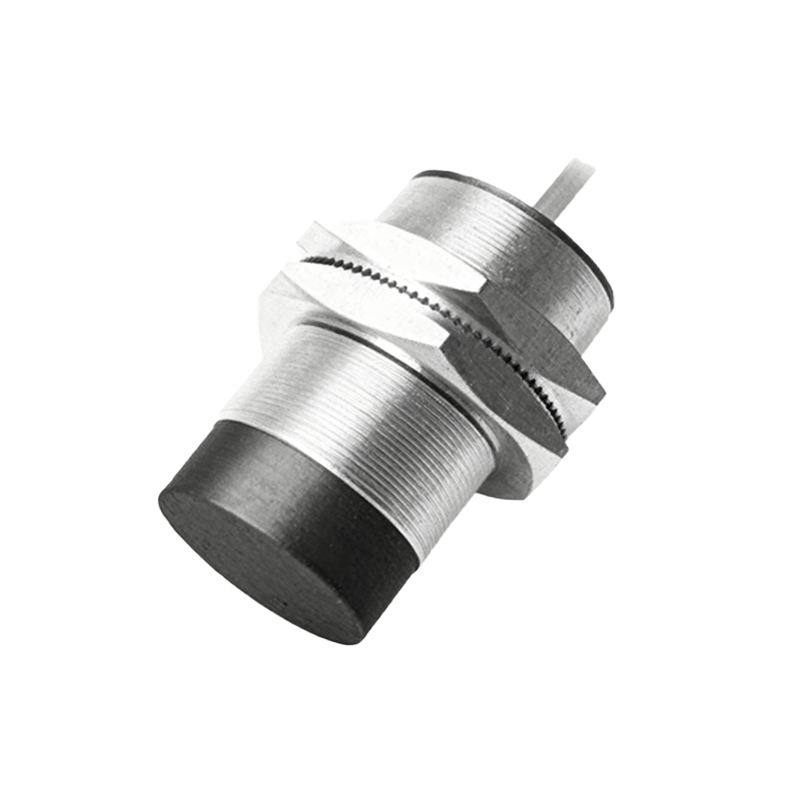
One of the most significant advantages of electromagnetic sensors is their resilience. Unlike optical sensors, they are largely unaffected by opaque contaminants such as dirt, oil, or paint splatters. This makes them ideal for harsh industrial environments like machining centers, foundries, or automotive assembly lines. Common applications include position sensing for cylinders and valves, end-of-travel detection for moving parts, conveyor belt monitoring, and non-contact limit switching. In robotics, they provide precise feedback for arm positioning and object handling. Beyond heavy industry, these sensors find use in consumer electronics for features like lid-closing detection in laptops and screen wake-up functions in devices.
The technology is not without its limitations. The sensing range is generally shorter compared to some ultrasonic or laser sensors. Performance can vary with different target metals, often requiring calibration or sensor selection specific to the application. Furthermore, they are primarily designed for detecting metallic objects and are ineffective for most non-conductive materials.
Recent advancements are pushing the boundaries of traditional electromagnetic proximity sensing. The integration of advanced signal processing algorithms and microprocessors has led to smarter sensors with enhanced capabilities. These "intelligent" sensors can differentiate between various metals, compensate for temperature drift, and provide analog output proportional to distance, not just a simple on/off switch. The miniaturization of components has also enabled the development of extremely small sensors for use in tight spaces within electronic assemblies or medical devices.
Looking ahead, the convergence of electromagnetic sensing with the Internet of Things (IoT) and Industry 4.0 frameworks represents a major trend. Modern sensors are increasingly equipped with digital communication interfaces like IO-Link. This allows for not only the transmission of basic switch status but also rich diagnostic data—such as operating temperature, signal strength, and device health—directly to central control systems. This facilitates predictive maintenance, where potential sensor failures or system anomalies can be identified before they cause downtime, thereby increasing overall equipment effectiveness.
Another promising area of development is in the creation of more sensitive and selective sensors capable of working with a broader range of materials, including certain non-metallic composites. Research into novel coil designs and multi-frequency excitation methods aims to improve accuracy and reduce the influence of external electromagnetic interference.
In conclusion, electromagnetic proximity sensors remain a cornerstone technology in automation. Their simple yet effective operating principle, combined with ongoing innovations in digitalization and miniaturization, ensures their continued relevance. From ensuring the smooth operation of a massive production robot to enabling a subtle feature in a smartphone, these sensors silently and reliably bridge the gap between the physical and digital worlds, providing the essential sense of "touch" where direct contact is neither possible nor desirable.