In the realm of industrial safety, environmental monitoring, and scientific research, the precise detection of gases is paramount. Among the various technologies developed for this critical task, gas laser sensors stand out for their exceptional sensitivity, selectivity, and ability to perform remote or in-situ measurements. Unlike conventional electrochemical or catalytic bead sensors, gas laser sensors operate on fundamental principles of light-matter interaction, offering a robust and often non-intrusive solution for gas analysis.
The core principle behind most gas laser sensors is absorption spectroscopy. Each gas molecule has a unique "fingerprint"—a set of specific wavelengths of light it can absorb, corresponding to the vibrational and rotational energy transitions of its molecules. A gas laser sensor exploits this by emitting a laser beam at a wavelength that matches one of these absorption lines of the target gas. As the laser light passes through a sample containing the gas, a portion of the light is absorbed. By precisely measuring the attenuation of the laser beam's intensity, the concentration of the gas can be determined with high accuracy using the Beer-Lambert law. Tunable Diode Laser Absorption Spectroscopy (TDLAS) is a prevalent implementation of this technique, where a semiconductor diode laser's wavelength is finely tuned to scan across a specific absorption feature, enhancing selectivity and minimizing interference from other gases.
The advantages of this approach are significant. Firstly, the selectivity is extremely high, as the laser can be tuned to a very narrow spectral line unique to the target molecule, even in complex gas mixtures. Secondly, the sensitivity can reach parts-per-billion (ppb) or even parts-per-trillion (ppt) levels for certain gases, enabling the detection of trace contaminants. Thirdly, the response is rapid, allowing for real-time monitoring of dynamic processes. Furthermore, the technology enables various measurement configurations. It can be used in extractive sampling, where gas is drawn into a measurement cell, or in open-path configurations, where the laser beam is sent over distances of hundreds of meters to kilometers to monitor average concentrations across a wide area, such as a factory perimeter or a landfill site.
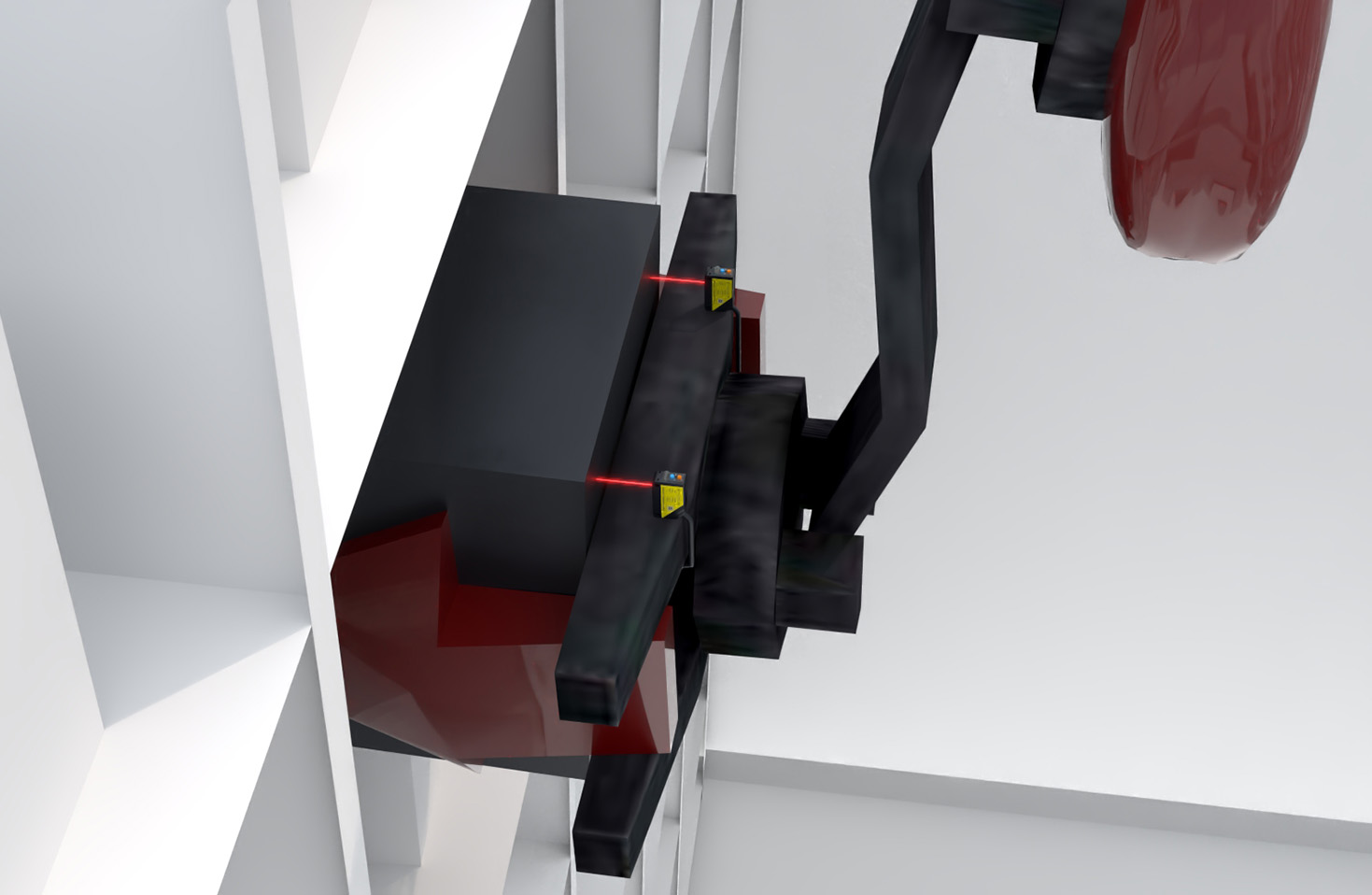
The applications of gas laser sensors are diverse and critical. In industrial settings, they are indispensable for detecting hazardous gas leaks, such as methane in natural gas facilities, hydrogen sulfide in refineries, or ammonia in chemical plants, ensuring worker safety and preventing catastrophic incidents. In environmental monitoring, they are deployed to measure greenhouse gases like methane and carbon dioxide, track atmospheric pollutants like ozone and nitrogen oxides, and monitor emissions from industrial stacks for regulatory compliance. The medical field utilizes similar spectroscopic principles in breath analyzers for diagnosing conditions by detecting biomarkers like nitric oxide. Research institutions use high-precision laser sensors for atmospheric studies and fundamental physics experiments.
Looking ahead, the future of gas laser sensors is geared towards miniaturization, integration, and enhanced intelligence. The development of novel laser sources, such as Quantum Cascade Lasers (QCLs) and Interband Cascade Lasers (ICLs), which operate in the mid-infrared region where most gases have strong absorption, is pushing the boundaries of sensitivity and enabling the detection of a wider range of compounds. Efforts are ongoing to create compact, low-power, and cost-effective sensor modules that can be integrated into Internet of Things (IoT) networks for distributed, wireless monitoring. The integration of advanced data processing algorithms and artificial intelligence will further improve the sensors' ability to identify multiple gases simultaneously, compensate for environmental variables, and predict potential leak events or system failures.
In conclusion, gas laser sensors represent a sophisticated and powerful technology for gas detection. By harnessing the precise interaction between laser light and gas molecules, they provide unmatched accuracy and reliability in situations where safety, environmental protection, and precise measurement are non-negotiable. As technological advancements continue to drive down costs and size while improving performance, their adoption is set to expand, making our industrial processes safer, our environment cleaner, and our scientific understanding deeper.