In the world of automation and smart technology, proximity sensors are the silent, unseen workhorses. These devices detect the presence or absence of an object within a specific range without any physical contact. The principle is elegantly simple: the sensor emits a field or a beam of electromagnetic radiation, often infrared light, and looks for changes in the field or the return signal. When an object enters this predefined zone, it interrupts or reflects the signal back to the receiver component of the sensor. This change is then converted into an electrical signal that triggers a pre-programmed action.
The core technology behind proximity sensors varies, leading to several types, each suited for different environments and materials. Inductive proximity sensors are one of the most common. They generate an electromagnetic field and are exclusively used for detecting metallic objects. When a metal target enters the oscillating electromagnetic field, it induces eddy currents on the metal's surface. This causes a load on the sensor's oscillator, leading to a change in the oscillation amplitude. The sensor's circuit detects this change and switches its output state. These sensors are incredibly robust, resistant to dirt, dust, and moisture, making them ideal for harsh industrial settings like assembly lines, machine tools, and robotic arms.
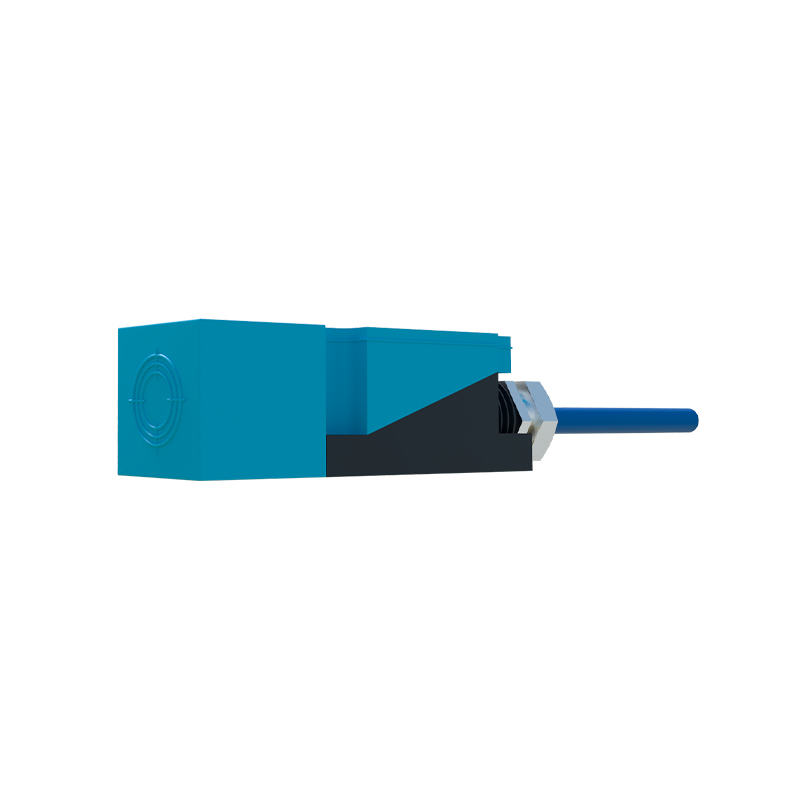
Another widely used type is the capacitive proximity sensor. This sensor can detect both metallic and non-metallic objects, including liquids, powders, and plastics. It operates by generating an electrostatic field. Any object that enters this field changes the capacitance of the sensor's circuit. The sensor monitors this capacitance, and once it reaches a specific threshold, the output switches. This makes capacitive sensors perfect for applications like liquid level detection in tanks, material handling, and touch-sensitive interfaces on consumer electronics.
For longer-range detection, ultrasonic proximity sensors are the tool of choice. They work on a principle similar to sonar. The sensor emits high-frequency sound waves (ultrasound) and then listens for the echo. By calculating the time interval between sending the signal and receiving the echo, the sensor can determine the distance to an object. These sensors are excellent for detecting objects of any material, shape, or color, and they perform well in environments with dust, smoke, or fog. You'll find them in automotive parking assist systems, container level measurement, and even in some robotic vacuum cleaners.
Photoelectric sensors, which use light beams, are also a form of proximity detection. A photoelectric sensor projects a light beam (visible, laser, or infrared) to a receiver. The presence of an object is detected either by the interruption of the beam (through-beam mode) or by the reflection of the beam back to the sensor (retro-reflective or diffuse reflective modes). They offer very long sensing ranges and high speed, suitable for packaging lines, object counting, and security systems.
The applications of proximity sensors are vast and integral to modern life. In consumer electronics, they are the reason your smartphone screen turns off when you hold it to your ear during a call, saving battery life. In the automotive industry, they are crucial for parking sensors, blind-spot monitoring, and automatic braking systems. Industrial automation relies on them for precise positioning, counting, and safety interlocks on machinery to prevent accidents. In the burgeoning field of the Internet of Things (IoT), proximity sensors provide critical data for smart homes, smart cities, and inventory management systems.
Choosing the right proximity sensor depends on several factors: the material of the target object, the required sensing distance, the environmental conditions (temperature, contaminants), the required response speed, and the output type needed (digital or analog). Understanding these parameters ensures reliable and efficient operation within any system.
As technology advances, proximity sensors continue to become smaller, more energy-efficient, and smarter. The integration of microprocessors allows for advanced features like programmability, self-diagnostics, and IO-Link communication for seamless integration into Industry 4.0 networks. Their fundamental role in enabling machines to perceive their immediate environment remains a cornerstone of automation, safety, and interactive technology, proving that sometimes the most impactful components are those we never see.