In the intricate world of modern smartphones, proximity sensors play a crucial yet often overlooked role in enhancing user experience, power efficiency, and device durability. These small components are responsible for detecting the presence of nearby objects without any physical contact. Their primary function is to sense when a phone is held close to the user's ear during a call, automatically turning off the display to prevent accidental screen touches and save battery life. However, the technology behind this simple action is diverse and sophisticated. This article explores the main types of proximity sensors commonly integrated into mobile devices today.
The most prevalent type is the Infrared (IR) Proximity Sensor. This sensor consists of an IR LED that emits infrared light and a photodiode that detects the reflection of this light from a nearby object. When you bring the phone close to your ear, the emitted IR light bounces back and is captured by the photodiode. The sensor's logic circuit then measures the intensity of the reflected light to determine the object's distance. A significant change in intensity signals the system to deactivate the touchscreen. IR sensors are favored for their reliability, low cost, and effectiveness in various lighting conditions. However, they can sometimes be fooled by certain materials that absorb or poorly reflect infrared light.
Another common technology is the Ultrasonic Proximity Sensor. This sensor operates by emitting high-frequency sound waves, inaudible to humans, and then listening for the echo. By calculating the time it takes for the sound wave to return, the sensor can accurately gauge the distance to an object. Ultrasonic sensors are excellent at detecting objects regardless of their color, transparency, or material, making them robust in diverse scenarios. Some flagship smartphones have utilized ultrasonic sensors not just for proximity detection but also for advanced features like gesture recognition. Their main drawback can be interference from other ultrasonic sources or certain environmental factors.
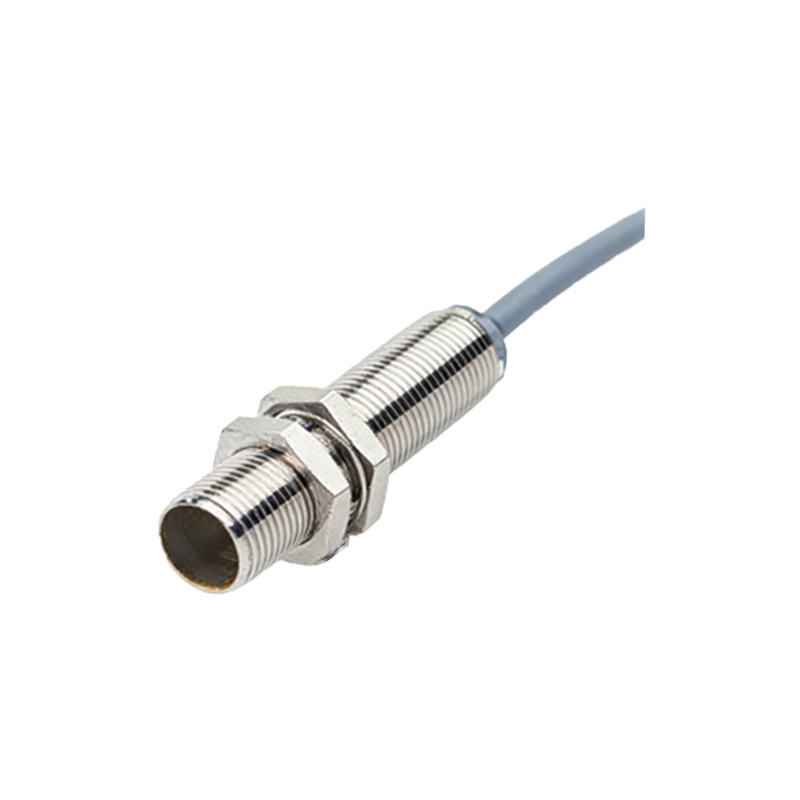
Capacitive Proximity Sensors represent a different approach. Instead of using light or sound, they detect changes in an electrical field. The sensor creates an electrostatic field. When an object, especially a conductive one like a human body part, enters this field, it causes a measurable change in capacitance. This change triggers the sensor. Capacitive sensors are highly sensitive and can work through non-conductive materials like glass, allowing for seamless integration under a phone's display. They are also less susceptible to environmental factors like dust or ambient light. Their sensitivity, however, can sometimes lead to false triggers.
A more advanced and increasingly integrated type is the Time-of-Flight (ToF) Sensor. While often associated with camera systems for depth sensing, ToF sensors are also employed for precise proximity detection. A ToF sensor works by emitting a laser light pulse and measuring the time it takes for the light to reflect back to the sensor. This provides extremely accurate distance measurements. In the context of proximity sensing, a ToF sensor can offer finer control, such as distinguishing between a phone being in a pocket versus held close to the ear, enabling more nuanced power management and user interface responses.
Finally, some modern devices employ a Fusion Sensor system. This isn't a single sensor type but a combination of multiple sensors, often including an accelerometer and an ambient light sensor, working in concert with a primary IR or capacitive proximity sensor. The system uses sensor fusion algorithms to cross-verify data. For example, the accelerometer can confirm the device is in a "handheld" orientation, while the ambient light sensor can confirm a dark environment (like against the ear), making the proximity detection more accurate and reducing false positives.
The choice of proximity sensor technology in a phone is a balance of factors: cost, power consumption, accuracy, reliability, and the desired feature set. From the ubiquitous IR sensor to the high-precision ToF and intelligent fusion systems, these components are fundamental to making our interactions with smartphones seamless and intuitive. As phone designs evolve, particularly with the push towards full-screen displays with minimal bezels, the integration of more advanced and discreet proximity sensing solutions will continue to be a key area of innovation.