In the realm of industrial automation, scientific research, and advanced manufacturing, precise temperature measurement is a critical parameter. Among the various technologies available, laser temperature sensors have emerged as a powerful non-contact solution, offering unique capabilities for challenging environments. Unlike traditional thermocouples or resistance temperature detectors (RTDs) that require physical contact, these sensors utilize the principles of optical pyrometry to determine an object's temperature from a distance.
The core technology behind most laser temperature sensors is infrared radiation thermometry. All objects with a temperature above absolute zero emit infrared radiation. The intensity and spectral distribution of this radiation are directly related to the object's temperature, as described by Planck's law. A laser temperature sensor typically employs a low-power laser diode to produce a visible aiming beam. This beam helps the operator precisely target the measurement spot on the object of interest. The sensor's optical system then collects the infrared radiation emitted from that specific spot. A detector, often a thermopile or photodiode, converts the infrared energy into an electrical signal. Sophisticated onboard electronics and algorithms process this signal, compensating for factors like the object's emissivity—a measure of how efficiently it emits infrared energy compared to a perfect blackbody—to calculate and display the temperature accurately.
The applications for laser temperature sensors are vast and diverse. In industrial settings, they are indispensable for monitoring temperatures of moving machinery, such as motor bearings, conveyor rollers, or gearboxes, where contact is impossible or would interfere with operation. They are used in metal processing to monitor molten metal, forging, and heat treatment processes. Within the electronics industry, these sensors help prevent overheating in circuit boards and microchips during development and testing. In the energy sector, they monitor components in power plants, electrical substations, and solar panels. Furthermore, they play a vital role in predictive maintenance programs, allowing technicians to identify abnormal heat patterns in equipment before catastrophic failure occurs, thereby saving costs and preventing downtime.
The advantages of using a laser-guided non-contact thermometer are significant. First and foremost is safety; users can measure the temperature of hazardous, extremely hot, or electrically live surfaces from a safe distance. Speed is another key benefit, with most sensors providing a reading in less than a second. This allows for scanning large surfaces or monitoring rapid temperature changes effectively. Since there is no physical contact, the sensor does not influence the temperature of the object being measured, a crucial factor for small or delicate components. It also eliminates the risk of contamination or mechanical wear associated with contact probes. Modern laser temperature sensors are highly portable, user-friendly, and often feature data logging, high-temperature alarms, and connectivity options for integration into larger control systems.
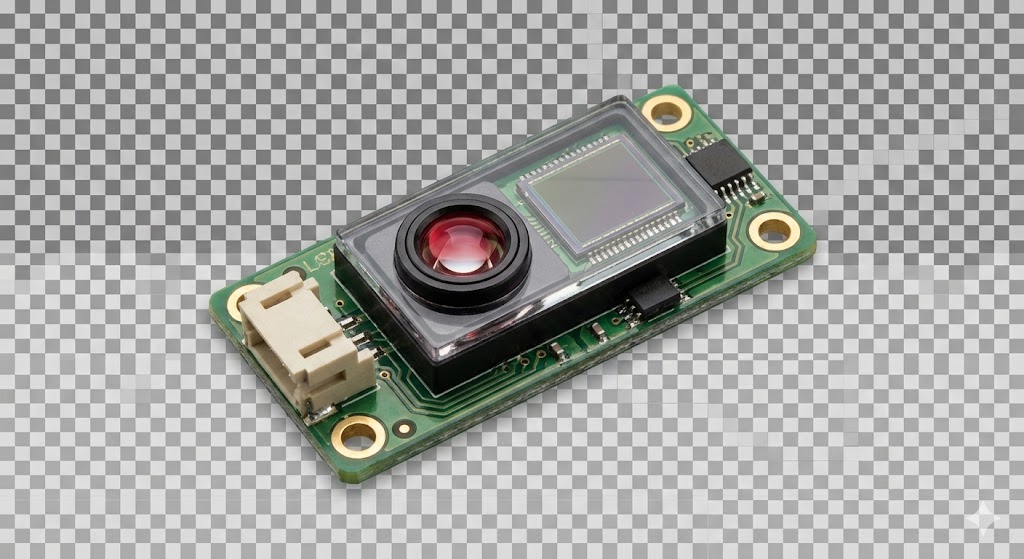
When selecting a laser temperature sensor, several parameters must be considered. The temperature range is primary, with models available from sub-zero measurements to several thousand degrees Celsius. Optical resolution, defined by the distance-to-spot ratio (e.g., 12:1), determines how small a spot can be measured from a given distance—a critical factor for small targets. Spectral response refers to the specific infrared wavelength band the sensor is optimized for, which should be chosen based on the application material. Emissivity adjustment, either fixed or variable, is essential for accuracy on non-metallic or oxidized surfaces. Other features like response time, accuracy, and the type of laser (single point, crosshair, or circle for area averaging) further guide the selection process.
In conclusion, laser temperature sensors represent a sophisticated fusion of optics and electronics, providing a versatile and reliable method for non-contact temperature measurement. Their ability to deliver accurate, instantaneous readings from a safe distance makes them an invaluable tool across countless industries. As technology advances, we can expect these sensors to become even more precise, intelligent, and integrated into the Internet of Things (IoT) for automated monitoring and control, solidifying their role as a cornerstone of modern thermal management and process optimization.