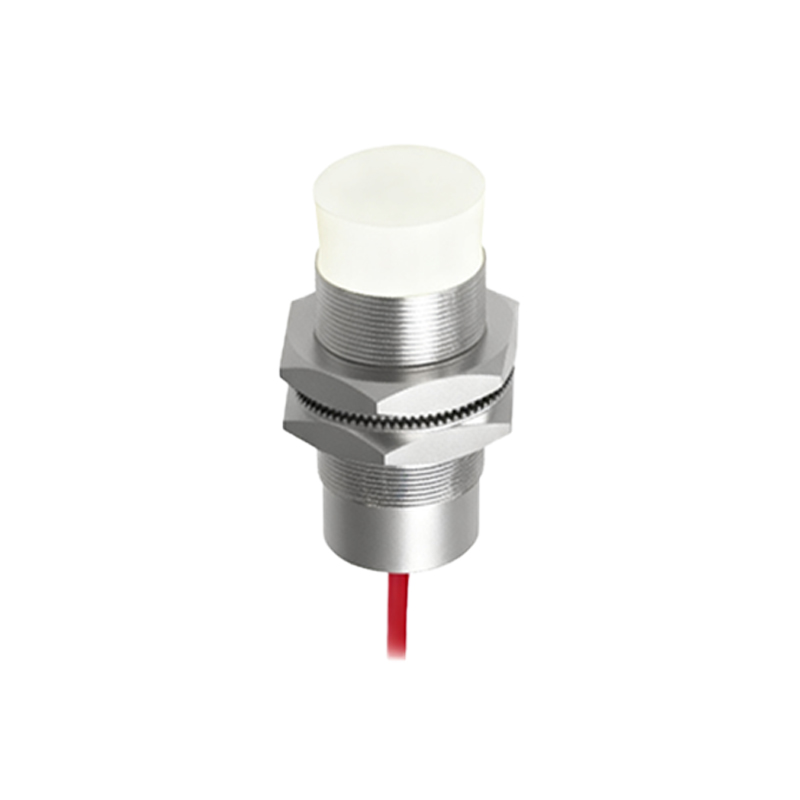
In the realm of industrial automation and smart electronics, the integrated proximity switch sensor stands as a fundamental component, enabling machines to perceive their environment without physical contact. This technology has evolved from simple detection mechanisms to sophisticated, intelligent systems that form the backbone of modern manufacturing, robotics, and consumer devices. Unlike traditional mechanical switches that require direct force or contact, integrated proximity sensors operate on various principles—inductive, capacitive, ultrasonic, and optical—to detect the presence, absence, or position of an object. Their "integrated" nature signifies the seamless combination of the sensing element, signal conditioning circuitry, and output interface into a single, compact, and robust package. This integration enhances reliability, simplifies installation, and reduces overall system complexity.
The operational core of an inductive proximity sensor, one of the most common types, is a coiled oscillator circuit that generates a high-frequency electromagnetic field. When a metallic object enters this field, eddy currents are induced on the object's surface, causing a change in the oscillation amplitude. The sensor's integrated circuitry detects this change and triggers a solid-state output switch. These sensors are predominantly used for detecting metals and are highly valued in harsh industrial environments for their durability and resistance to dust, oil, and moisture. Capacitive sensors, on the other hand, can detect both metallic and non-metallic materials—liquids, plastics, wood, and even granular substances. They function by measuring changes in capacitance between the sensor's active surface and the target object, which acts as the second plate of a capacitor. This makes them ideal for level detection, material handling, and applications involving non-conductive targets.
The integration of advanced microelectronics has propelled these sensors into a new era of performance. Modern integrated proximity switches often feature embedded microprocessors that allow for programmability, self-diagnostics, and temperature compensation. They can communicate via standard industrial protocols like IO-Link, providing not just a simple on/off signal but also detailed parametric data such as sensor health, operating distance, and environmental conditions. This data-driven capability is crucial for predictive maintenance and Industry 4.0 initiatives, where understanding machine state in real-time prevents unplanned downtime. Furthermore, the miniaturization of components has led to sensors with incredibly small form factors, enabling their use in space-constrained applications like mobile phones (for screen blanking during calls), tablets, and compact robotic assemblies.
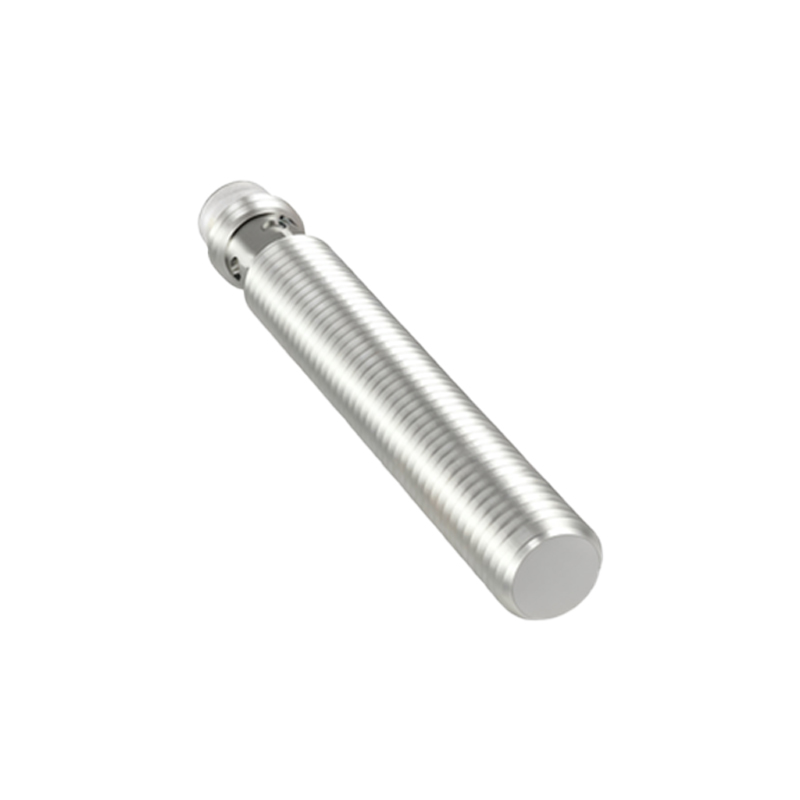
Selecting the appropriate integrated proximity sensor requires careful consideration of several application-specific parameters. The sensing range, typically a few millimeters to several tens of millimeters, must be matched to the required detection distance. The target material dictates the choice between inductive, capacitive, or other technologies. Environmental factors are paramount; sensors destined for washdown areas in food processing must have high IP (Ingress Protection) ratings, such as IP67 or IP69K, while those used in welding environments need robust shielding against electromagnetic interference. The output configuration—whether NPN (sinking) or PNP (sourcing) transistor, or a digital/analog signal—must be compatible with the controller's input module. Installation is notably straightforward due to the integrated design, often requiring just a single mounting hole and a connection to a power supply and load. Many models feature built-in LED indicators for operational status, aiding in quick setup and troubleshooting.
The applications of integrated proximity switches are vast and cross-disciplinary. In automotive assembly lines, they precisely count parts, verify door closure, and position robotic welding arms. In packaging machinery, they ensure correct bottle cap placement and label positioning. Within the realm of consumer electronics, they enable touchless faucets, automatic soap dispensers, and the aforementioned smartphone proximity features. In material handling and logistics, they monitor conveyor belt operations, detect pallet positions, and manage automated storage and retrieval systems. Their role in safety is critical, often serving as non-contact interlock devices to prevent machine access while in operation. As systems become more interconnected, the humble proximity sensor has transformed from a simple detector into a smart node within a larger network of industrial IoT, providing essential data that drives efficiency, safety, and innovation. The ongoing trends point toward even greater intelligence, with sensors incorporating machine learning algorithms for adaptive sensing, and further miniaturization for integration into next-generation micro-devices and wearables.