Flaw detection is a critical process in modern manufacturing and maintenance, ensuring the structural integrity and safety of components across industries. Among the various non-destructive testing (NDT) methods, laser sensor-based flaw detection has emerged as a powerful, precise, and increasingly accessible technology. This technique utilizes laser beams to inspect materials for surface and near-surface defects without causing any damage to the part itself.
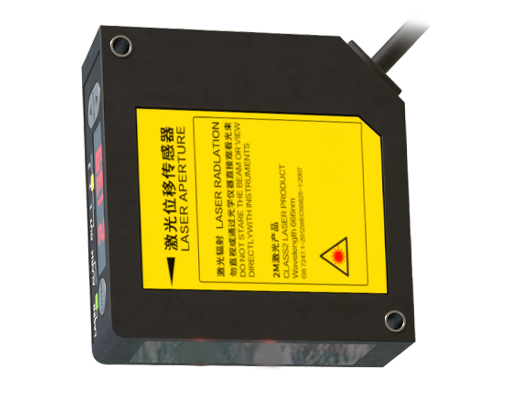
The fundamental principle behind laser sensor flaw detection involves the interaction of laser light with the material surface. A laser emitter projects a focused beam of coherent light onto the target area. The reflected or scattered light is then captured by a sensitive photodetector or camera system. Any irregularity on the surface—such as a crack, pit, corrosion spot, or weld defect—alters the way the light is reflected. These alterations are detected as changes in light intensity, phase, or pattern. Advanced systems often employ techniques like laser triangulation, where the position of a reflected laser spot is measured to create a highly accurate 3D profile of the surface, revealing minute deviations. Another common method is laser shearography, which detects strain in materials by measuring changes in the laser speckle pattern when the object is under slight stress, making subsurface flaws visible.
The applications of this technology are vast and growing. In the aerospace sector, it is indispensable for inspecting turbine blades, aircraft skins, and composite structures for micro-cracks and delamination that could lead to catastrophic failure. Automotive manufacturers rely on laser sensors to ensure the quality of critical components like engine blocks, transmission parts, and safety-critical welds on chassis frames. The energy industry uses it to monitor pipelines, wind turbine blades, and pressure vessels for signs of fatigue and corrosion. Even in electronics, laser sensors help detect micro-fractures in semiconductors and soldering defects on circuit boards. The non-contact nature of the inspection is a key advantage, allowing for the examination of hot, moving, or delicate surfaces that would be impossible to touch with conventional probes.
Recent advancements are pushing the boundaries of what laser flaw detection can achieve. The integration of artificial intelligence and machine learning algorithms has revolutionized data analysis. These systems can now learn from vast datasets of flaw signatures, dramatically improving defect recognition rates, reducing false positives, and even predicting the progression of certain flaw types. The development of faster, more compact, and more affordable laser diodes and sensors has also enabled the creation of portable handheld scanners and the integration of inspection systems directly onto robotic arms for fully automated production lines. Furthermore, the combination of laser scanning with other modalities, such as thermography or ultrasound, in multi-sensor systems provides a more comprehensive inspection capability, capturing both surface and deep internal flaws in a single pass.
Despite its strengths, implementing laser flaw detection requires careful consideration. The surface finish of the material can affect results; highly reflective or transparent surfaces may pose challenges. Environmental factors like ambient light, vibration, and dust must be controlled or compensated for in the system design. Initial setup and calibration demand expertise, and the cost of high-end systems can be significant, though this is decreasing. However, the return on investment is often clear through prevented downtime, enhanced product quality, and avoided safety incidents.
Looking ahead, the trajectory points toward greater automation, intelligence, and miniaturization. Research into new laser wavelengths and novel optical configurations promises to detect even smaller and more deeply buried defects. As Industry 4.0 and the Industrial Internet of Things (IIoT) mature, laser flaw detectors are becoming intelligent nodes in connected factories, streaming real-time quality data to central dashboards for instantaneous process control and predictive maintenance. This evolution solidifies laser sensor flaw detection not merely as a testing tool, but as a fundamental pillar of modern, data-driven quality assurance and asset management strategies, safeguarding infrastructure and products upon which daily life depends.