Laser sensors have become indispensable tools across numerous industries, offering unparalleled precision, reliability, and versatility. Among the vast array of options, 23 distinct types of laser sensors stand out for their unique capabilities and transformative applications. This exploration delves into these 23 laser sensors, highlighting their core principles and the real-world problems they solve.
The foundation of laser sensing lies in emitting a focused beam of light and measuring its interaction with a target. Key measurements include time-of-flight for distance, triangulation for displacement, and analysis of reflected light characteristics. This basic principle is engineered into specialized forms to meet specific demands.
Distance and displacement measurement is a primary application. Laser distance sensors, such as time-of-flight (ToF) sensors, provide long-range measurements for logistics and autonomous vehicles. In contrast, laser displacement sensors, often using triangulation, achieve micron-level accuracy for inspecting semiconductor wafers or monitoring machinery vibration. Confocal chromatic sensors offer exceptional resolution for measuring transparent or multi-layered surfaces, vital in display manufacturing.
For environmental and safety monitoring, laser-based gas detectors identify trace concentrations of hazardous gases like methane or carbon monoxide by analyzing specific light absorption wavelengths. Particulate matter sensors use laser scattering to monitor air quality. Furthermore, laser barrier sensors create invisible protective fields around dangerous machinery, instantly halting operation if the beam is interrupted.

In the realm of object detection and profiling, laser photoelectric sensors reliably detect the presence or absence of objects on assembly lines, unaffected by color or material. More advanced laser profile scanners, or line lasers, capture the complete 3D contour of an object for quality control in automotive or aerospace manufacturing. Laser edge detection sensors precisely locate object edges for cutting or alignment tasks.
Speed and velocity are precisely captured by laser Doppler vibrometers, which measure minute vibrations in structures like wind turbines or microchips without physical contact. Laser speed sensors monitor the surface velocity of rolls in paper and steel production.
Surface inspection is revolutionized by sensors like laser scatterometers, which detect minute defects on polished surfaces, and laser-induced fluorescence sensors used in biomedical analysis. Laser triangulation scanners are also core to reverse engineering and archaeological preservation, digitally capturing complex geometries.
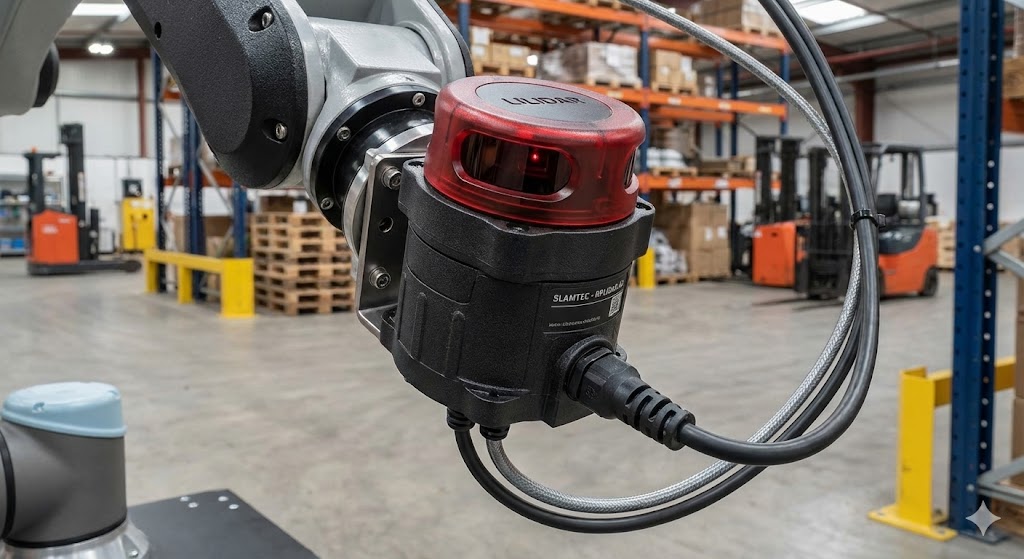
Emerging and specialized sensors continue to push boundaries. Quantum cascade lasers enable sophisticated spectroscopic analysis in research. LiDAR (Light Detection and Ranging) sensors, using pulsed lasers, are the eyes of self-driving cars and topographic mapping systems. Laser interferometers provide nanometer-scale measurements for calibrating other instruments and in advanced physics experiments. Finally, laser threshold sensors provide simple, binary outputs for level control in silos or for part counting.
The integration of these 23 laser sensor types is driving Industry 4.0. They provide the critical data for predictive maintenance, real-time process control, and automated quality assurance. Their non-contact nature ensures no wear on the sensor or the target, and their speed allows for inspection at full production rates.
From ensuring the safety of workspaces to enabling the autonomy of vehicles and guaranteeing the quality of mass-produced goods, these 23 laser sensors are silent yet powerful engines of modern innovation. Their continued evolution promises even greater precision, miniaturization, and intelligence, further embedding them as fundamental components in the technological landscape of the future. Their selection depends on specific factors like required range, accuracy, target material, and environmental conditions, but their collective impact is universally transformative.