In the rapidly evolving landscape of industrial automation and robotics, the quest for unparalleled precision, reliability, and efficiency is relentless. At the forefront of this technological advancement are Navi laser sensors, a class of non-contact measurement devices that are fundamentally transforming how machines perceive and interact with their environment. Unlike conventional sensors, Navi laser sensors utilize focused laser beams to deliver exceptional accuracy in distance measurement, object detection, and surface profiling, making them indispensable in a myriad of modern applications.
The core principle behind Navi laser sensor technology is based on laser triangulation or time-of-flight measurement. In triangulation, a laser diode projects a visible or infrared spot onto a target surface. The reflected light is captured by a high-resolution CMOS or CCD receiver at a specific angle. By calculating the displacement of the light spot on the receiver, the sensor's onboard processor can determine the exact distance to the object with micron-level precision. This method is exceptionally effective for close-range, high-accuracy tasks. For longer ranges, time-of-flight sensors measure the phase shift or the direct travel time of a laser pulse to calculate distance, offering robust performance over several meters.
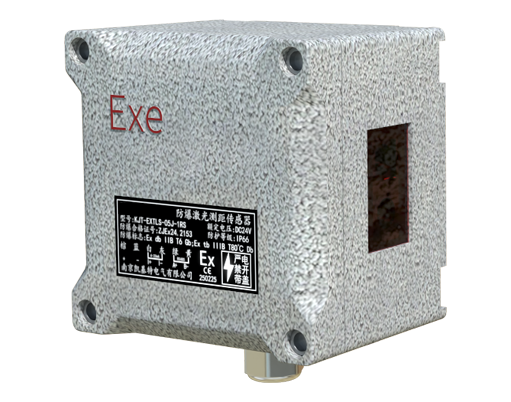
The advantages of integrating Navi laser sensors into automated systems are profound. First and foremost is their exceptional accuracy and resolution. They can detect minute changes in position, thickness, or height that are imperceptible to other sensor types. This capability is critical in quality control processes within electronics manufacturing, where the precise placement of microchips or the measurement of solder paste thickness can determine product success or failure. Secondly, their non-contact nature eliminates the risk of damaging delicate products or wearing out the sensor itself through physical interaction, ensuring long-term operational stability and reducing maintenance costs.
Furthermore, Navi laser sensors exhibit remarkable speed. They can perform thousands of measurements per second, enabling real-time feedback and control in high-speed production lines, such as in automotive assembly or packaging machinery. This high-speed operation, combined with insensitivity to ambient light and color variations of the target object, guarantees consistent performance in challenging industrial environments. Whether it's detecting transparent glass bottles on a filling line, measuring the profile of hot metal sheets in a foundry, or guiding robotic arms for precise pick-and-place operations, these sensors deliver reliable data where others might fail.
The application spectrum for Navi laser sensors is vast and continuously expanding. In logistics and warehousing, they are pivotal for automated guided vehicles (AGVs) and robotic palletizers, providing precise navigation and object dimensioning. In the semiconductor industry, they ensure the exact alignment of wafers during lithography. Even in emerging fields like autonomous mobile robots (AMRs) and advanced driver-assistance systems (ADAS), laser sensors contribute to environmental mapping and obstacle avoidance. Their versatility also extends to profile scanning, where a line laser, instead of a single point, is used to capture the complete 3D contour of an object for inspection or reverse engineering.
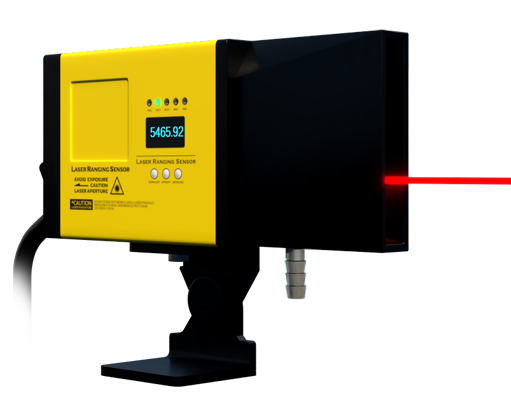
Choosing the right Navi laser sensor requires careful consideration of several parameters: the required measuring range, resolution, spot size, response time, and the environmental conditions (like temperature, dust, or vibrations). Manufacturers offer a diverse portfolio, from compact, cost-effective models for basic presence detection to sophisticated, multi-functional units with integrated Ethernet/IP or PROFINET interfaces for seamless integration into Industry 4.0 networks. The trend is moving towards smarter sensors with embedded intelligence, capable of pre-processing data and making simple decisions at the edge, thereby reducing the load on central controllers.
In conclusion, Navi laser sensors represent a cornerstone technology in the fourth industrial revolution. By providing eyes for machines with unmatched precision and speed, they enable higher levels of automation, improve product quality, and optimize manufacturing processes. As technology progresses, we can anticipate even more compact, powerful, and intelligent laser sensing solutions that will further blur the line between the digital and physical worlds, driving innovation across every sector of industry.