In the seamless interaction between humans and machines, a silent, unseen technology plays a pivotal role: the proximity sensor. These unassuming electronic components detect the presence or absence of nearby objects without any physical contact, triggering a cascade of actions that define modern convenience, safety, and efficiency. From the smartphone that dims its screen when held to your ear to the automatic doors that glide open upon approach, proximity sensors are the unsung heroes of our automated world.
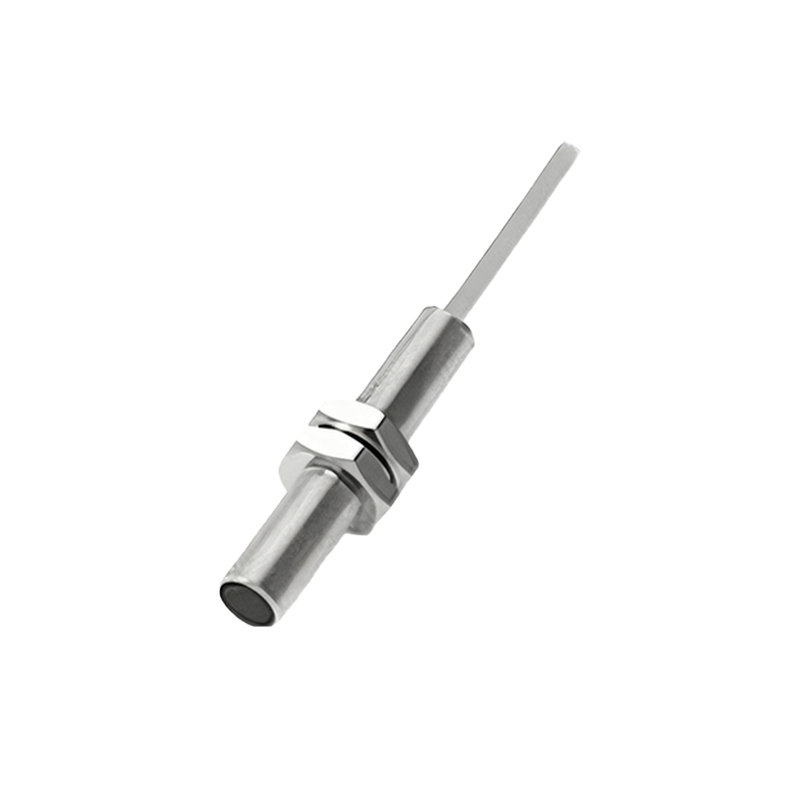
At their core, proximity sensors operate on various physical principles, each suited to different applications and environments. The most common types include inductive, capacitive, ultrasonic, and optical sensors. Inductive sensors are the workhorses of industrial automation. They generate an electromagnetic field and detect the eddy current losses caused when a metallic object enters this field. This makes them ideal for harsh factory environments, reliably counting metal parts on a conveyor belt or ensuring a robotic arm is in the correct position, all while being immune to dust, oil, and moisture.
Capacitive sensors, on the other hand, can detect both metallic and non-metallic materials—liquids, plastics, wood, and even human skin. They function by measuring changes in capacitance. When an object enters the sensor's electrostatic field, it alters the capacitance, signaling detection. This principle is ubiquitous in consumer electronics. The touchscreens we use daily rely on a matrix of capacitive sensors. Furthermore, capacitive sensors in appliances like touch-controlled faucets or soap dispensers promote hygiene by enabling touchless operation.
For longer-range detection or in environments with challenging conditions like smoke or dust, ultrasonic sensors are often employed. They emit high-frequency sound waves and calculate the time it takes for the echo to return, precisely measuring distance. You'll find them in automotive parking assist systems, providing those audible beeps that warn of an impending curb, or in manufacturing for precise level detection in tanks.
Optical proximity sensors, which include infrared (IR) LEDs and photodetectors, are another major category. They work by emitting a beam of light (often infrared to be invisible to the human eye) and detecting its reflection. The smartphone example is a classic application: an IR LED shines light, and a photodetector measures the reflection from your face, telling the phone to disable the touchscreen during a call to prevent accidental cheek-dialing. They are also fundamental in robotics for obstacle avoidance and in retail for people-counting systems.
The applications of proximity sensing technology are vast and continually expanding. In the automotive sector, they are critical for advanced driver-assistance systems (ADAS), enabling features like blind-spot monitoring, automatic emergency braking, and hands-free trunk opening. In smart homes, they enable energy-saving lighting that turns on only when someone is in the room and security systems that detect unauthorized movement. In healthcare, they are used in equipment for touchless interfaces, vital in sterile environments, and in devices that monitor patient presence or movement.
Choosing the right proximity sensor depends on a careful analysis of the target object (material, size), the required sensing distance, environmental factors (temperature, contaminants), and the desired output signal. Engineers must balance factors like cost, precision, response time, and durability.
As we move towards an increasingly interconnected and automated future—the realms of the Internet of Things (IoT), Industry 4.0, and autonomous systems—the role of proximity sensors will only grow more profound. They provide the essential "sense of touch" for machines, allowing them to perceive and react to their surroundings. Their evolution continues towards miniaturization, increased intelligence with integrated processing, lower power consumption for battery-operated devices, and enhanced robustness for extreme conditions.
In conclusion, proximity sensors are a foundational technology that bridges the physical and digital worlds. Their ability to provide reliable, contactless detection makes them indispensable across countless industries. By understanding their operating principles and applications, we gain a deeper appreciation for the invisible intelligence that orchestrates so much of the technology we interact with effortlessly every day.