In the realm of industrial automation and machinery, the ability to detect the presence or absence of an object without physical contact is paramount. Among the various technologies enabling this capability, cylindrical proximity sensors stand out as one of the most common and versatile solutions. These robust devices are engineered to perform reliably in demanding environments, offering a blend of durability, precision, and ease of installation that makes them indispensable in modern manufacturing and control systems.
A cylindrical proximity sensor is a non-contact sensing device housed in a tubular, metallic body. Its primary function is to detect the presence of a target object within a specified sensing range. The operating principle depends on the specific type of sensor, with inductive and capacitive models being the most prevalent. Inductive cylindrical proximity sensors generate an electromagnetic field. When a metallic object enters this field, it causes a change in the oscillation amplitude, which the sensor's circuitry detects, triggering a solid-state output switch. These sensors are exclusively for detecting metals. Capacitive variants, on the other hand, can detect a wider range of materials, including liquids, plastics, and wood, by sensing changes in capacitance caused by the dielectric properties of the target.
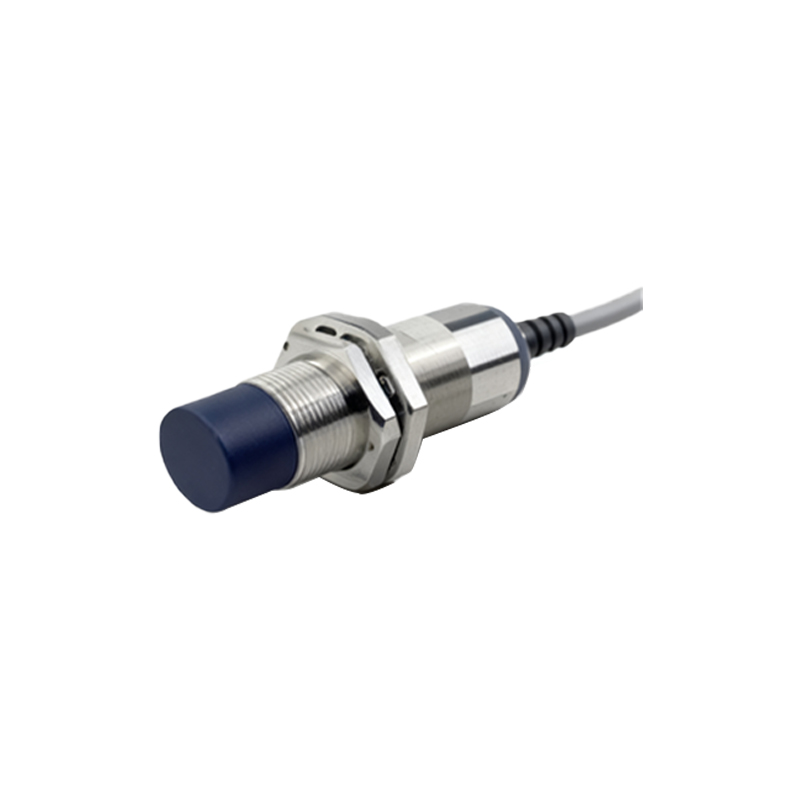
The cylindrical form factor is a key to their widespread adoption. This shape allows for easy mounting via threaded barrels, typically conforming to standard sizes like M8, M12, M18, or M30. This standardized threading enables quick installation into drilled and tapped holes, providing a secure and stable fit. The housing is usually made of nickel-plated brass or stainless steel, offering excellent resistance to vibration, shock, and harsh industrial conditions such as coolants, oils, and metal chips. Many models also feature LED indicators that provide visual confirmation of the sensor's operational status and output switching.
The applications for cylindrical proximity sensors are vast and varied. In automated assembly lines, they are used for part detection, verifying that a component is in the correct position before a robotic arm performs a task. They serve as end-of-travel limit switches in pneumatic or hydraulic cylinders, providing precise positional feedback. In material handling, they count objects on conveyors or detect the level of materials in bins. Machine tools rely on them for tool breakage detection and spindle positioning. Their sealed designs make them suitable for washdown environments in food and beverage processing. The choice between inductive and capacitive types, shielded or unshielded designs, and different sensing ranges allows engineers to select the perfect sensor for each specific challenge.
When selecting a cylindrical proximity sensor, several critical parameters must be considered. The sensing distance, or nominal range, is specified by the manufacturer and should be derated for different target materials and sizes. The mounting style is crucial; shielded (flush-mountable) sensors can be installed flush with metal without affecting their sensing field, while unshielded (non-flush) sensors offer a longer sensing range but require clearance from surrounding metal. Output configuration—whether NPN (sinking) or PNP (sourcing)—must match the control system's input card requirements. Environmental factors like temperature extremes, voltage supply fluctuations, and potential electrical noise interference also guide the selection process.
Installation and wiring practices significantly impact sensor performance and longevity. Ensuring a clean target surface and maintaining the proper gap between the sensor face and the target is essential for reliable operation. Cables should be routed away from high-power lines to prevent electromagnetic interference. For sensors in high-vibration applications, using a locking nut or a vibration-resistant model is advisable. Regular maintenance, though minimal, involves keeping the sensing face free of debris and periodically checking for physical damage or corrosion.
In conclusion, cylindrical proximity sensors are fundamental components that bridge the physical and control worlds in automated systems. Their simple yet effective design, combined with rugged construction and standardized features, provides a reliable and cost-effective solution for countless detection tasks. From controlling complex robotic sequences to performing simple presence checks, these sensors deliver the critical data needed for efficient, safe, and uninterrupted operation. As technology advances, newer models continue to offer enhanced features like longer sensing ranges, improved noise immunity, and increased connectivity options, ensuring their continued relevance in the evolving landscape of industrial automation.