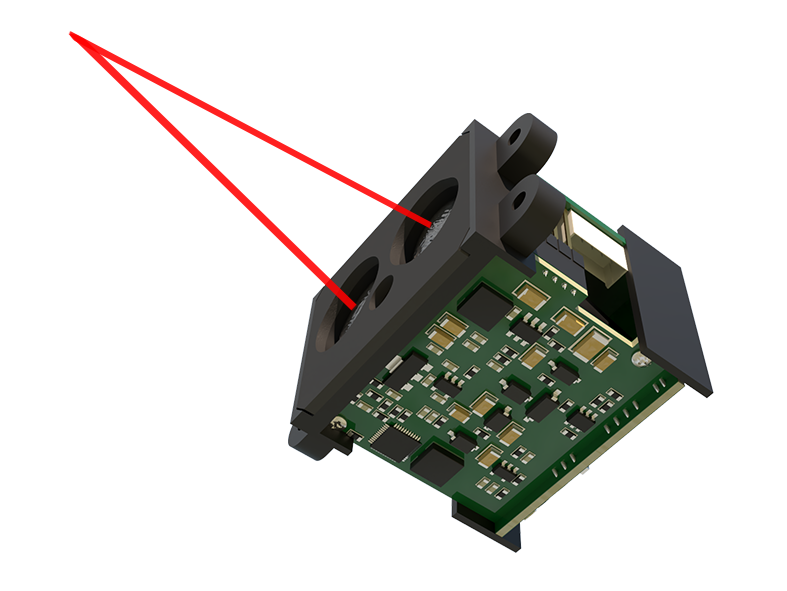
In the rapidly evolving landscape of sensing technologies, two systems stand out for their critical roles across diverse industries: Lidar and optical sensors. While both harness light to gather information about the environment, their underlying principles, capabilities, and applications differ significantly. Understanding these differences is key to selecting the right tool for tasks ranging from autonomous navigation to industrial automation and environmental monitoring.
Lidar, which stands for Light Detection and Ranging, is an active remote sensing method. It operates by emitting rapid pulses of laser light—often invisible infrared beams—towards a target and precisely measuring the time it takes for each pulse to reflect back to the sensor. This "time-of-flight" data, combined with the known speed of light, allows the system to calculate exact distances. By scanning these laser pulses across a field of view, Lidar systems can generate highly accurate, three-dimensional point cloud maps of their surroundings. Modern systems can emit millions of pulses per second, creating incredibly dense and precise spatial models. This capability makes Lidar indispensable for applications requiring detailed environmental understanding, such as the perception systems of self-driving cars, where it detects and classifies objects like vehicles, pedestrians, and road boundaries. Beyond automotive uses, Lidar is revolutionizing topographic mapping, forestry management, archaeology, and even the construction of digital twins for cities and infrastructure projects.
Optical sensors, in contrast, represent a broader category of passive or sometimes active devices that detect and measure light within the visible or near-visible spectrum to gather information. They do not typically emit their own light for ranging purposes. Instead, they capture light reflected from objects or ambient light to form two-dimensional images or measure specific light properties like intensity, color (wavelength), or polarization. Common types include photodiodes, charge-coupled devices (CCDs), and complementary metal-oxide-semiconductor (CMOS) sensors found in digital cameras. Their primary function is imaging and qualitative analysis. Optical sensors excel at tasks like visual inspection in manufacturing—checking for product defects, reading barcodes, or verifying assembly. They are the "eyes" of machine vision systems in robotics, enable facial recognition in security, and are fundamental to consumer photography and videography. Their data is rich in color, texture, and pattern information but lacks the inherent, precise depth data provided by Lidar.
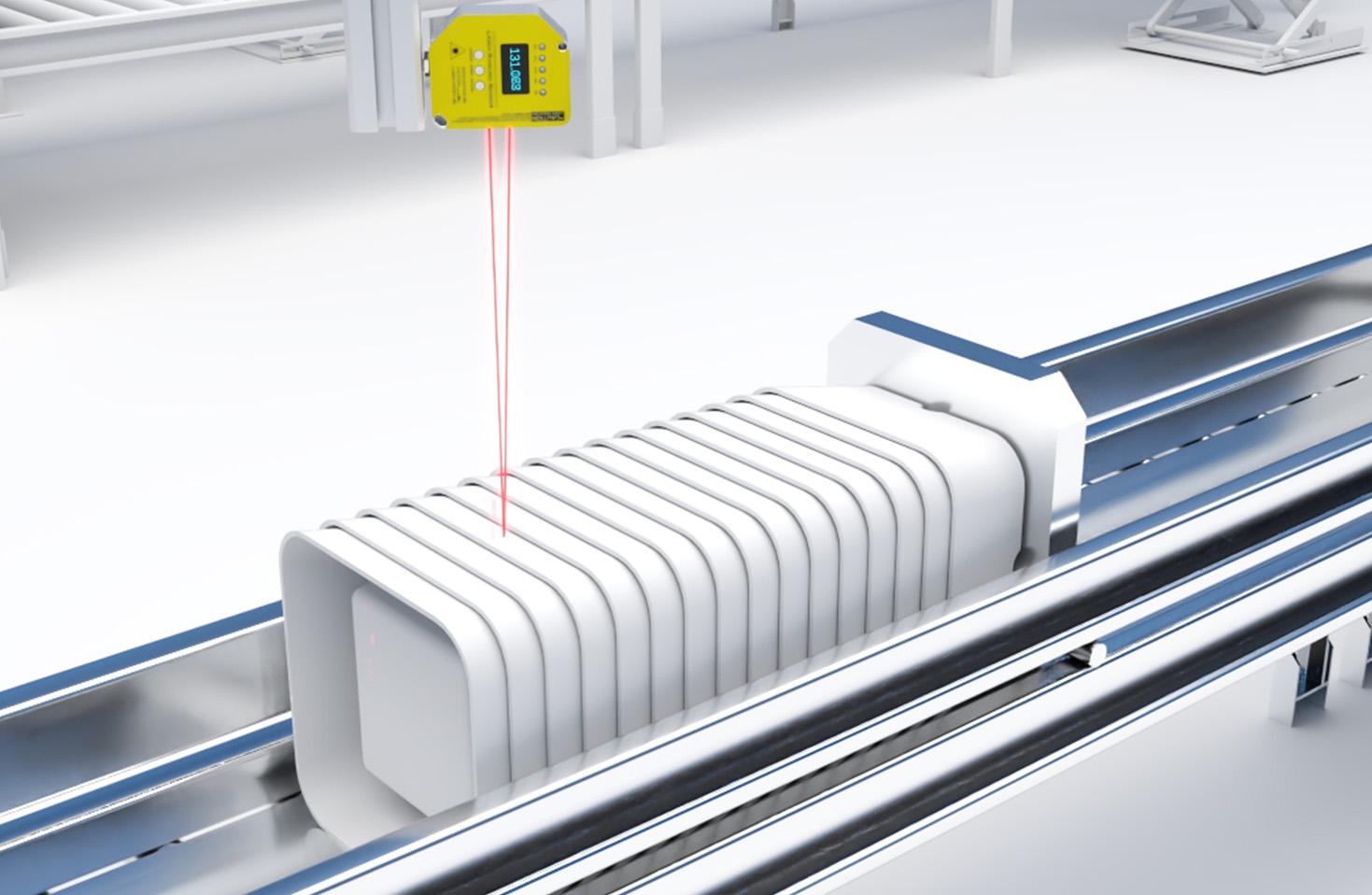
The core distinction lies in dimensionality and method. Lidar is fundamentally a ranging technology designed to measure distance and create 3D spatial models with high geometric accuracy, often with less concern for the visual appearance of objects. Optical sensors are primarily imaging technologies focused on capturing 2D visual data, recording how a scene looks in terms of color and luminance. Lidar actively illuminates its target, allowing it to operate effectively in low-light or dark conditions. Most conventional optical sensors are passive and rely on ambient light, though some active variants like structured light sensors used in some depth-sensing cameras blur this line.
However, the lines between these technologies are increasingly blurring through fusion and hybrid systems. Many advanced autonomous systems, for instance, combine Lidar, radar, and optical cameras in a sensor suite. The Lidar provides precise depth and object轮廓, while the optical cameras deliver rich semantic context, color, and texture details. This fusion creates a more robust and comprehensive environmental model than any single sensor could achieve alone. Furthermore, developments in solid-state Lidar and new sensor modalities like event-based vision sensors are pushing the boundaries of what is possible, offering higher speeds, lower costs, and different data formats.
Choosing between Lidar and optical sensors depends entirely on the application's requirements. If the primary need is for high-precision distance measurement, 3D mapping, or object detection in varying lighting conditions, Lidar is often the superior choice. If the task involves visual identification, color analysis, pattern recognition, or high-resolution 2D imaging at a potentially lower cost, then optical sensors are typically more suitable. In many cutting-edge applications, the most powerful solution is not a choice between them but a strategic integration of both, leveraging the geometric precision of Lidar with the rich visual intelligence of optical sensing to build smarter, more perceptive machines and systems for our interconnected world.