Proximity sensors are a fundamental component in modern automation and control systems. They detect the presence or absence of an object within a specific range without any physical contact. This non-contact operation is their primary advantage, leading to high reliability, long operational life, and minimal maintenance. The analysis of these sensors involves understanding their various types, underlying technologies, key specifications, and ideal application scenarios.
The most common types of proximity sensors are inductive, capacitive, photoelectric, and ultrasonic. Each type operates on a distinct physical principle, making them suitable for different materials and environments.
Inductive proximity sensors are widely used in industrial settings. They generate an electromagnetic field and detect changes caused by metallic objects entering this field. The core component is a coil driven by an oscillator. When a conductive metal object approaches the sensor's active surface, it induces eddy currents within the object. These currents absorb energy from the oscillator, causing its amplitude to decrease. This change is detected by a threshold circuit, which triggers the sensor's output switch. Inductive sensors are robust, resistant to environmental factors like dust and oil, and are ideal for detecting metals. However, they are generally ineffective for non-metallic materials.
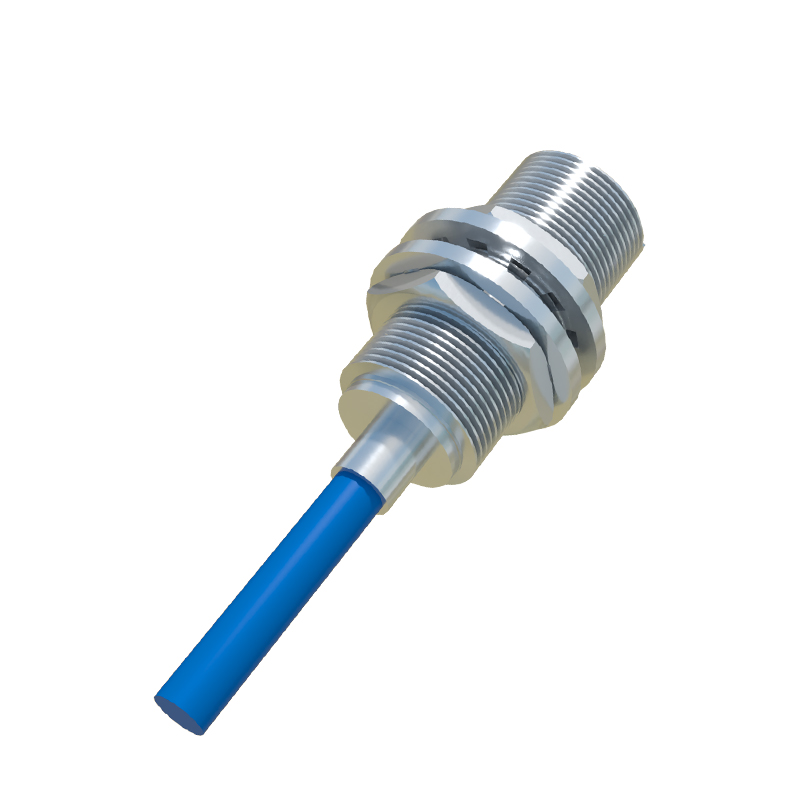
Capacitive proximity sensors, in contrast, can detect both metallic and non-metallic objects, including liquids, powders, and plastics. They function by generating an electrostatic field. The sensor and the target object act as two plates of a capacitor. As an object enters the sensing field, it alters the capacitance of the system. This change in capacitance is measured, and when it exceeds a preset threshold, the output state changes. These sensors are versatile but can be influenced by environmental factors like humidity or contamination on the sensor face, which may cause false triggering.
Photoelectric sensors utilize light beams to detect objects. They consist of a light emitter (usually an LED) and a receiver. There are three main configurations: through-beam, retro-reflective, and diffuse. Through-beam sensors have separate emitter and receiver units; an object is detected when it interrupts the light beam. This type offers the longest sensing range and high reliability. Retro-reflective sensors house the emitter and receiver together, using a reflector to bounce the light beam back. Detection occurs when the beam is blocked. Diffuse sensors, or proximity-mode sensors, rely on light reflected directly from the target object itself. Photoelectric sensors are excellent for long-range detection and can sense virtually any material, but their performance can be degraded by ambient light, color, and surface reflectivity of the target.
Ultrasonic proximity sensors operate by emitting high-frequency sound waves and evaluating the reflected echo. They measure the time interval between sending the signal and receiving the echo to calculate the distance to an object. These sensors are effective for detecting objects of various materials, shapes, and colors, including transparent items that challenge photoelectric sensors. They perform well in harsh environments with dust, smoke, or vapors. Limitations include potential inaccuracies with soft, sound-absorbing materials or in environments with significant temperature gradients.
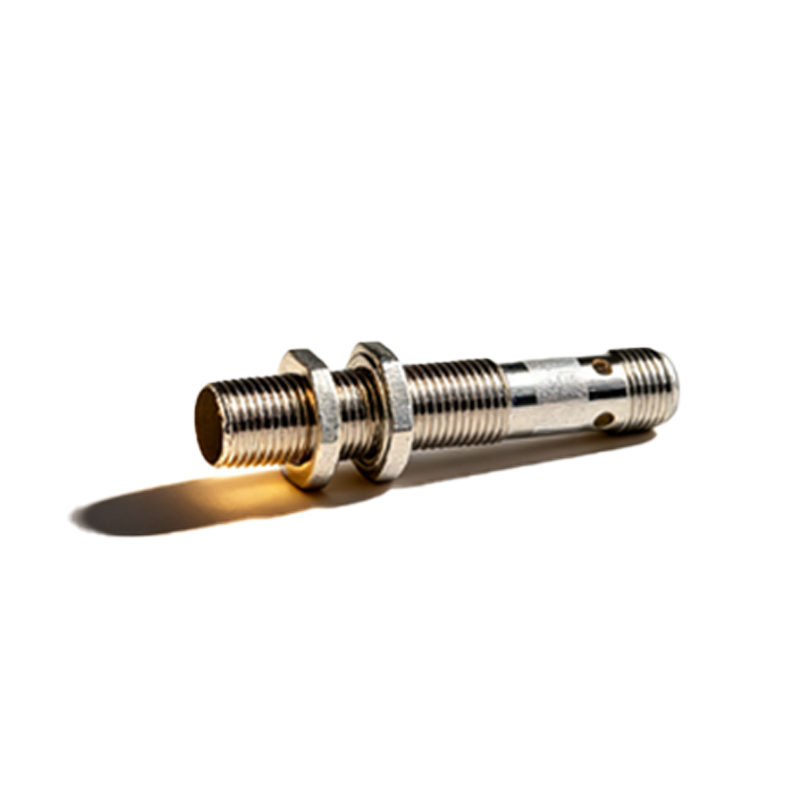
When analyzing and selecting a proximity sensor, several key parameters must be considered. Sensing distance, often called the nominal range, is the maximum distance at which the sensor can reliably detect a standard target. It is crucial to note that the actual sensing distance can vary with target material, size, and shape. Hysteresis is another critical factor; it is the difference between the switch-on point (when the object approaches) and the switch-off point (when it moves away). Hysteresis prevents output oscillation when an object is at the exact sensing limit, ensuring stable switching. Response time defines how quickly the sensor can react to the presence or absence of an object, a vital specification for high-speed applications. Output type is also essential, with common options being NPN (sinking), PNP (sourcing), analog voltage/current, or IO-Link for digital communication.
The applications of proximity sensors are vast and span across industries. In automotive manufacturing, inductive sensors count gears or detect piston position. In packaging lines, capacitive sensors monitor the level of liquid in bottles, while photoelectric sensors verify label presence. Ultrasonic sensors are used in warehouse automation for pallet detection and distance measurement. In consumer electronics, capacitive sensors enable touchless faucets or screen activation when a user approaches.
In conclusion, a thorough analysis of proximity sensors requires a clear understanding of the target object's properties, the environmental conditions, and the specific requirements of the application. By matching the sensor technology—inductive, capacitive, photoelectric, or ultrasonic—to these factors, engineers can ensure reliable, efficient, and maintenance-free operation within automated systems. The continuous evolution of these technologies, including miniaturization and enhanced communication capabilities like IO-Link, promises even greater integration and intelligence in future industrial and commercial applications.