Laser sensor devices represent a cornerstone of modern measurement and detection systems. Their operation is fundamentally based on the principles of light amplification by stimulated emission of radiation. A laser sensor typically emits a highly focused, coherent beam of light. This beam interacts with a target object, and the sensor then detects the reflected or scattered light. By analyzing properties of this returned light—such as its time-of-flight, phase shift, intensity, or frequency shift—the device can derive precise information about the target. Common measured parameters include distance, displacement, velocity, thickness, and presence.
The core components of a typical laser sensor include the laser source itself (often a laser diode), a transmitting optic to shape the beam, a receiving optic to collect the reflected light, and a photodetector (like a photodiode or CCD) to convert the light signal into an electrical one. Sophisticated signal processing electronics then interpret this data to provide a usable output. The choice of laser wavelength—ranging from visible red to infrared—depends on the application, considering factors like target material, required precision, ambient light conditions, and safety regulations.
Several major types of laser sensors dominate the market, each suited for specific tasks. Laser Distance Sensors, often using time-of-flight or triangulation principles, are ubiquitous in automation for positioning and dimension checking. Laser Displacement Sensors offer extremely high resolution for measuring minute changes in position or surface profile. Laser Speed Sensors utilize the Doppler effect to measure the velocity of moving surfaces without physical contact. Laser Contrast Sensors are optimized for detecting marks, labels, or color differences on packaging lines. Furthermore, LIDAR (Light Detection and Ranging) systems, which are essentially advanced laser radar, use scanning laser beams to create detailed 3D maps of environments, powering applications from autonomous vehicles to topographic surveying.
The advantages of laser sensors are numerous and explain their widespread adoption. They provide non-contact measurement, eliminating mechanical wear and allowing use with delicate, hot, or moving objects. Their high speed and accuracy are unparalleled for many tasks, capable of resolutions in the sub-micron range. The focused beam allows for precise targeting, even in confined spaces, and many models are designed to be robust against industrial environmental factors like vibration, dust, and varying ambient light.
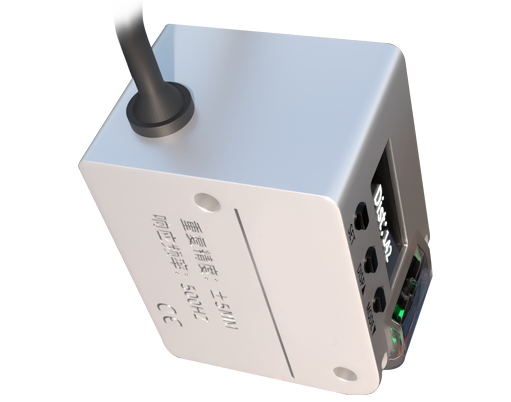
Applications for laser sensor devices span virtually every industry. In factory automation and robotics, they guide assembly arms, inspect part dimensions, control web tension, and ensure precise filling levels. The automotive industry relies on them for body-in-white gap measurement, brake disc thickness monitoring, and crash test analysis. In electronics manufacturing, they are critical for solder paste inspection, wafer alignment, and component placement. Medical technology employs laser sensors in diagnostic equipment, lab automation, and surgical guidance systems. Beyond manufacturing, they are vital in agriculture for yield monitoring, in logistics for warehouse automation and parcel dimensioning, and in security systems for perimeter intrusion detection.
Selecting the right laser sensor requires careful consideration of the application's specific needs. Key parameters include measuring range, resolution, accuracy, response time, and the required spot size. Environmental conditions such as temperature fluctuations, presence of dust or steam, and target surface properties (color, reflectivity, texture) significantly influence performance. For instance, a diffuse reflective surface may require a different sensor type or setup compared to a specular, mirror-like surface. Modern sensors often come with integrated intelligence, such as background suppression, programmable logic, and digital communication interfaces (IO-Link, Ethernet/IP) for seamless integration into Industry 4.0 networks.

Looking ahead, the evolution of laser sensor technology continues. Trends include miniaturization, reducing both the sensor size and the laser spot for micro-measurements. Multi-functional sensors that can measure several parameters simultaneously are emerging. There is also a strong push towards smarter sensors with embedded diagnostics and predictive maintenance capabilities. Furthermore, advancements in laser safety (e.g., Class 1 enclosed systems) and cost reduction are making these powerful tools accessible for an ever-broader range of applications. As a critical enabling technology, laser sensor devices will remain indispensable for driving precision, efficiency, and innovation across the global industrial landscape and beyond.