In industrial automation and control systems, sensors play a pivotal role in gathering critical data about position, presence, and movement. Among the vast array of sensor types, linear sensors and proximity sensors are two fundamental categories often mentioned together, yet they serve distinct purposes based on their operating principles and output characteristics. Understanding their differences is essential for selecting the right component for a specific application.
A linear sensor, fundamentally, is a device designed to measure displacement or position along a single axis with a continuous output that is directly proportional to the measured parameter. The term "linear" refers to the nature of its output signal, not necessarily its physical form. Common technologies employed in linear sensors include Linear Variable Differential Transformers (LVDTs), magnetostrictive sensors, potentiometric sensors, and certain types of optical encoders. The core function is to provide an analog or digital signal that accurately represents the precise distance or position of a target object relative to a reference point. For instance, an LVDT can measure the precise linear position of a machine tool slide or a hydraulic piston rod with high accuracy and repeatability. The output is typically a voltage or current signal whose magnitude varies linearly with displacement. These sensors are valued in applications demanding high-resolution measurement, such as coordinate measuring machines, precision assembly, and thickness gauging.
In contrast, a proximity sensor is primarily a presence detector. Its main function is to determine whether an object is within a certain detection range or not, without making physical contact. It does not provide continuous distance information; instead, it offers a discrete, on/off output signal when an object enters its sensing field. Common technologies for proximity sensors include inductive, capacitive, ultrasonic, and photoelectric (through-beam, retro-reflective, diffuse). An inductive proximity sensor, for example, detects the presence of metallic objects by creating an electromagnetic field. A capacitive sensor can detect both metallic and non-metallic materials by sensing changes in capacitance. The key specification is the sensing distance or range, within which the sensor will trigger. These devices are ubiquitous in applications like object counting, limit switching, jam detection, and part presence verification on conveyor lines.
The primary distinction lies in the type of information provided. A linear sensor answers the question "How far?" or "Where exactly is it?" with a continuous value. A proximity sensor answers the question "Is it there or not?" with a simple binary state. This fundamental difference dictates their applications. Linear sensors are chosen for tasks requiring measurement, feedback for closed-loop control, or profiling. Proximity sensors are selected for detection, counting, or safety interlocking where precise position is less critical than reliable presence detection.
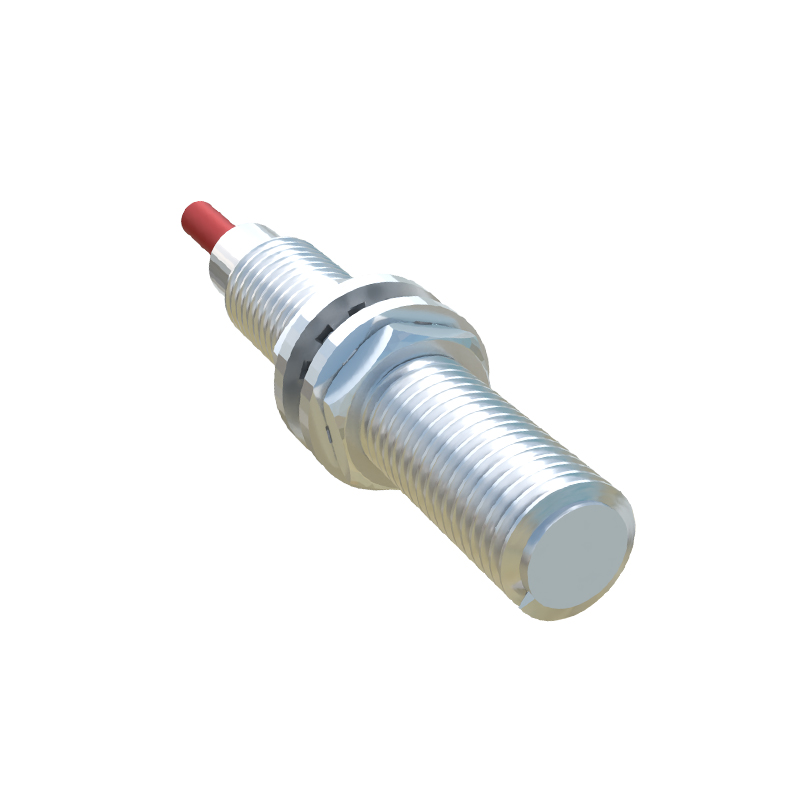
Output signals further highlight this divergence. Linear sensors commonly provide analog outputs (0-10V, 4-20mA) or high-resolution digital signals (SSI, SPI). Proximity sensors typically provide discrete digital outputs, either PNP (sourcing) or NPN (sinking) transistor switches, or sometimes a relay contact.
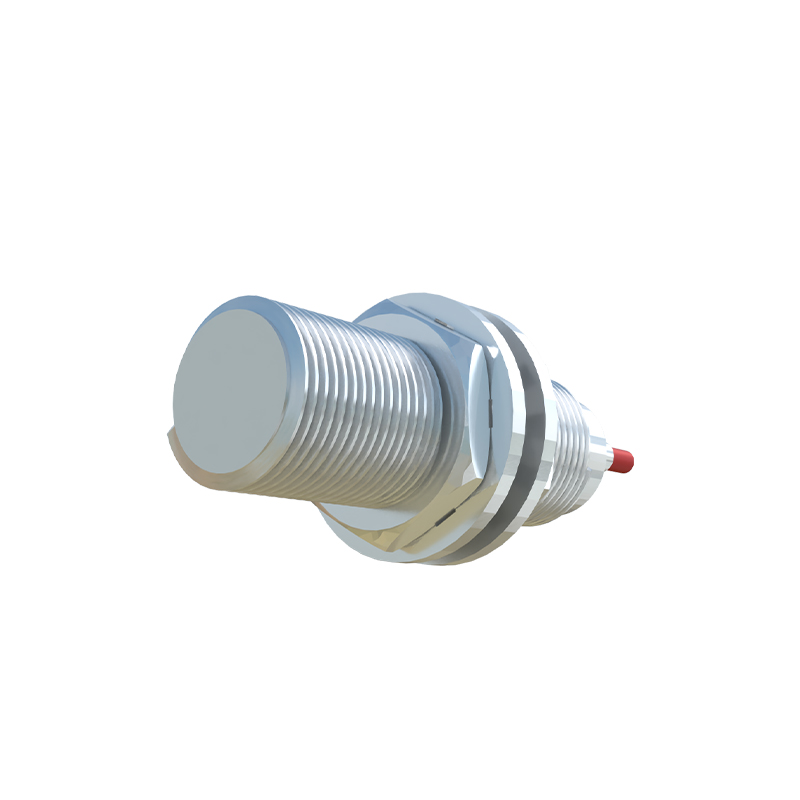
Environmental considerations also differ. While both can be ruggedized, the sensitive measuring coils or optics of some linear sensors may require more protection from harsh contaminants like metal chips or oil mist compared to the often hermetically sealed housing of a standard inductive proximity sensor. Furthermore, the target material is a major factor. Inductive proximity sensors only work with metals, capacitive with a wider range, while linear sensors like LVDTs or magnetostrictive types require a specific target (a magnetic or ferrous material, or a dedicated actuator).
In summary, while both sensor types are essential for automation, the choice hinges on the application's core requirement: precise, continuous positional measurement calls for a linear sensor; reliable, non-contact detection of an object's presence within a zone calls for a proximity sensor. Misapplying them can lead to system inefficiency, inaccurate data, or operational failure. Engineers must carefully evaluate parameters such as required accuracy, resolution, sensing range, output type, target material, and environmental conditions to make the optimal selection between these two critical classes of sensors.