Proximity sensors are essential components in modern automation and industrial systems, detecting the presence or absence of objects without physical contact. Their operation relies on various physical principles, primarily categorized into inductive, capacitive, ultrasonic, and optical types. Each type serves distinct applications based on environmental conditions, target material, and required sensing range.
Inductive proximity sensors generate an electromagnetic field using a coil and oscillator. When a metallic object enters this field, eddy currents are induced, causing a change in oscillation amplitude. This change is detected by the sensor's circuitry, triggering an output signal. These sensors are ideal for detecting metals, commonly used in machinery for position sensing or counting metallic parts. They are not suitable for non-metallic materials.
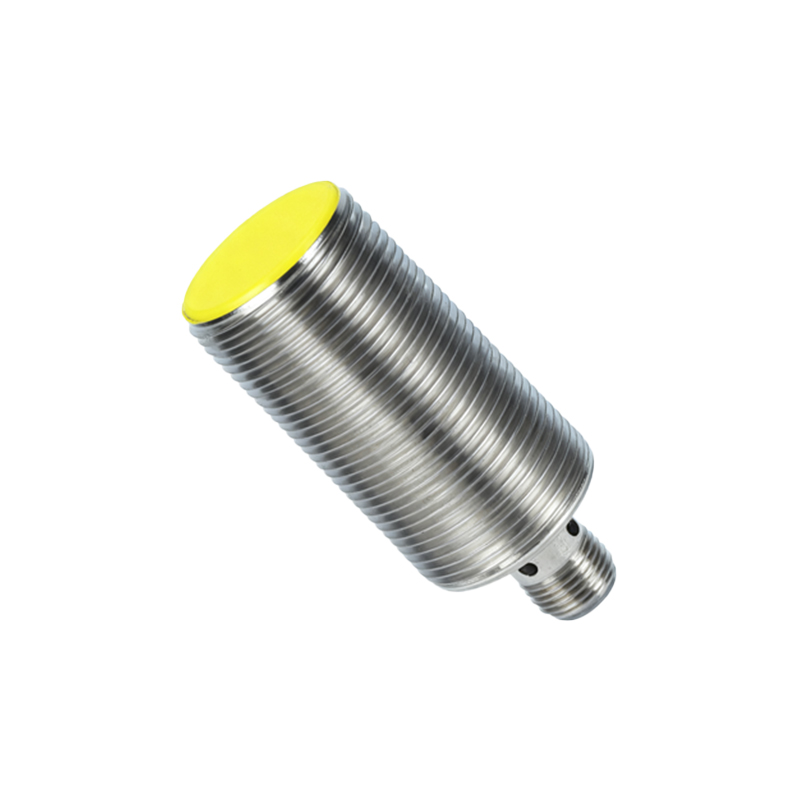
Capacitive proximity sensors create an electrostatic field between two electrodes. Any object entering this field alters the capacitance, detected by the sensor. Unlike inductive types, capacitive sensors can detect both metallic and non-metallic materials, including liquids, plastics, and wood. They are often employed in level detection for tanks or material handling systems.
Ultrasonic proximity sensors emit high-frequency sound waves and measure the time taken for echoes to return after hitting an object. By calculating the time delay, the sensor determines the object's distance. These sensors work well in challenging environments with dust, smoke, or varying lighting conditions, making them suitable for distance measurement and object detection in logistics or automotive applications.
Optical proximity sensors use light beams, typically infrared, to detect objects. They consist of a light emitter and a receiver. When an object interrupts the light beam, the receiver detects the change, signaling the presence of the object. Optical sensors offer long sensing ranges and high precision, commonly found in packaging, printing, and safety systems.
Regarding pricing, proximity sensor costs vary significantly based on type, brand, features, and quantity. Basic inductive sensors may start from $10 to $50 per unit, while more advanced models with extended ranges or specialized housings can exceed $100. Capacitive sensors generally range from $20 to $80, depending on sensitivity adjustments and environmental ratings. Ultrasonic sensors, due to their complex circuitry, often cost between $50 and $150, with high-precision industrial versions reaching higher prices. Optical sensors can be affordable, starting around $15 for simple models, but sophisticated versions with fiber optics or laser technology may cost over $200.
Factors influencing price include sensing distance, output type (e.g., analog or digital), housing material (e.g., stainless steel for harsh environments), and certifications like IP ratings for water and dust resistance. Bulk purchases typically reduce per-unit costs, making them economical for large-scale installations.
In summary, selecting the right proximity sensor involves understanding the working principle suited to the application and balancing performance with budget. Prices reflect the sensor's capabilities, ensuring reliability in automated processes across industries from manufacturing to consumer electronics.