In the realm of precision measurement and environmental monitoring, particle laser sensors have emerged as a critical technology. These sophisticated devices utilize the principles of laser light scattering to detect, measure, and analyze particulate matter in various environments with exceptional accuracy and speed. Unlike traditional methods that might rely on physical collection and weighing, laser sensors provide real-time, non-contact analysis, making them indispensable in industries ranging from manufacturing to healthcare.
The core operating principle of a particle laser sensor is based on light scattering, specifically Mie scattering theory. A laser diode emits a highly focused, coherent beam of light into a sampling chamber. As airborne particles pass through this laser beam, they scatter the light in all directions. A strategically placed photodetector, typically positioned at a specific angle (like 90 degrees), collects this scattered light. The intensity of the scattered light is directly proportional to the size and concentration of the particles. By analyzing this light signal with advanced algorithms, the sensor can determine the particle size distribution and number concentration in real-time. This method allows for the detection of particles across a wide spectrum, from sub-micron particles like viruses and combustion byproducts to larger dust and pollen.
The applications for particle laser sensors are vast and growing. In industrial settings, they are crucial for monitoring cleanroom environments in semiconductor fabrication and pharmaceutical production, where even minute contaminants can ruin products. They are employed in engine emission testing to measure soot and particulate matter, helping to comply with stringent environmental regulations. Within HVAC systems, these sensors ensure indoor air quality by monitoring dust, allergens, and other pollutants, triggering filtration systems when necessary. In scientific research, they are used to study atmospheric aerosols, cloud formation, and pollution dynamics. Recently, their role in public health has been highlighted through the monitoring of airborne pathogens and aerosols in hospitals and public spaces.
When selecting a particle laser sensor, several key specifications must be considered. The measurement range defines the smallest and largest particle diameters the sensor can detect, often reported in micrometers (µm). High-end sensors can detect particles as small as 0.1 µm. Sampling flow rate indicates how much air is analyzed per unit of time, affecting response speed. Accuracy and resolution determine the reliability and fineness of the measurements. Furthermore, factors like response time, data output interfaces (analog, digital, USB), and the device's robustness in different environmental conditions (temperature, humidity) are critical for integration into specific systems.
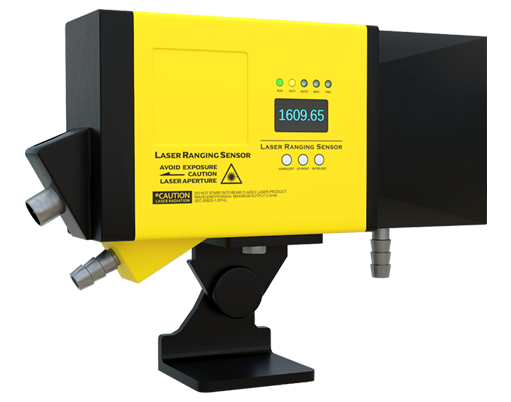
Compared to alternative technologies like optical particle counters using white light or beta attenuation monitors, laser-based sensors offer significant advantages. They provide superior resolution for smaller particles, faster response times, and generally require less maintenance as they have no moving parts in the sensing area and do not consume filter tapes. However, they may have limitations with certain particle types that have low light-scattering efficiency or in environments with extremely high concentrations that can cause coincidence error.
The future of particle laser sensor technology is geared towards miniaturization, increased intelligence, and multi-parameter sensing. Advances in laser diodes and photodetector arrays are driving down the size and cost of sensors, enabling their integration into consumer devices like air purifiers and wearables. The integration of Internet of Things (IoT) capabilities allows for networked sensors providing vast, real-time air quality maps. Furthermore, research is ongoing into sensors that can not only count and size particles but also identify their chemical composition using techniques like laser-induced breakdown spectroscopy (LIBS), which would be a revolutionary step for environmental and security monitoring.

In conclusion, particle laser sensors represent a mature yet rapidly evolving technology that translates the physical interaction of light and matter into actionable data. Their ability to provide instantaneous, precise particulate analysis has made them a cornerstone of modern quality control, environmental protection, and health safety protocols. As the demand for cleaner air, stricter industrial standards, and advanced research tools continues to grow, the refinement and adoption of these sensitive laser-based detectors will undoubtedly accelerate, shedding more light on the invisible particulate world around us.