In the world of industrial automation, robotics, and smart devices, proximity sensors are the silent sentinels that enable machines to "sense" the presence or absence of nearby objects without any physical contact. Among the diverse range available, four primary types of proximity sensors dominate the market, each with its own operating principle, strengths, and ideal use cases. Understanding these four key sensors—inductive, capacitive, ultrasonic, and photoelectric—is crucial for engineers, designers, and technicians to implement effective and reliable detection solutions.
First, let's explore the inductive proximity sensor. This sensor operates on the principle of electromagnetic induction. It generates an oscillating electromagnetic field from its sensing face. When a metallic object, typically ferrous metals like iron or steel, enters this field, it induces eddy currents within the object. These currents cause a change in the oscillation amplitude, which the sensor's circuitry detects, triggering an output signal. The key advantage of inductive sensors is their robustness. They are highly resistant to environmental factors like dust, dirt, oil, and moisture, making them perfect for harsh industrial environments such as metal machining, automotive assembly lines, and conveyor systems for counting metal parts. Their limitation is clear: they only detect metals, and their sensing range is relatively short, often just a few millimeters to several centimeters.
The second major type is the capacitive proximity sensor. Similar in construction to the inductive type, it functions differently. It generates an electrostatic field. Any object that enters this field, whether metallic or non-metallic (like plastic, wood, glass, or liquids), alters the capacitance of the sensor's circuit. This change is detected, and an output is activated. This ability to detect almost any material makes capacitive sensors incredibly versatile. Common applications include level detection for liquids or granular materials in tanks, detecting filled bottles on a production line, or sensing the presence of wood or plastic panels. They can even sense through certain non-metallic container walls. However, they can be susceptible to false triggers from environmental humidity or contaminants, requiring careful calibration.
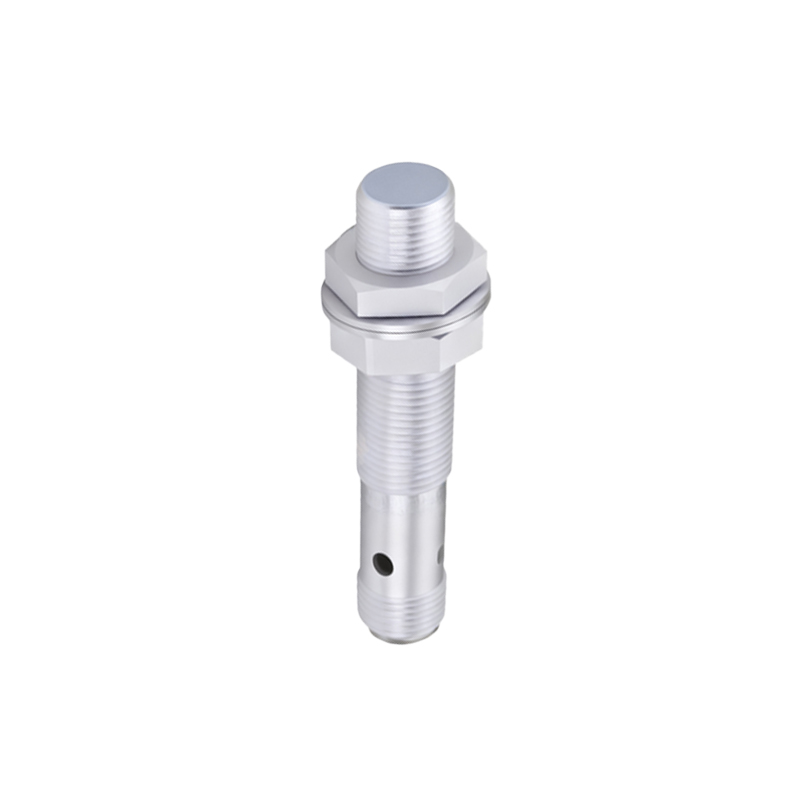
Moving to a different physical principle, the third type is the ultrasonic proximity sensor. This sensor emits high-frequency sound waves (ultrasonic pulses) and then listens for the echo reflected from a target object. By measuring the time interval between the emitted pulse and the received echo, it can calculate the distance to the object. This technology allows for true distance measurement, not just presence detection. Ultrasonic sensors are excellent for detecting objects of virtually any material, shape, or color, including transparent items that challenge photoelectric sensors. They are widely used in parking assistance systems, liquid level sensing in large tanks, pallet detection in warehouses, and collision avoidance in automated guided vehicles (AGVs). Their performance can be affected by temperature variations (which change the speed of sound) and by soft, sound-absorbing materials.
The fourth cornerstone is the photoelectric proximity sensor. This category uses a beam of light, typically infrared or visible LED, to detect objects. It consists of a light emitter and a receiver. There are three main sub-types: through-beam, retro-reflective, and diffuse. The through-beam type has separate emitter and receiver units; an object is detected when it breaks the light beam. It offers the longest sensing range and highest reliability. The retro-reflective type uses a single unit and a reflector; detection occurs when the beam is broken. The diffuse (or proximity) type uses the reflection of light from the object itself back to the receiver housed in the same unit. Photoelectric sensors are ideal for long-range detection, sensing small objects, and high-speed applications. They are prevalent in packaging machinery, bottle counting, door systems, and security. Their main drawbacks are potential interference from ambient light and difficulty with transparent or highly reflective objects.
Selecting the right proximity sensor depends on a careful analysis of the application requirements. Key factors include: the target material (metal, plastic, liquid), the required sensing distance, the operating environment (presence of dust, moisture, or temperature extremes), the required response speed, and installation constraints. For instance, detecting a steel gear tooth in an oily environment calls for an inductive sensor. Checking the fill level of a glass bottle with liquid might require a capacitive or ultrasonic sensor. Detecting a cardboard box on a high-speed conveyor is a classic job for a photoelectric through-beam sensor.
In conclusion, inductive, capacitive, ultrasonic, and photoelectric sensors form the essential toolkit for non-contact object detection. Each technology fills a specific niche, driven by its underlying physics. By matching the sensor's core capabilities—whether it's inductive sensitivity to metals, capacitive material versatility, ultrasonic distance measurement, or photoelectric speed and range—to the specific demands of the task, engineers can build smarter, more efficient, and more reliable automated systems. As technology advances, these sensors continue to evolve with enhanced intelligence, mini