In the world of industrial automation and sensing technology, the shift from infrared (IR) sensors to laser sensors is gaining momentum. This transition is driven by the need for higher precision, reliability, and adaptability in various applications, from manufacturing lines to security systems. While infrared sensors have long been a staple due to their cost-effectiveness and simplicity, laser sensors offer distinct advantages that address modern challenges.
Infrared sensors operate by emitting infrared light and detecting its reflection from objects. They are widely used for proximity detection, object counting, and basic distance measurement. However, IR sensors have limitations, including susceptibility to environmental interference such as ambient light, dust, or smoke. Their accuracy can degrade in outdoor settings or in environments with varying temperatures. Additionally, the resolution and range of IR sensors are often insufficient for tasks requiring fine detail or long-distance sensing.
Laser sensors, on the other hand, utilize focused laser beams to achieve superior performance. These sensors emit coherent light that allows for precise measurement and detection. One key benefit is their high accuracy, with capabilities to measure distances down to micrometer levels in some models. Laser sensors are less affected by external light conditions, making them suitable for both indoor and outdoor use. They also offer longer ranges, often exceeding tens of meters, compared to the typical few meters of IR sensors. This makes them ideal for applications like robotics, automotive safety, and quality control in production.
Another advantage of laser sensors is their speed. They can capture data at faster rates, enabling real-time monitoring in dynamic environments. For instance, in conveyor belt systems, laser sensors can quickly identify defects or sort items with minimal delay. Their narrow beam width allows for targeted sensing, reducing false triggers from surrounding objects. This precision is crucial in complex setups where multiple sensors operate simultaneously.
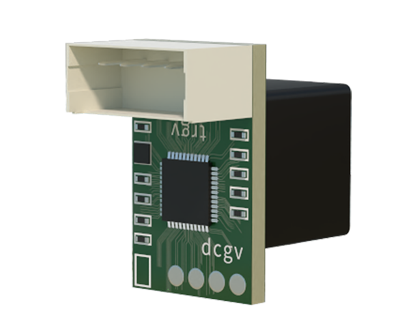
Despite these benefits, the transition to laser sensors requires consideration of factors like cost and implementation. Laser sensors are generally more expensive upfront than IR sensors. However, their durability and lower maintenance needs can lead to long-term savings. Installation may involve calibration and alignment due to the focused nature of laser beams, but modern designs often include user-friendly features to simplify this process.
In summary, replacing infrared sensors with laser sensors enhances performance in terms of accuracy, range, and environmental resilience. Industries seeking to improve efficiency and reliability should evaluate this upgrade based on their specific needs. As technology advances, laser sensors are becoming more accessible, paving the way for broader adoption across sectors.
