In the realm of industrial automation, precision measurement and reliable object detection are paramount. Among the various technologies enabling this, laser sensors have established themselves as a cornerstone. The SRCK laser sensor represents a specific category within this advanced field, offering distinct capabilities for a wide range of applications. This article delves into the core technology, operational principles, and practical uses of SRCK laser sensors.
At its heart, an SRCK laser sensor operates on the principle of optical triangulation or time-of-flight measurement, depending on the specific model and intended use. In a common triangulation setup, the sensor emits a focused beam of visible red or laser light towards a target. The light reflects off the target's surface and is captured by a receiving lens, which focuses it onto a position-sensitive detector, such as a CCD or CMOS array. The precise position of the light spot on this detector changes based on the distance to the target. By analyzing this shift, the sensor's internal processor calculates the exact distance with high accuracy. This method allows for non-contact measurement, which is crucial for delicate surfaces or high-speed processes.
The applications for SRCK laser sensors are extensive and span multiple industries. In manufacturing and assembly lines, they are indispensable for precise positioning, contour profiling, and height detection of components. For instance, they can verify the correct placement of parts on a circuit board or measure the thickness of materials like metal sheets or glass. In packaging machinery, these sensors ensure fill levels are consistent and labels are applied correctly. The logistics and warehousing sector utilizes them for dimensioning packages, guiding autonomous mobile robots (AMRs), and managing inventory through precise object detection on conveyor belts. Furthermore, their ability to perform reliably in challenging environments—detecting transparent objects like glass or plastic films, or shiny metallic surfaces—makes them versatile tools where other optical sensors might fail.
Key advantages define the value proposition of SRCK laser sensors. First and foremost is their exceptional accuracy and resolution, capable of detecting minute distance changes, often in the micrometer range. They offer a high response speed, making them suitable for dynamic, high-throughput production environments. The focused laser beam provides excellent background suppression, meaning the sensor can reliably ignore objects beyond its set sensing range, reducing false triggers. Many models feature a visible laser spot, simplifying setup and alignment during installation. Robust housing designs often grant them good resistance to ambient light interference, dust, and vibrations, ensuring stable operation in industrial settings.
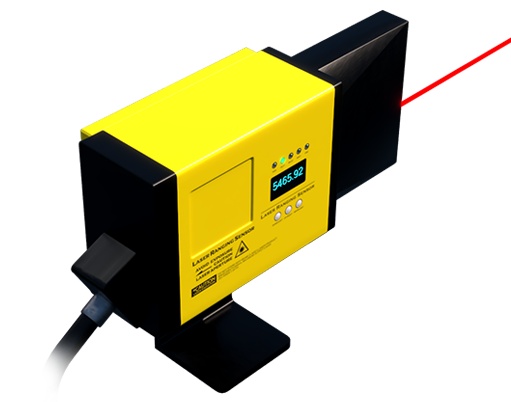
When selecting an SRCK laser sensor for a specific task, several parameters require consideration. The sensing range defines the minimum and maximum distances over which the sensor can operate effectively. The resolution indicates the smallest detectable change in distance. The output type—whether analog (e.g., 4-20mA, 0-10V), digital (e.g., NPN/PNP switch), or serial communication (e.g., IO-Link)—determines how the measurement data integrates with a PLC or control system. The size of the laser spot and the minimum detectable object size are also critical, especially for small part detection. Environmental factors like temperature ranges and ingress protection (IP) ratings must match the operational conditions.
Installation and maintenance are straightforward but vital for optimal performance. Ensuring a stable mount free from vibration is essential. The sensor should be positioned so the laser beam is perpendicular to the target surface for the most accurate reading, unless a specific angle is required for the application. Regular cleaning of the lens with appropriate materials prevents dust accumulation from attenuating the laser signal. Many modern SRCK sensors come with built-in teach-in functions or simple push-button programming, allowing users to easily set sensing windows and thresholds directly on the device.
In conclusion, SRCK laser sensors are sophisticated instruments that translate the precision of laser light into actionable data for automation systems. Their non-contact operation, high accuracy, speed, and reliability make them a fundamental component in modern industrial automation, quality control, and logistics. By understanding their working principles and key selection criteria, engineers and technicians can effectively leverage this technology to enhance efficiency, ensure product quality, and enable more intelligent automated processes across countless applications.