In industrial automation and machinery design, proximity sensors play a critical role in non-contact detection, object positioning, and process control. Among the diverse form factors available, the square proximity sensor, often referred to as a "square prox" sensor, has become a staple for many applications due to its robust design and reliable performance. This article delves into the functionality, key features, common types, and primary applications of these versatile sensing devices.
A square proximity sensor is an electronic device designed to detect the presence or absence of an object within its sensing range without any physical contact. Its defining characteristic is its housing, which is typically a compact, rugged square or rectangular block. This shape offers distinct advantages in mounting and integration, especially in environments where space is constrained or where a flush, clean installation is desired. The sensing face is usually located on one of the larger flat surfaces of the housing.
The core technology behind most industrial square proximity sensors is based on one of three principles: inductive, capacitive, or photoelectric sensing. Inductive square prox sensors are the most common. They generate an electromagnetic field from the sensing face. When a metallic object (ferrous or non-ferrous) enters this field, it causes a change in the oscillation amplitude, which the sensor's circuitry detects and converts into a switching signal. These sensors are ideal for detecting metal targets in harsh environments, as they are inherently resistant to dust, oil, and moisture when properly sealed.
Capacitive square proximity sensors operate by generating an electrostatic field. They can detect both metallic and non-metallic materials, such as plastics, liquids, wood, or granules, by sensing changes in capacitance caused by the target object. This makes them suitable for level detection in tanks or presence detection of packaging materials. Photoelectric square sensors, which house an emitter and receiver in the same square housing (diffuse or retro-reflective types), use a beam of light to detect objects. They offer longer sensing ranges and can detect virtually any material that interrupts the light beam.
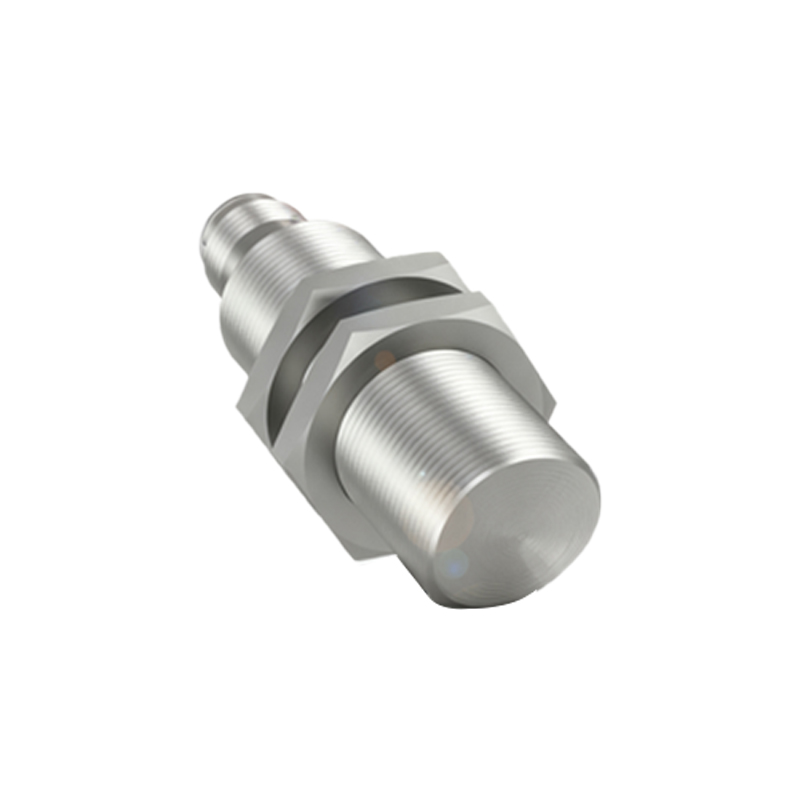
Key features that define the utility of square proximity sensors include their sensing range, output type, housing material, and environmental protection rating. Sensing ranges vary from a few millimeters to several tens of millimeters, depending on the technology and sensor size. Outputs are typically digital, either as a discrete NPN (sinking) or PNP (sourcing) transistor signal, or sometimes an analog (4-20 mA or 0-10V) signal proportional to distance. The housings are commonly made from nickel-plated brass, stainless steel, or rugged plastics like PBT, providing durability against mechanical impact and chemical exposure. Ingress Protection (IP) ratings, such as IP67 or IP69K, indicate high resistance to dust and water, making them suitable for washdown areas in food and beverage or pharmaceutical industries.
The applications for square proximity sensors are vast across manufacturing and automation. They are frequently used for end-of-travel detection on linear actuators and cylinders, verifying the position of machine parts. In conveyor systems, they count products, detect jams, or position items for robotic pick-and-place operations. Within machining centers, they serve as tool presence detectors or part clamps verification sensors. Their robust square design allows for easy mounting in machined slots or with standard brackets, ensuring a secure and stable installation that minimizes vibration-related issues.
When selecting a square proximity sensor for a specific task, engineers must consider several factors: the material of the target object (metal, plastic, liquid), the required sensing distance, the electrical interface (DC voltage, output type) needed by the control system, the environmental conditions (temperature, presence of contaminants), and the required mounting style. Understanding these parameters ensures optimal sensor performance, reliability, and longevity in the application.
In summary, the square proximity sensor is a fundamental component in modern industrial control systems. Its standardized form factor, combined with proven sensing technologies and rugged construction, provides a dependable solution for countless detection and positioning tasks. From automotive assembly lines to packaging machinery, these sensors deliver the essential feedback needed for automated processes to run smoothly, efficiently, and safely. Their continued evolution, including the integration of IO-Link for digital communication and diagnostics, ensures they will remain a key element in the advancing landscape of industrial automation and the Industrial Internet of Things (IIoT).