Electromagnetic proximity sensors are widely used in industrial automation, robotics, and safety systems to detect the presence or absence of metallic objects without physical contact. Their operation relies on fundamental principles of electromagnetism, offering reliable performance in harsh environments where other sensing technologies might fail.
At the core of an electromagnetic proximity sensor is an oscillator circuit that generates a high-frequency alternating current. This current flows through a coil wound around a ferrite core, producing a rapidly alternating magnetic field that extends from the sensor's active face into the surrounding space. This oscillating field is often referred to as the sensing field. When a conductive metal target enters this field, electromagnetic induction occurs. According to Faraday's law of induction, the changing magnetic flux induces eddy currents on the surface of the target object. These circulating currents are parasitic and dissipate energy as heat within the conductor.
The key to detection lies in the energy loss. The induced eddy currents draw energy from the sensor's oscillating circuit, effectively increasing the load on the oscillator. This energy loss causes a measurable change in the circuit's characteristics—typically a decrease in the amplitude of the oscillation. A dedicated evaluation circuit within the sensor continuously monitors this amplitude. Once the amplitude drop exceeds a predefined threshold, the sensor's output state changes. For a digital sensor, this usually means switching a solid-state output (like an NPN or PNP transistor) from OFF to ON, or vice-versa, signaling the detection of a target.
The sensing distance, or nominal range, is a critical specification. It depends on factors like the sensor's coil design, oscillator frequency, and the target material's properties. Ferrous metals (like iron and steel) are typically detected at longer ranges because they have high magnetic permeability, which concentrates the magnetic field lines and enhances the eddy current effect. Non-ferrous metals (like aluminum, copper, or brass) have lower permeability but are still good conductors; they are detected at shorter ranges as the primary mechanism is purely eddy current induction. The size, shape, and thickness of the target also influence the effective sensing distance.
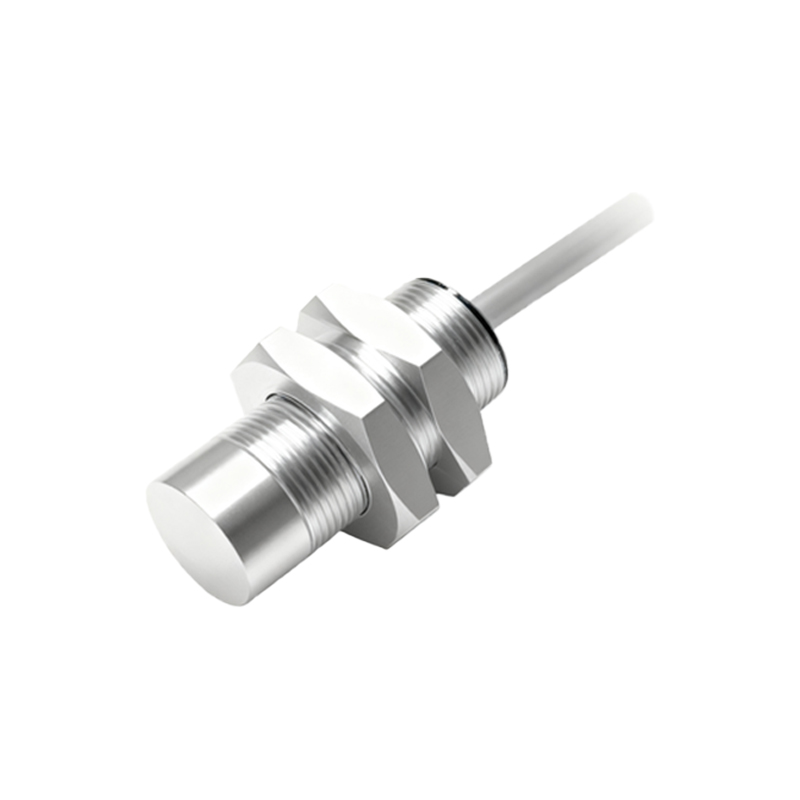
These sensors are prized for their robustness. Since detection is based on an electromagnetic field interaction, the sensor face can be sealed, making it resistant to dust, dirt, oil, and moisture. They are not affected by ambient light and can operate in total darkness. However, their specificity to metals is both a strength and a limitation. They will not detect non-metallic objects like plastic, wood, or liquids. Furthermore, the presence of different metals in the sensing environment can affect performance, and sensors must often be shielded or specially designed to prevent mutual interference when mounted closely together.
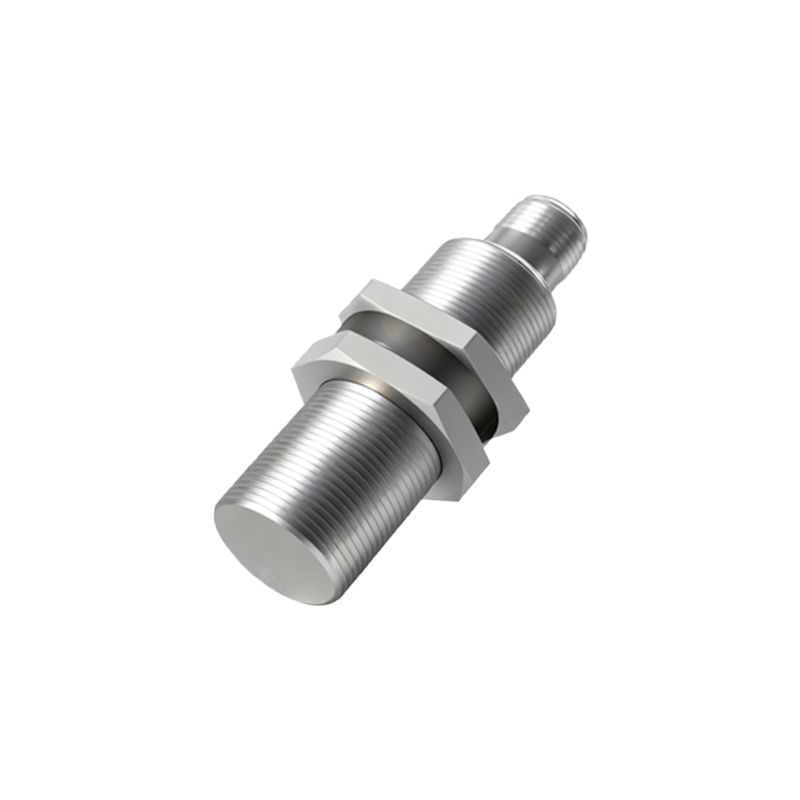
Applications are extensive. In manufacturing, they count metal parts on a conveyor, control robotic arm positions, or verify the presence of a machined component. In safety, they are used as non-contact limit switches on moving machinery. Advanced versions incorporate analog outputs or IO-Link communication to provide continuous distance information, not just a binary on/off signal, enabling more precise positioning tasks.
Understanding the electromagnetic principle behind their operation allows engineers to select the right sensor—considering factors like target material, required sensing distance, environmental conditions, and output type—to build more efficient, reliable, and safe automated systems.