Proximity sensors have become an indispensable component in today's smart devices, from smartphones and tablets to industrial machinery and automotive systems. Their primary function is to detect the presence or absence of nearby objects without physical contact, enabling features like automatic screen turn-off during calls, touchless interfaces, and collision avoidance. However, the accuracy and reliability of these sensors are not guaranteed by mere installation; they require careful consideration of several factors throughout their lifecycle, from selection and integration to calibration and maintenance.
The journey toward ensuring a proximity sensor performs as intended begins at the design and selection phase. Engineers must match the sensor's specifications—such as sensing distance, response time, and environmental tolerance—to the precise application requirements. For instance, a sensor designed for a smartphone must be miniaturized, energy-efficient, and capable of distinguishing between a face and a pocket lining. In contrast, an industrial sensor might prioritize long-range detection and robustness against dust, moisture, or extreme temperatures. Choosing the wrong type, be it infrared (IR), ultrasonic, capacitive, or inductive, can lead to immediate failure or gradual performance degradation.
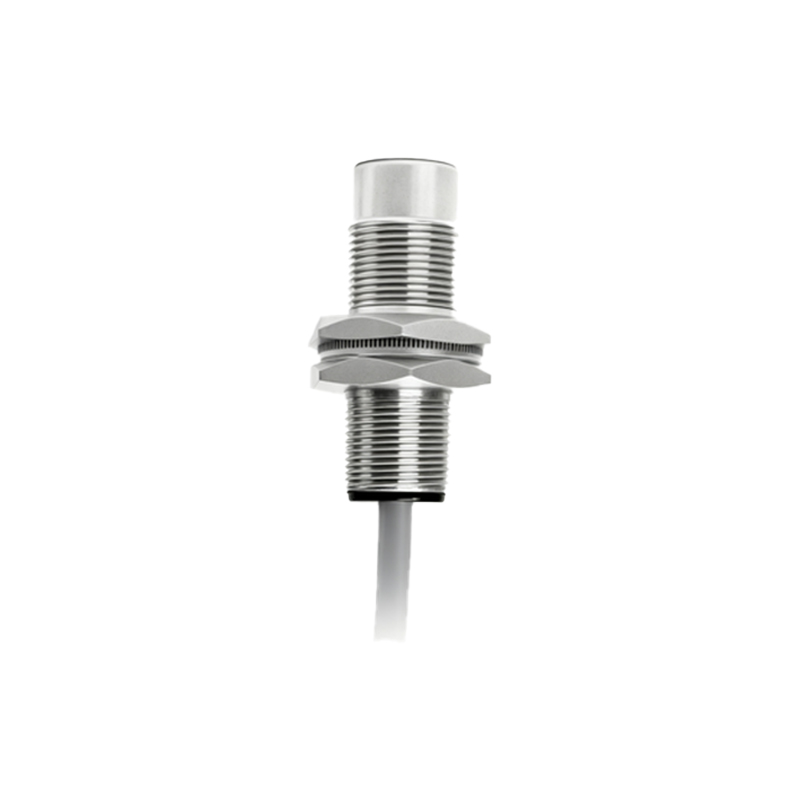
Once the appropriate sensor is selected, proper integration into the device's ecosystem is critical. This involves more than just physical mounting. Electrical integration requires stable power supply lines to prevent voltage fluctuations that can cause erratic readings. Signal integrity is paramount; the sensor's output must be shielded from electromagnetic interference (EMI) generated by other components like processors, wireless modules, or motors. In many devices, the proximity sensor is placed behind a cover glass or within a bezel. The material and thickness of this barrier significantly affect performance, especially for optical-based sensors like IR. The cover material must have suitable optical properties to allow the transmitted and received signals to pass through with minimal attenuation or distortion.
Software plays an equally vital role in ensuring sensor reliability. Raw data from the sensor is often noisy and requires sophisticated algorithms for processing. Effective firmware includes filtering routines to smooth out signal noise, adaptive thresholding to adjust to different environmental conditions (like ambient light for IR sensors), and logic to debounce readings—preventing a single false trigger from initiating an action. Calibration is a crucial software-driven process, often performed during manufacturing. It establishes a baseline for "near" and "far" states, accounting for minor variances in component assembly and cover material. Some advanced systems incorporate continuous background calibration to adapt to long-term changes, such as sensor window dirt accumulation or component aging.
Environmental factors present ongoing challenges. Proximity sensors operate in the real world, not a controlled lab. For optical sensors, bright sunlight or other strong IR sources can saturate the receiver, causing detection failures. Dust, condensation, or fingerprints on the sensor window can scatter or block light beams. Industrial settings might involve vibrations, oils, or chemical vapors. Ensuring reliability means anticipating these conditions. This can involve designing physical seals or coatings, implementing environmental compensation algorithms in software, or scheduling regular cleaning and inspection in operational manuals.
Finally, a comprehensive testing and validation regimen is non-negotiable. This should extend beyond simple functional checks. Testing must simulate real-world scenarios: Does the phone screen turn off reliably when held at different angles against the ear? Does the industrial sensor still detect a target when its lens is slightly dirty? Does the capacitive sensor ignore water droplets? Long-term reliability tests, including temperature cycling and endurance under continuous operation, help uncover failure modes before the product reaches the end-user.
In conclusion, ensuring the reliable operation of a proximity sensor is a multifaceted engineering task. It demands a holistic approach that intertwines careful hardware selection, meticulous integration design, intelligent software algorithms, proactive environmental hardening, and rigorous, scenario-based testing. Neglecting any one of these pillars can compromise the user experience, reduce device efficiency, or, in safety-critical applications, lead to hazardous situations. As devices become more interconnected and autonomous, the humble proximity sensor's role as a trusted guardian of interaction and safety only grows, making its assured performance more critical than ever.