In the world of industrial automation and process control, accurate counting is a fundamental task. Proximity sensors, known for their reliability and non-contact operation, have become a cornerstone technology for this purpose. Unlike mechanical counters or manual methods, proximity sensors offer a fast, wear-free, and highly repeatable solution for detecting objects and incrementing a count. This article delves into the principles behind using proximity sensors for counting, explores common applications, and outlines key best practices for implementation.
The core principle of counting with a proximity sensor is straightforward: each time an object passes within the sensor's detection range, it triggers a discrete electrical signal. This signal is then sent to a counter device, such as a programmable logic controller (PLC), a dedicated counter module, or even a microcontroller. The counter interprets each pulse as one unit, thereby tallying the total number of objects that have passed the sensing point. The type of proximity sensor used—inductive for metals, capacitive for non-metals and liquids, or photoelectric for long-range detection—depends entirely on the nature of the objects being counted.
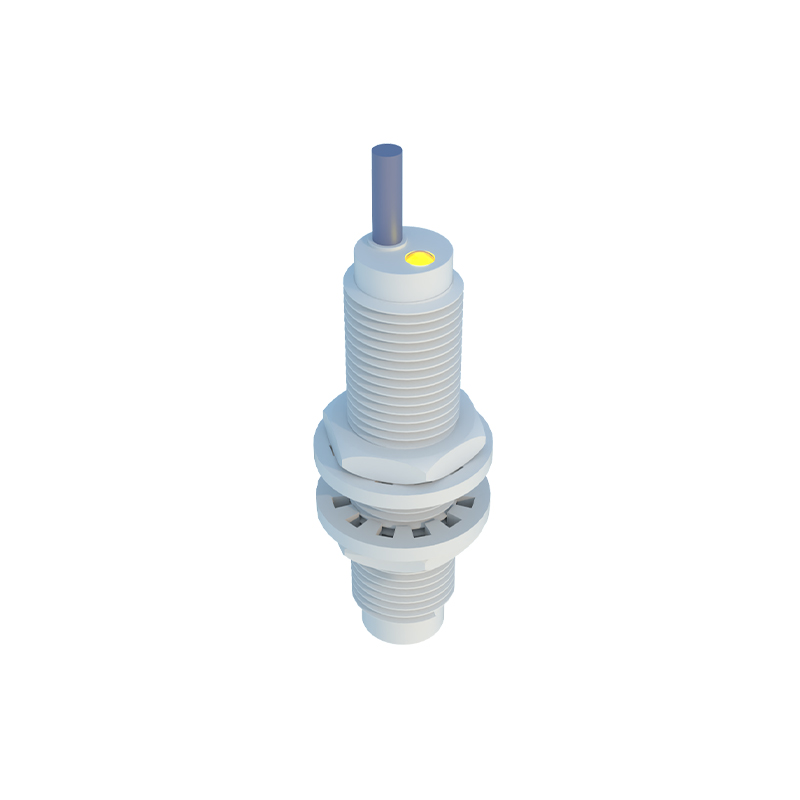
One of the primary advantages of this system is its speed. High-frequency proximity sensors can detect and signal the passage of thousands of items per minute, far exceeding human capability or mechanical limits. Furthermore, because there is no physical contact, there is no wear on either the sensor or the product, leading to lower maintenance costs and higher system longevity. This non-contact nature also makes it ideal for counting delicate, fragile, or high-speed items on a production line, such as bottles, packages, or electronic components.
Typical applications are vast and varied. In manufacturing, proximity sensors count components on assembly lines, monitor production volumes, and control batch sizes. In packaging, they ensure the correct number of items are placed into each box or carton. In material handling, they track boxes on conveyors, count pallets, and manage inventory flow. Automotive plants use them to count parts like pistons or gears, while the pharmaceutical industry relies on them for precise pill or vial counting. Essentially, any process involving discrete objects in motion is a candidate for proximity sensor counting.
However, achieving accurate and reliable counts requires careful consideration of several factors. Sensor selection is paramount. The sensing distance must be appropriate for the application to avoid false triggers from background objects or missed detections. The sensor's response time must be fast enough to distinguish between rapidly passing items. For instance, counting small, closely spaced parts requires a sensor with a very short response time and a focused detection field to prevent double-counting a single object or missing one entirely.
Installation and environment play a critical role. The sensor must be mounted securely to prevent vibration from causing erratic signals. The sensing face should be positioned perpendicular to the path of the object for optimal detection. Environmental contaminants like dust, oil, or coolant can affect certain sensor types; choosing a sensor with an adequate IP (Ingress Protection) rating is essential for harsh conditions. For inductive sensors, it's also crucial to maintain proper clearance from surrounding metal to avoid electromagnetic interference.
The integration with the counting logic is the final, crucial step. Debounce filtering, often available within the sensor itself or the controller, is used to "clean" the signal by ignoring very short, spurious pulses that are not actual object detections. For high-speed counting, the controller's input frequency and scan time must be capable of keeping up with the pulse train. In applications where objects may vary in size or pass at inconsistent gaps, using a sensor with a teachable or adjustable sensing window can improve accuracy.
A common challenge is counting irregular or overlapping objects. In such cases, a single sensor might not suffice. A solution often involves using two sensors in a specific configuration to determine the direction of travel or to ensure only one count per object, regardless of its orientation or profile. This highlights that while the basic concept is simple, practical deployment demands a thorough understanding of the process.
In conclusion, proximity sensor counting is a robust, efficient, and versatile method integral to modern automation. Its success hinges on selecting the right sensor technology, meticulous installation, and proper integration with control systems. By adhering to established best practices, engineers and technicians can implement counting solutions that deliver the high accuracy and reliability demanded by today's fast-paced industrial environments, driving efficiency and ensuring quality control.