In the seamless interaction between humans and machines, a silent, unseen technology plays a pivotal role. Embedded proximity sensors are the unheralded components that enable devices to perceive the presence or absence of nearby objects without any physical contact. This foundational capability has become integral to the functionality, efficiency, and user experience of countless modern electronic systems.
At its core, an embedded proximity sensor detects the presence of an object within a specified range. It achieves this by emitting a field or beam of electromagnetic radiation, often infrared light, and then looking for changes in the return signal. When an object enters this field, it causes a detectable variation, which the sensor's circuitry interprets as "presence." This simple principle belies its profound impact. Unlike traditional mechanical switches, these sensors are non-contact, meaning they suffer no wear and tear from repeated activation, leading to exceptional reliability and longevity.
The technology behind these sensors primarily falls into a few categories. Infrared (IR) sensors are among the most common, using an IR LED to emit light and a photodiode to detect its reflection. Capacitive sensors detect changes in an electrical field caused by a conductive or even non-conductive object. Inductive sensors, on the other hand, are used for detecting metallic objects by generating an electromagnetic field. Ultrasonic sensors use sound waves to measure distance to an object. The choice of technology depends entirely on the application's specific requirements for range, target material, environmental conditions, and cost.
The applications of embedded proximity sensors are vast and touch nearly every aspect of daily life. In the smartphone industry, they are the reason a screen turns off when held to the ear during a call, preventing accidental touch inputs and saving battery life. In automotive systems, they are crucial for parking assistance, blind-spot detection, and gesture control for infotainment systems. Industrial automation relies heavily on them for object detection on assembly lines, machine safety guarding, and robotic positioning. Consumer appliances like automatic faucets, soap dispensers, and paper towel machines use them for touch-free hygiene. Even in robotics, they provide essential environmental awareness for navigation and object handling.
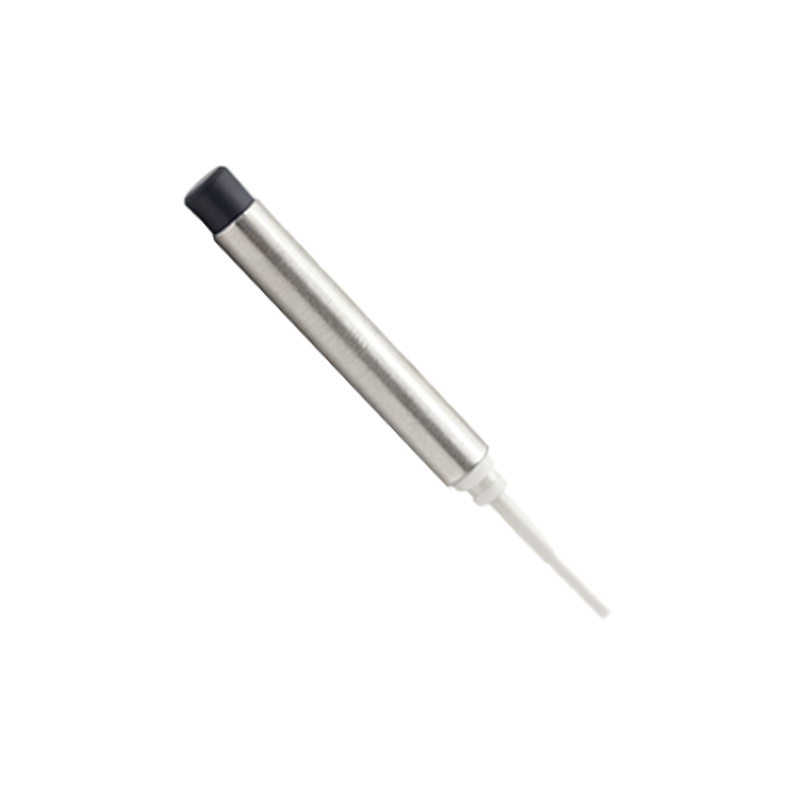
The process of integrating these sensors into a device—the "embedding"—is a critical engineering challenge. It involves not just the physical mounting of the sensor component but also the careful design of the surrounding electronics and software. Factors such as power consumption, response time, immunity to ambient light or electrical noise, and calibration are paramount. Designers must ensure the sensor's field of view is appropriate and that its housing material (like a smartphone's glass cover) does not interfere with its operation. Advanced sensors now come with integrated digital output and intelligent features like ambient light rejection, simplifying the design-in process for engineers.
The evolution of this technology points toward greater miniaturization, intelligence, and multi-functionality. Modern embedded proximity sensors are increasingly combining multiple sensing modalities. A single module might integrate proximity detection, ambient light sensing, and even gesture recognition. This convergence allows for more sophisticated and context-aware user interfaces. Furthermore, improvements in energy efficiency are enabling their use in always-on, battery-powered Internet of Things (IoT) devices, from smart watches to security systems.
Looking ahead, the role of embedded proximity sensors will only expand. As the world moves towards more intuitive and autonomous systems, the need for devices to understand their immediate physical context becomes non-negotiable. They are a key enabler for the vision of ambient computing, where technology recedes into the background, responding intelligently and unobtrusively to human presence and intent. From making our personal devices more responsive to ensuring safety in industrial settings, these invisible sentinels continue to be a cornerstone of intelligent design, proving that the most powerful technologies are often the ones we never see.