In the realm of industrial automation and machinery, the reliable detection of objects without physical contact is paramount. FC proximity switch sensors, often simply called proximity sensors, stand as a cornerstone technology enabling this precise, non-contact sensing. These robust electronic devices are engineered to detect the presence or absence of metallic objects within their sensing range, triggering an output signal that integrates seamlessly into control systems. Their durability, high switching frequency, and immunity to environmental factors like dust and moisture make them indispensable across countless applications.
At the heart of an FC inductive proximity sensor lies the principle of electromagnetic induction. The sensor's active face contains an oscillator coil that generates a high-frequency electromagnetic field. When a metallic object, known as the target, enters this oscillating field, eddy currents are induced on the surface of the target. This phenomenon dampens the oscillation amplitude within the sensor. An integrated evaluation circuit continuously monitors this amplitude. Once the damping reaches a predefined threshold—indicating the target is within the specified sensing distance—the circuit triggers a change in the sensor's output state. This output is typically a solid-state switch, either in a PNP (sourcing) or NPN (sinking) configuration, providing a clean electrical signal to a Programmable Logic Controller (PLC), relay, or other control unit.
The "FC" designation commonly refers to a standardized form factor and mounting style, typically a cylindrical threaded barrel (e.g., M8, M12, M18, M30). This design allows for easy installation into a drilled and tapped hole, with nuts for secure fastening and precise adjustment of the sensor's position. Key performance specifications include the sensing distance, which is rated for a standard target (usually mild steel). It's crucial to note that the effective sensing distance varies with different metals; for instance, it reduces for stainless steel and is significantly less for non-ferrous metals like aluminum or copper. Other vital parameters are the switching frequency (how many on/off cycles per second), repeat accuracy, temperature range, and protection class (IP rating), which defines its resistance to solids and liquids.
The applications for FC proximity switches are vast and varied. In manufacturing assembly lines, they count products, verify the presence of components, and control robotic arms. Within packaging machinery, they ensure correct positioning of labels and cartons. In the automotive industry, they monitor the position of pistons, shafts, and robotic welders. Material handling systems use them to detect the position of pallets on conveyors or the end-of-travel for automated guided vehicles (AGVs). A critical safety application is in machine guarding, where they can be part of a system to detect if a safety door is properly closed before initiating a dangerous machine cycle.
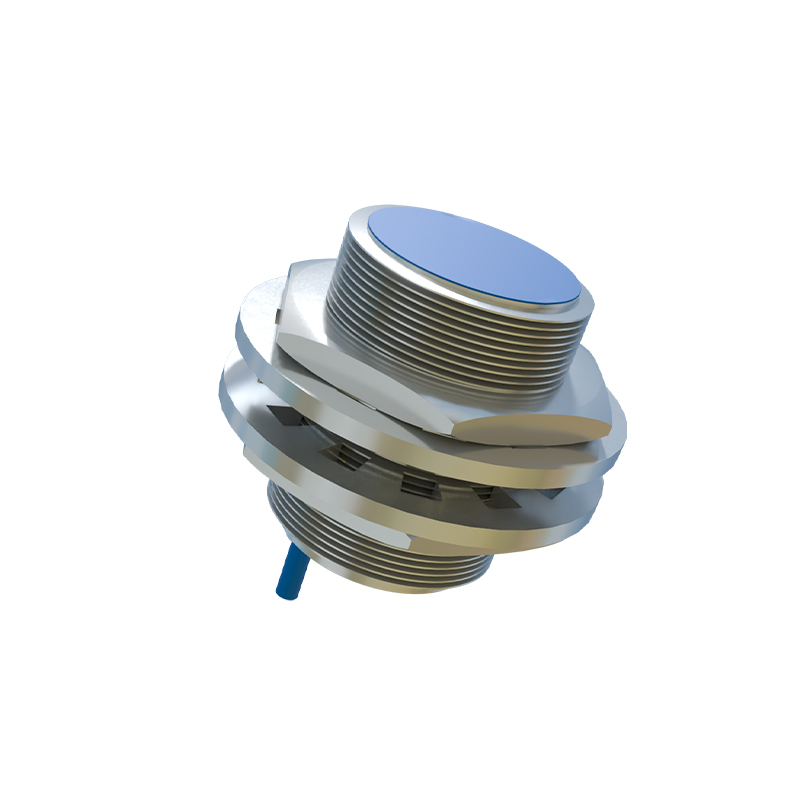
Selecting the right FC proximity sensor requires careful consideration of the operating environment and task. For harsh conditions with coolant, oil, or metal chips, sensors with high IP ratings (e.g., IP67, IP69K) are essential. The target material and required sensing distance dictate the sensor type—standard inductive sensors for ferrous metals, or capacitive models (often in similar FC housings) for detecting non-metals like plastics, wood, or liquids. Engineers must also match the electrical output type (PNP/NPN) and voltage rating (commonly 10-30V DC) to the control system's input requirements. Proper installation is equally important; ensuring the sensor is not over-tightened, maintaining the correct clearance from surrounding metal (lateral and flush-mounting considerations), and using shielded cables in electrically noisy environments are all best practices for optimal performance and longevity.
In summary, FC proximity switch sensors are a fundamental, reliable component in modern industrial control. Their non-contact operation ensures minimal wear and tear, leading to long service life and reduced maintenance. By understanding their operating principle, key specifications, and application guidelines, engineers and technicians can effectively deploy these sensors to enhance automation efficiency, improve process reliability, and contribute to safer working environments. From simple presence detection to complex positional feedback, the humble proximity sensor continues to be a critical enabler of precision and automation in the digital factory era.