Proximity sensing is a fundamental technology in modern automation and interactive systems, enabling devices to detect the presence or absence of objects without physical contact. Among various configurations, the two-sensor proximity sensing system stands out for its enhanced reliability and functionality. This approach utilizes a pair of sensors working in tandem to provide more accurate and robust detection compared to single-sensor setups.
The core principle of a two-sensor proximity system often involves a combination of complementary sensing methods. A common implementation pairs an active sensor, such as an infrared (IR) emitter, with a passive receiver. The active sensor emits a signal—be it infrared light, ultrasonic waves, or a radio frequency—towards a target area. The passive sensor is dedicated to detecting the reflected or altered signal. The system's logic unit continuously compares the expected signal pattern with the received one. When an object enters the sensing field, it interrupts or reflects the signal, causing a measurable change that triggers detection. The use of two dedicated sensors, one for emission and one for reception, minimizes interference and cross-talk, leading to clearer signal interpretation.
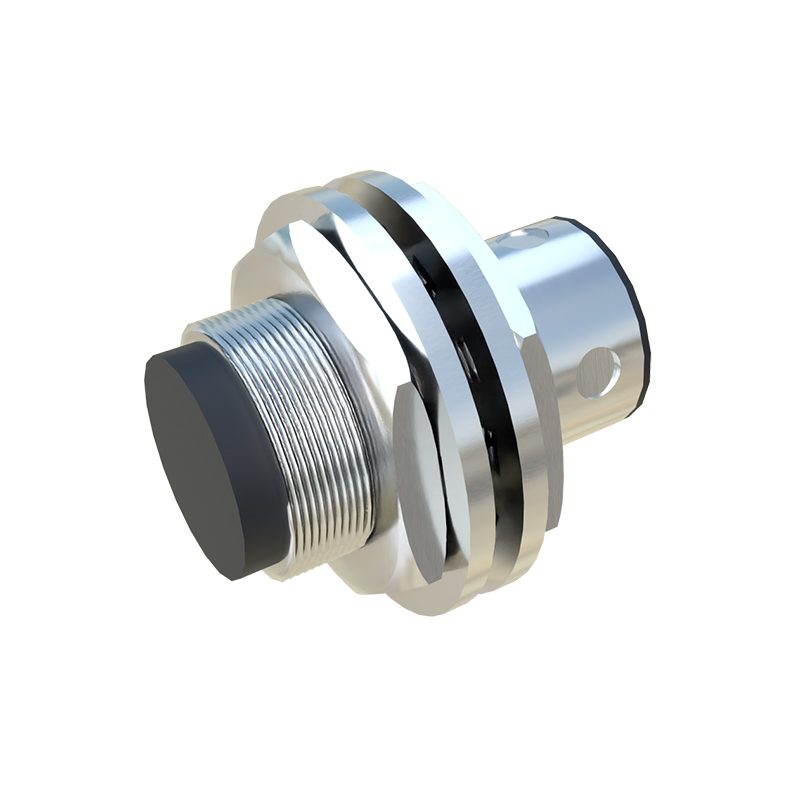
Another prevalent architecture employs two identical sensors, such as inductive or capacitive proximity sensors, placed strategically. In this setup, the system monitors the differential signal between the two sensors. Environmental factors like temperature drift or humidity changes typically affect both sensors equally, causing a common-mode signal that can be canceled out. However, the presence of a target object will affect one sensor more than the other, creating a differential signal that is easily identified. This differential measurement technique is highly effective in rejecting environmental noise and false triggers, making it ideal for challenging industrial environments.
The advantages of implementing a two-sensor system are significant. First and foremost is improved accuracy and reduced false positives. A single sensor might be triggered by environmental noise, electrical interference, or unintended objects. A dual-sensor system can employ confirmation logic; an event is only registered if both sensors indicate a change in a specific sequence or pattern, dramatically increasing decision reliability. Secondly, these systems offer better range and sensitivity calibration. The dedicated receiver can be finely tuned to detect weak signals, while the emitter can be optimized for output power, together extending the effective sensing range. Furthermore, such systems can enable simple direction sensing. By analyzing which sensor is triggered first or with greater intensity, the system can infer the direction of an object's movement—approaching or receding—adding a valuable dimension to the data.
Applications for two-sensor proximity sensing are vast and growing. In industrial automation, they are critical for precise object counting on high-speed conveyor belts, ensuring only interruptions detected by both sensors are counted as valid products. They provide reliable jam detection in machinery by monitoring the expected gap between components. In the consumer electronics domain, this technology enables sophisticated touchless interfaces. For instance, a smartphone might use paired IR sensors to detect a hand wave for silencing an alarm or answering a call without a touch. Automotive systems rely on them for occupancy detection in passenger seats, ensuring airbag deployment is correctly managed, and for hands-free trunk opening systems where a foot gesture under the bumper is reliably detected. In security, dual-sensor setups form the basis of advanced intrusion detection systems, where breaking both an IR beam and a microwave field is needed to trigger an alarm, preventing false alerts from pets or debris.
Designing an effective two-sensor proximity system requires careful consideration. Sensor pairing is crucial; the chosen technologies must be compatible and suited to the target material (metallic, non-metallic, liquid) and the environmental conditions (dust, light, moisture). The placement and alignment of the two sensors are critical to defining the sensing zone accurately. Signal processing is the backbone of the system. The controller must be programmed with intelligent algorithms to process the raw data from both sensors, perform filtering to remove noise, and execute the logic for final object detection or rejection.
Looking ahead, the integration of two-sensor proximity systems with digital communication protocols like IO-Link is enhancing their capabilities. This allows for remote configuration, real-time diagnostics, and the transmission of detailed process data, facilitating predictive maintenance and integration into Industry 4.0 frameworks. As machine learning algorithms become more embedded in edge devices, these dual-sensor systems will evolve from simple detection tools into predictive elements that can classify objects or predict movement patterns based on historical sensor data.
In conclusion, the two-sensor approach to proximity sensing represents a significant step forward from basic single-point detection. By leveraging the synergy between two sensing elements, engineers achieve a level of accuracy, reliability, and functional richness that is essential for advanced applications in manufacturing, automotive, consumer technology, and security. This technology underscores a key principle in sensing: sometimes, two perspectives are fundamentally better than one.