In the realm of optoelectronics and precision sensing, the laser sensor receiver tube plays a critical yet often understated role. While the laser emitter garners attention for generating the beam, it is the receiver tube that performs the essential task of detecting and converting optical signals into usable electrical data. This component is fundamental to the functionality of countless modern systems, from industrial automation to consumer electronics.
At its core, a laser sensor receiver tube is a photodetector specifically designed to respond to the wavelength of a corresponding laser emitter. Its primary function is to convert incident laser light into an electrical current or voltage change. This process, known as photodetection, hinges on the photoelectric effect. When photons from the laser strike the photosensitive material within the receiver tube—often silicon, germanium, or indium gallium arsenide—they transfer energy to electrons, prompting them to jump into a conductive state and generate a photocurrent. The sensitivity, speed, and accuracy of this conversion are paramount for the overall sensor's performance.
Several key parameters define a receiver tube's capability. Responsivity measures how effectively it converts light into electrical signal, typically expressed in amperes per watt. Response time, often in nanoseconds, dictates how quickly it can react to changes in the light signal, which is crucial for high-speed applications. The spectral response range must be matched to the laser's wavelength to ensure efficient detection. Furthermore, factors like noise equivalent power (NEP) and dark current (the current that flows without any light) determine the minimum detectable signal and the unit's performance in low-light conditions.
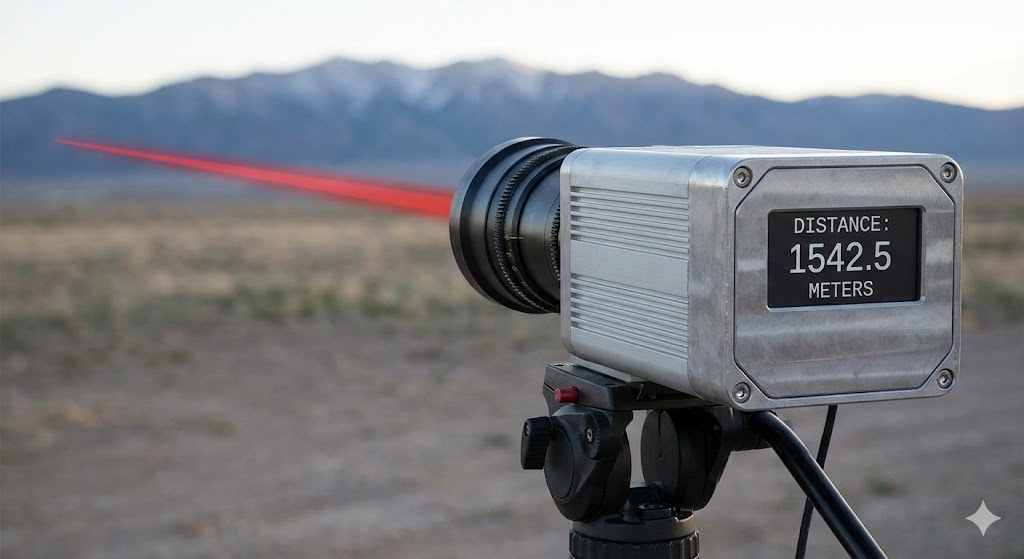
Common types of laser sensor receiver tubes include photodiodes, phototransistors, and avalanche photodiodes (APDs). Photodiodes, particularly PIN photodiodes, are widely used for their linear response, good speed, and reliability in applications like barcode scanners and distance measurement. Phototransistors offer built-in gain, providing a larger output signal for a given light input, making them suitable for proximity sensing and object detection where signal amplification is beneficial. For applications demanding extreme sensitivity to very low light levels, such as in LiDAR or long-range telemetry, Avalanche Photodiodes (APDs) are employed. APDs operate with internal gain through an avalanche multiplication process, amplifying the photocurrent before it leaves the device.

The integration of a receiver tube into a complete laser sensor involves careful optical and electronic design. Typically, it is paired with focusing lenses or apertures to collect and direct the reflected or interrupted laser beam onto its active area. Surrounding circuitry, including transimpedance amplifiers, filters, and comparators, is essential to condition the weak photocurrent, suppress noise, and produce a clean, digital output signal for a microcontroller or logic circuit. This entire assembly is often housed in a compact, shielded package to protect it from ambient light interference and electromagnetic noise.
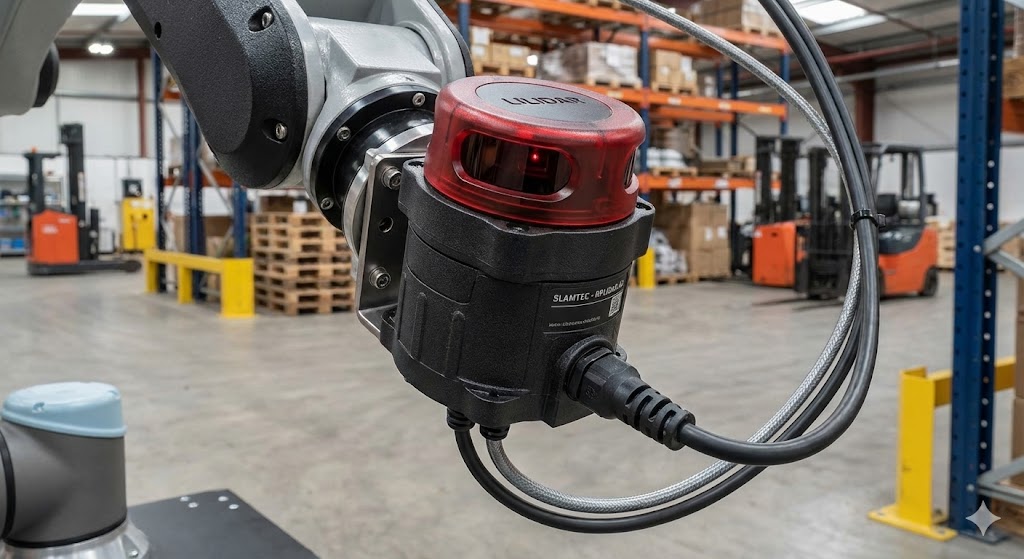
The applications of laser sensor receiver tubes are vast and integral to modern technology. In industrial automation, they are the eyes of laser distance sensors, precision positioning systems, and part presence detectors on assembly lines. Consumer electronics rely on them in optical disk drives, laser printers, and autofocus mechanisms in cameras. Automotive safety systems utilize them in adaptive cruise control and collision avoidance LiDAR. Furthermore, they are pivotal in scientific instruments, environmental monitoring equipment for particle detection, and even in some medical diagnostic devices.
Selecting the right receiver tube requires a careful analysis of the application's demands. Engineers must consider the operating wavelength, required bandwidth or response speed, necessary sensitivity, acceptable noise levels, power constraints, and environmental conditions like temperature range. A mismatch between the laser source and the receiver's spectral band can lead to poor performance or complete failure. Similarly, a receiver that is too slow will miss rapid events, while one with excessive noise may generate false triggers.
Maintenance and handling of these components also warrant attention. While solid-state devices are generally robust, their photosensitive surfaces can be damaged by electrostatic discharge (ESD) or excessive optical power. Clean handling procedures and the use of appropriate protective packaging are standard. In operation, ensuring a clean optical path free from obstructions, dust, or condensation is vital for maintaining signal integrity.
In conclusion, the laser sensor receiver tube is a sophisticated and indispensable component that bridges the optical and electronic worlds. Its performance characteristics directly influence the accuracy, range, and reliability of the entire sensing system. As laser technology continues to advance, driving trends like miniaturization and higher-speed communication, the evolution of receiver tubes—toward greater integration, higher bandwidths, and improved sensitivity—will remain a key enabler for the next generation of smart sensors and interconnected devices. Understanding its principles and selection criteria is essential for anyone involved in designing or implementing modern sensing solutions.