Displacement sensors, particularly laser displacement sensors, represent a critical technology in modern industrial measurement and quality control. These devices provide non-contact, high-precision measurements of distance, position, thickness, and vibration by projecting a laser beam onto a target surface and analyzing the reflected light. The core principle often involves triangulation or time-of-flight measurement. In the triangulation method, a laser diode emits a focused beam. The reflected light from the target strikes a position-sensitive detector (like a CCD or PSD). As the target's distance changes, the position of the light spot on the detector shifts linearly. This shift is calculated by the sensor's internal processor to determine the exact displacement with micron or even sub-micron resolution. Time-of-flight sensors, often used for longer ranges, measure the phase shift or the direct time delay between the emitted and reflected laser pulse.
The advantages of laser displacement sensors are manifold. Their non-contact nature eliminates the risk of damaging delicate surfaces and allows for measurement of soft, molten, or vibrating objects. They offer exceptionally high speed, capable of taking thousands of measurements per second, which is indispensable for in-line production inspection. Furthermore, they provide outstanding accuracy and resolution, unaffected by the material's color or reflectivity in advanced models with automatic gain control. Common industrial applications are extensive. In automotive manufacturing, they measure panel gaps, brake disc thickness, and engine part dimensions. In electronics, they verify component coplanarity and solder paste height. In metal processing, they monitor roll gap and sheet flatness. They are also pivotal in robotics for precise positioning and in civil engineering for monitoring structural deformation.

Selecting the right laser displacement sensor requires careful consideration of several parameters. The measuring range defines the minimum and maximum distances over which the sensor can operate accurately. Resolution indicates the smallest detectable change in distance. Linearity error specifies the maximum deviation from a perfect straight-line response across the measuring range. Spot size determines the minimum feature that can be measured, crucial for small targets. Response speed, or sampling rate, must match the application's dynamics. Environmental factors like ambient light, dust, temperature, and the target's surface finish (highly reflective, matte, transparent) significantly influence performance. Modern sensors incorporate sophisticated algorithms and filters to compensate for these challenges.
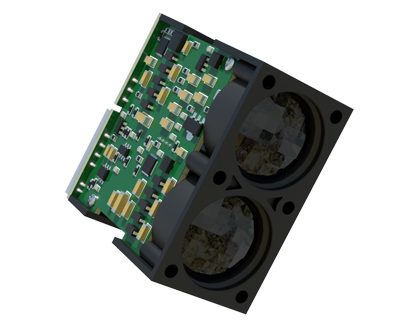
Recent technological advancements are pushing the boundaries of laser displacement sensing. The development of blue laser diodes has improved performance on organic materials like rubber and transparent objects like glass, which traditionally scatter or transmit red laser light. Confocal chromatic sensors offer even higher precision for multi-layer and transparent material measurement. Integration with Industry 4.0 frameworks is another key trend, where sensors feature built-in IO-Link, Ethernet/IP, or PROFINET interfaces for seamless data exchange with PLCs and cloud systems, enabling predictive maintenance and real-time process optimization. Furthermore, miniaturization continues, allowing these high-precision sensors to be installed in increasingly cramped spaces on production lines.

In conclusion, laser displacement sensors are indispensable tools for achieving the high levels of precision, speed, and reliability demanded by contemporary manufacturing and research. Their ability to deliver accurate, non-contact measurements under challenging conditions makes them a cornerstone of automation and quality assurance. As technology evolves, these sensors will become even more intelligent, robust, and integrated, further solidifying their role in enabling smarter factories and more precise engineering across countless industries.