In the realm of industrial automation and precision engineering, the demand for accurate, reliable, and non-contact measurement solutions has never been greater. Among the various technologies available, laser origin sensors have emerged as a critical component for countless applications, from semiconductor manufacturing to robotics and quality control. These devices are designed to detect a specific reference point—often called the "origin" or "zero point"—with exceptional accuracy, enabling machines and systems to perform tasks with repeatable precision.
Unlike traditional mechanical limit switches or proximity sensors, laser origin sensors utilize focused laser beams to identify a target's position. The core principle involves emitting a coherent light beam toward a surface or object. When the beam strikes the target, the reflected light is captured by a receiver within the sensor. By analyzing characteristics such as light intensity, triangulation, or time-of-flight, the sensor can determine the exact moment the target aligns with the predefined origin. This detection triggers a signal that informs the control system, allowing for precise positioning, alignment, or initiation of a process sequence.
The advantages of using laser origin sensors are manifold. First, their non-contact nature eliminates wear and tear associated with physical contact, leading to longer operational lifespans and reduced maintenance. Second, laser sensors offer high resolution and fast response times, often in the microsecond range, which is essential for high-speed production lines. Third, they are largely immune to environmental factors like dust, vibration, or electromagnetic interference when properly housed, ensuring stable performance in harsh industrial settings. Common applications include determining home positions in CNC machines, aligning substrates in printing processes, verifying part presence in assembly lines, and guiding autonomous vehicles within defined pathways.

Selecting the appropriate laser origin sensor requires consideration of several parameters. Key factors include measurement range, spot size, response time, output type (e.g., digital or analog), and environmental ratings. For instance, in clean-room semiconductor fabrication, sensors with ultra-fine spot sizes and minimal heat emission are preferred to avoid damaging sensitive components. In contrast, outdoor logistics automation might prioritize sensors with robust enclosures and immunity to ambient light variations.
Installation and calibration are crucial for optimal performance. Proper mounting ensures the laser beam is perpendicular to the target surface, minimizing detection errors. Regular calibration against a known reference maintains accuracy over time. Many modern sensors feature self-diagnostic capabilities and intuitive setup interfaces, simplifying integration into existing systems.

Looking ahead, advancements in laser diode technology, miniaturization, and smart sensor networks are driving innovation. Future laser origin sensors may incorporate AI-driven adaptive algorithms to compensate for surface variations or predictive maintenance alerts. As Industry 4.0 and the Internet of Things expand, these sensors will play an even more integral role in enabling fully automated, data-driven manufacturing ecosystems.
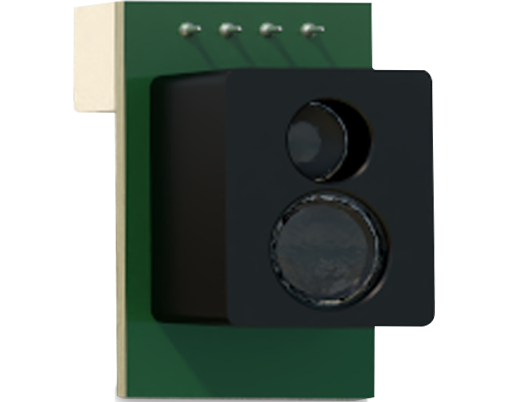
In summary, laser origin sensors represent a sophisticated yet practical solution for achieving precise spatial reference in automated systems. Their ability to deliver consistent, contactless detection underpins efficiency and quality across diverse industries, making them indispensable tools in the pursuit of operational excellence.