In the world of automation and smart technology, proximity sensors are the silent, unseen workhorses. These devices detect the presence or absence of an object within a specific range without any physical contact. The principle is elegantly simple: the sensor emits a field or a beam of electromagnetic radiation, often infrared light, an inductive electromagnetic field, or capacitive energy, and looks for changes in the field or return signal. The object being detected is often referred to as the sensor's "target.
The core advantage of non-contact detection is profound. It eliminates mechanical wear and tear, allows for high-speed operation, and functions reliably in harsh environments where dirt, oil, or moisture would incapacitate a mechanical switch. This makes them indispensable in modern manufacturing, consumer electronics, and safety systems.
There are several primary types of proximity sensors, each with its own operating principle and ideal application.
Inductive Proximity Sensors are the champions of industrial automation. They generate an oscillating electromagnetic field. When a metallic object enters this field, it induces eddy currents within the metal, which causes a load on the oscillator. The sensor detects this change and triggers a switch. These sensors are exceptionally robust, perfect for detecting metal parts on assembly lines, in machine tools, or in robotic arms. They are unaffected by non-metallic substances like dust or liquids but are limited to ferrous and non-ferrous metals.
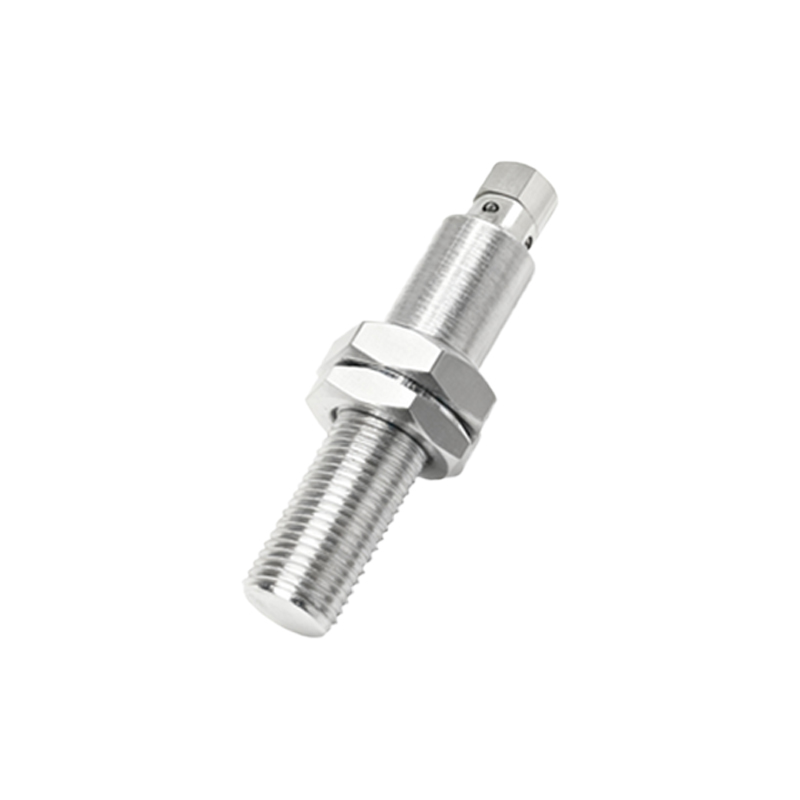
Capacitive Proximity Sensors can detect both metallic and non-metallic materials, including liquids, plastics, wood, and granular substances. They work by generating an electrostatic field. Any object that enters this field alters the capacitance of the sensor's circuit, triggering detection. This versatility makes them ideal for applications like liquid level sensing in tanks, detecting filled packages on a conveyor belt, or touch-sensitive interfaces. They can even see through certain non-metallic walls to detect material levels inside a container.
Photoelectric Sensors operate on a different principle: light. They consist of a light emitter (usually an LED) and a receiver. There are three main configurations. The through-beam type has separate emitter and receiver units; an object is detected when it breaks the light beam. This offers the longest sensing range and high reliability. The retro-reflective type uses a single unit that emits light and receives its reflection from a dedicated reflector; the target is detected when it interrupts this reflected beam. The diffuse (or proximity) type detects an object by the light reflected directly from the target itself. Photoelectric sensors are excellent for long-range detection, color differentiation, and sensing non-metallic objects at a distance, common in packaging, material handling, and automated doors.
Ultrasonic Sensors use sound waves beyond the range of human hearing. They emit high-frequency ultrasonic pulses and measure the time it takes for the echo to return. By calculating this time-of-flight, they can determine the presence and distance of an object with high accuracy. Unlike photoelectric sensors, they are largely unaffected by color, transparency, or ambient light, but can be influenced by temperature and air turbulence. They excel in applications like tank level measurement, collision avoidance in vehicles or robots, and presence detection for bulky items.
The applications of proximity sensors are vast and growing. In your smartphone, a miniature infrared proximity sensor turns off the touchscreen during a call to prevent accidental cheek-presses. In modern cars, they are part of parking assist systems, detecting obstacles. In aviation, they monitor landing gear position. In factories, they count products, control robotic movements, and ensure machine safety by confirming a guard door is closed. In smart homes, they enable touchless faucets and automatic lighting.
Selecting the right sensor requires careful consideration of the target material, required sensing distance, environmental conditions (temperature, contaminants), response speed, and output type needed (digital on/off or analog distance signal). Installation is also critical; proper alignment and avoiding sensor-to-sensor interference are key to reliable operation.
As technology advances, proximity sensors are becoming smaller, more energy-efficient, and smarter with integrated diagnostics and IO-Link communication for real-time data exchange. They remain a fundamental component in the journey toward fully automated and intelligent systems, providing the essential "sense of touch" to machines without ever making contact.