In today's rapidly evolving industrial and technological landscape, the demand for precision measurement and detection has never been higher. Standard, off-the-shelf sensors often fall short when faced with unique environmental conditions, specific performance thresholds, or unconventional application geometries. This is where the power of custom laser sensors comes into play, offering a bespoke solution engineered to meet exact operational requirements.
Laser sensors, at their core, utilize focused light beams to detect presence, measure distance, gauge thickness, or profile objects with exceptional accuracy. While standard models provide reliable performance for common tasks, they operate within predefined parameters. Customization breaks these boundaries. It involves a collaborative process between the client and engineering teams to design a sensor system that addresses singular challenges. This could mean developing a sensor that operates reliably in extreme temperatures ranging from cryogenic levels to those found in foundries, or one resistant to intense vibration, dust, or corrosive chemicals that would incapacitate a standard unit.
The journey to a custom laser sensor typically begins with a deep dive into the application's specifics. What is the exact measurement range needed? What is the required resolution and repeatability? What are the ambient light conditions? What is the material and surface texture of the target object? Answers to these questions inform critical design choices. For instance, a red laser might be standard, but a custom blue laser sensor could be specified for better performance on red-hot metals or through certain transparent materials. Similarly, the choice between time-of-flight, triangulation, or confocal measurement principles is dictated by the need for speed, stand-off distance, or resolution.
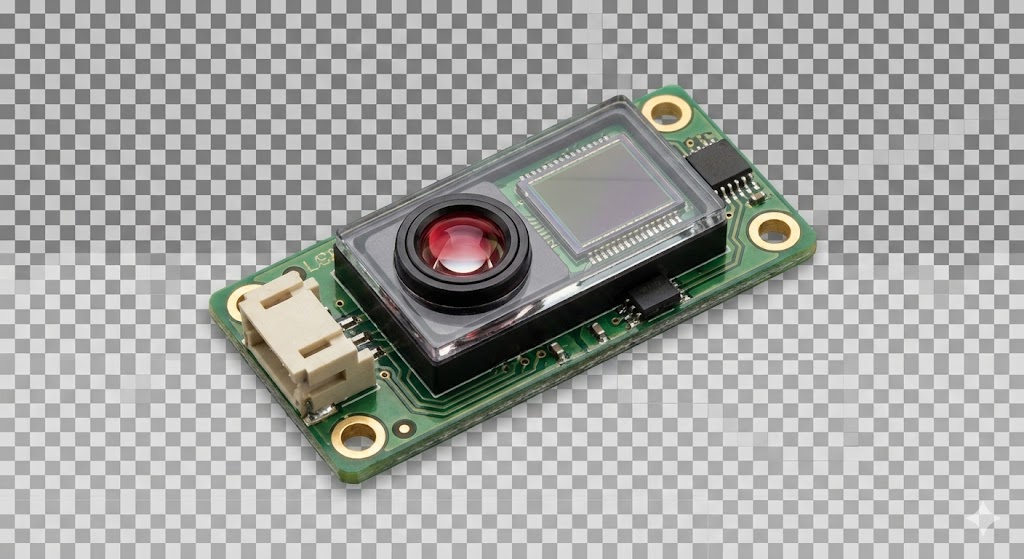
The housing and optics are also tailored. A sensor destined for a sterile pharmaceutical packaging line may require a polished stainless-steel enclosure with smooth, crevice-free surfaces for easy cleaning. In contrast, a sensor for outdoor logistics might need a ruggedized, IP67-rated housing to withstand rain and dust. The optical window might be coated with an anti-reflective layer or made from a material like sapphire for exceptional scratch resistance. Connectivity is another facet of customization. While analog outputs (0-10V, 4-20mA) are common, a custom sensor might integrate directly with a specific industrial network protocol like PROFINET, EtherCAT, or IO-Link, simplifying integration into a larger automated system.
The benefits of this tailored approach are substantial. Firstly, it enhances system performance and reliability. A sensor designed for the job eliminates workarounds and compensations needed for a standard sensor, leading to higher accuracy, fewer false readings, and reduced downtime. Secondly, it can streamline the overall machine design. A compact, custom-shaped sensor can fit into tight spaces where a standard boxy unit cannot, enabling more elegant and efficient mechanical layouts. Finally, while the initial development cost may be higher, the total cost of ownership often decreases due to improved yield, lower maintenance, and the avoidance of production line stoppages caused by sensor inadequacy.
Real-world applications are diverse. In automotive manufacturing, custom laser sensors measure weld seam quality on complex body panels with sub-millimeter precision. In semiconductor fabrication, they are tailored to detect nanometer-level defects on wafers in ultra-clean environments. In agriculture, ruggedized laser sensors are customized to monitor crop height and density from autonomous vehicles. Even in creative industries, custom sensors enable precise 3D scanning of artifacts for restoration or digital archiving.

Selecting the right partner for custom laser sensor development is crucial. Look for providers with proven expertise in photonics, electronics, and mechanical design, and a willingness to engage in thorough application analysis. A strong partner will not just sell a component but will co-engineer a solution, providing comprehensive support from prototyping through to volume production and after-sales service.
In conclusion, as industries push the limits of automation, quality control, and data acquisition, the one-size-fits-all approach to sensing becomes a constraint. Custom laser sensors represent the logical evolution—transforming a critical component from a commodity into a strategic, performance-defining asset. By investing in a sensor crafted for its unique mission, a company secures a tangible competitive advantage through unparalleled precision, reliability, and integration.
