In the world of industrial automation and machine safety, proximity switch distance sensors stand as fundamental components, enabling countless processes to run with precision, efficiency, and reliability. Unlike simple mechanical switches, these non-contact sensors detect the presence or absence of an object within a specific range without any physical contact. This principle of operation eliminates wear and tear, significantly enhancing longevity and reducing maintenance needs. The core technology revolves around generating an electromagnetic field or a beam of radiation. When a target object enters this field, it causes a detectable change in the sensor's signal, which is then converted into an electrical output signal.
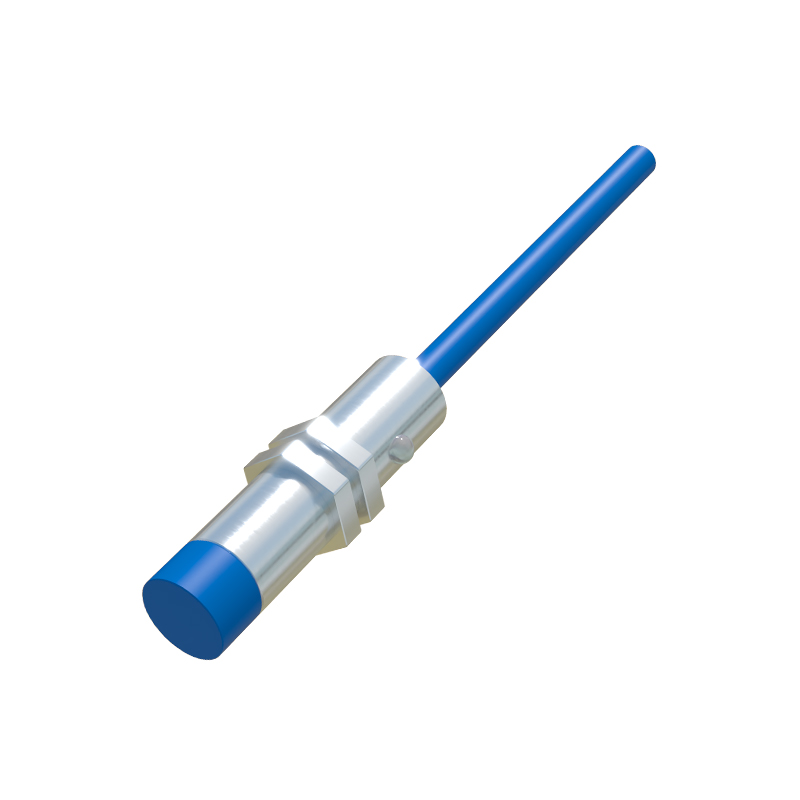
Several primary technologies dominate the proximity sensor landscape, each with distinct advantages and ideal use cases. Inductive proximity sensors are the workhorses of metal detection. They generate an oscillating electromagnetic field. When a metallic object enters this field, it induces eddy currents within the metal, which dampens the oscillation of the sensor's internal circuit. This damping effect is detected, triggering a solid-state output switch. These sensors are exceptionally robust, resistant to environmental factors like dust, oil, and moisture, and are perfect for counting metal parts, determining position limits on machinery, or detecting the presence of a metal gear tooth.
For detecting non-metallic objects—such as wood, plastic, glass, or liquids—capacitive proximity sensors are the preferred choice. They function by generating an electrostatic field. Any object that enters this field alters the capacitance of the sensor's circuit. This change is measured, and once it surpasses a predefined threshold, the sensor switches its output state. This makes them invaluable in industries like packaging, food and beverage, and chemical processing, where they can detect material levels through container walls or sense the presence of plastic bottles on a conveyor line.
A third major category is the photoelectric sensor, which operates on the principle of light transmission. An emitter sends out a beam of light (visible red, infrared, or laser), and a receiver detects it. The sensing occurs when the target object either interrupts this beam (through-beam mode) or reflects it back to the receiver (retro-reflective or diffuse reflective modes). Photoelectric sensors offer very long sensing ranges and can detect objects of almost any material, color, or finish, making them extremely versatile for complex automation tasks, object counting, and even color differentiation.
Ultrasonic sensors form another critical group, using sound waves beyond human hearing. They emit high-frequency sound pulses and measure the time it takes for the echo to return. This time-of-flight calculation provides precise distance measurement, not just simple presence detection. They excel in challenging environments with dust, fog, or varying light conditions where optical sensors might fail, and are commonly used for liquid level control, loop control, and pallet detection.
The selection of the right proximity switch distance sensor hinges on several key application parameters. The sensing range, or the maximum distance at which the sensor can reliably detect a standard target, is paramount. The nature of the target material—its size, shape, and composition—directly influences the choice of technology. Environmental conditions are equally critical; factors like temperature extremes, washdown requirements, or exposure to corrosive chemicals dictate the needed housing material and ingress protection (IP) rating. Finally, the required output type, such as a simple digital switch (PNP/NPN), analog current (4-20mA), or a digital communication signal (IO-Link), must align with the control system's input.
The applications for these sensors are virtually limitless. In automotive manufacturing, inductive sensors ensure robotic welders are in the correct position. On packaging lines, capacitive sensors confirm the fill level of containers, while photoelectric sensors verify label placement. In material handling, ultrasonic sensors guide automated guided vehicles (AGVs) and manage warehouse inventory. Their role in safety is indispensable, forming part of machine guarding systems that immediately halt equipment if a person breaches a protected zone.
Looking ahead, the evolution of proximity sensors is intertwined with Industry 4.0. Modern sensors are becoming smarter, equipped with integrated microprocessors and communication protocols like IO-Link. This intelligence allows for remote configuration, real-time diagnostics, and the transmission of process data (like exact distance values) directly to higher-level control systems, enabling predictive maintenance and more flexible, data-driven production processes. The humble proximity switch has evolved from a simple on/off device into a sophisticated, intelligent node in the connected industrial ecosystem, continuing to be a cornerstone of modern automation.