In the realm of industrial automation, consumer electronics, and automotive systems, the demand for precision is paramount. Proximity sensors, the silent sentinels that detect the presence or absence of objects without physical contact, are fundamental to this precision. However, not all sensors are created equal. A critical, yet often overlooked, performance characteristic is noise—specifically, electrical noise generated by the sensor itself or induced from the environment. Low noise proximity sensors have emerged as a specialized solution, enabling reliable operation in applications where signal integrity is non-negotiable.
Electrical noise in proximity sensors manifests as unwanted fluctuations in the output signal. This can stem from various sources: internal semiconductor noise, electromagnetic interference (EMI) from nearby motors or power lines, or even ground loop issues. In a standard sensor, this noise can cause false triggering, reduced detection accuracy, and unstable readings. For instance, in a high-speed packaging line, a sensor plagued by noise might misinterpret a slight vibration as an object presence, leading to incorrect counts and production errors. In medical equipment or laboratory automation, such inconsistencies are unacceptable.
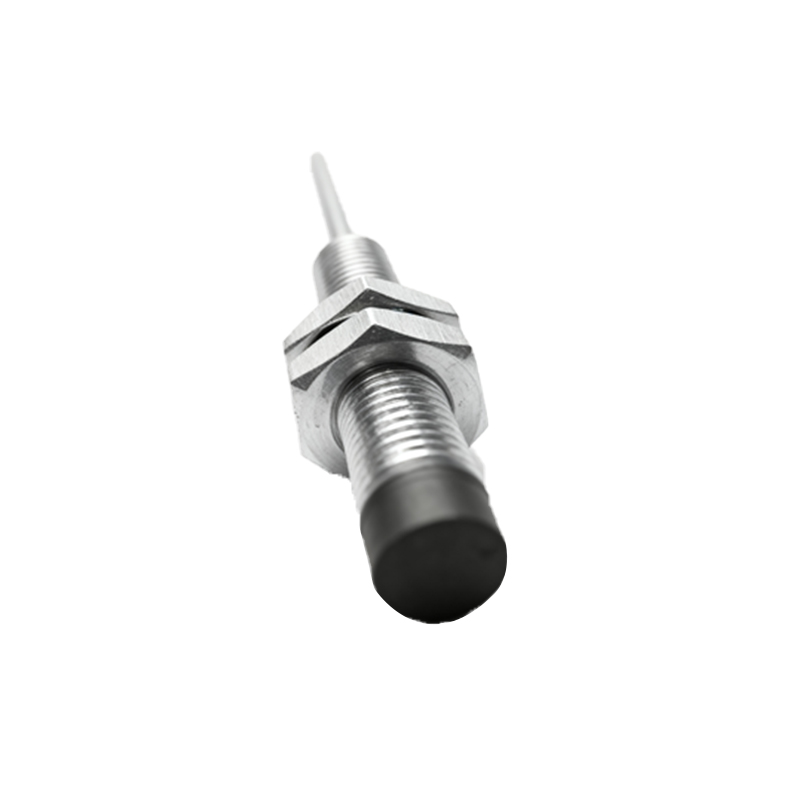
The engineering behind low noise proximity sensors involves a multi-faceted approach to suppression and immunity. It begins at the component level. High-quality, stable oscillators are employed to generate the sensor's detection field (whether inductive, capacitive, or photoelectric) with minimal inherent jitter. Advanced filtering circuits are integrated directly into the sensor housing. These are not simple passive filters but often active, adaptive circuits designed to attenuate specific noise frequencies common in industrial environments while preserving the fast response time of the sensor.
Shielding is another cornerstone of low-noise design. Robust metal housings, often made from nickel-plated brass or stainless steel, act as Faraday cages, preventing external EMI from penetrating the sensitive electronics. Cabling is equally important; sensors designed for low-noise performance typically feature integrated or recommend the use of shielded, twisted-pair cables. The twisting of the signal wires helps cancel out induced magnetic fields, while the overall shield drains environmental noise to ground before it can affect the signal.
Furthermore, the design of the sensor's output stage is optimized. Whether providing a digital switch signal (PNP/NPN) or an analog output (0-10V, 4-20mA), the output drivers are engineered for clean transitions and stability under load variations. This ensures that the signal arriving at the programmable logic controller (PLC) or data acquisition system is a true representation of the detected state, free from spikes or dropouts that could be misinterpreted by the control logic.
The practical benefits of implementing low noise proximity sensors are substantial across several key industries. In semiconductor manufacturing and precision assembly, where robotic arms handle micron-scale components, absolute detection reliability is crucial. Any noise-induced error could result in a misaligned placement, damaging expensive wafers. Within the automotive sector, particularly in electric vehicle (EV) production and testing, the high-power inverters and motors generate significant EMI. Low-noise sensors are essential for position sensing in battery module assembly and powertrain testing, ensuring safety and quality control processes are based on accurate data.
In the field of scientific research and medical diagnostics, equipment like automated analyzers and DNA sequencers rely on sensors to detect vial positions or stage locations. Noise here could corrupt experimental data or cause instrument failure. Even in consumer electronics, such as smartphones and tablets, low-noise capacitive proximity sensors contribute to better power management by accurately detecting when the device is near a user's ear, turning off the display reliably without false triggers.
Selecting the right low noise sensor requires careful consideration. Engineers must evaluate the sensor's specifications, particularly its immunity to EMI, often rated in volts per meter (V/m) according to standards like IEC 60947-5-2. The operating frequency and the type of output are also critical. In extremely noisy environments, sensors with analog current-loop outputs (like 4-20mA) are often preferred due to their inherent noise resistance compared to voltage signals. Consulting with sensor manufacturers and reviewing application notes for challenging installations is always a recommended practice.
Ultimately, the shift towards low noise proximity sensors represents a move from mere functionality to guaranteed performance. They are not merely components but enablers of system integrity. By minimizing electrical noise, these sensors provide the clean, unambiguous data that modern control systems require to execute complex, high-speed, and high-stakes operations with confidence. As industries continue to push the boundaries of automation and precision, the role of the low-noise proximity sensor as a guardian of signal fidelity will only become more pronounced, ensuring that machines see the world clearly, without static.